A+ English xin giới thiệu đến các bạn bài mẫu IELTS Speaking band 6.0 với những câu trả lời ấn tượng và tự nhiên, giúp thí sinh ghi điểm cao trong kỳ thi.
Bài mẫu không chỉ gợi ý cách triển khai ý tưởng mạch lạc mà còn cung cấp từ vựng phong phú, cấu trúc câu đa dạng và cách diễn đạt tự nhiên, giúp bạn tự tin giao tiếp và thuyết phục giám khảo.
Hãy cùng khám phá ngay để nâng tầm kỹ năng Speaking của bạn nhé!
1. Đề bài IELTS Speaking (Assignment)
| Task 1:
Where is your home town/city? What’s special about your home town/city? Would you like to change anything in your home town/city? How often did you go to a park when you were younger? Doyou enjoy visiting parks now? Do you think your town/city has enough parks and gardens? |
| Task 2:
Describe the sport that you most like watching You should say: what sport you most like watching where you watch this sport when you last watched this sport and explain why you like watching this sport so much |
| Task 3:
Which sports do many people enjoy playing in your country? What Can people learn from playing team sports? Should all children learn to play sports at school? Why do you think that? Why do you think the top sports people are paid so much? What are the disadvantages of being a top sportsperson? Why are extreme sports growing in popularity today? Many people feel governments should ban the most dangerous extreme sports? Do you agree with that view? |
Source: IELTS TRAINERS 2 TEST 4
2. Phân tích câu hỏi – Lập dàn ý (Analyze the topic – Outline)
Task 1
Where is your home town/city? What’s special about it?
[Tên thành phố], nổi tiếng với [đặc điểm như thiên nhiên, con người, văn hóa…]
Would you like to change anything in your home town/city?
Có. Muốn cải thiện giao thông/công viên/ô nhiễm môi trường…
How often did you go to a park when you were younger?
Thường đi vào cuối tuần/cùng gia đình…
Do you enjoy visiting parks now?
Có. Thư giãn, tập thể dục, đi dạo…
Do you think your town/city has enough parks and gardens?
Không. Cần thêm không gian xanh cho cộng đồng…
Task 2
What sport: Bóng đá / Bóng rổ / Tennis
Where: Trên TV / Sân vận động / Online
When: Tuần trước / Trận gần đây
Why: Hồi hộp, hấp dẫn, kỹ thuật cao, yêu thích đội/nhân vật…
Task 3
Which sports do many people enjoy playing in your country?
Bóng đá, cầu lông, bóng chuyền, chạy bộ…
What can people learn from playing team sports?
Làm việc nhóm, tinh thần đồng đội, giao tiếp, kỷ luật…
Should all children learn to play sports at school? Why?
Có. Tốt cho sức khỏe, phát triển kỹ năng xã hội…
Why are top sports people paid so much?
Tài năng, giải trí, quảng cáo, thu hút người hâm mộ…
Disadvantages of being a top sportsperson?
Áp lực, chấn thương, thiếu thời gian riêng tư…
Why are extreme sports growing in popularity?
Thử thách, cảm giác mạnh, mạng xã hội lan truyền…
Should governments ban dangerous extreme sports?
Không nên. Nhưng cần quy định an toàn rõ ràng…
3. Bài Mẫu (Sample Essay) Band 6.0+
Task 1Where is your hometown/city? What’s special about it?I live in Ho Chi Minh City, which is famous for its vibrant street life, delicious food, and historical landmarks that reflect both tradition and modern development. Would you like to change anything in your hometown/city?Yes, I wish the city could improve public transportation and reduce traffic jams because commuting can be stressful and time-consuming during rush hours. How often did you go to a park when you were younger?Honestly, I rarely went to parks when I was a kid because I preferred staying indoors, playing video games or reading rather than going outside. Do you enjoy visiting parks now?Not really. I still prefer indoor activities like gaming or browsing the internet, but sometimes I go to parks if friends invite me. Do you think your town/city has enough parks and gardens?I don’t think so. Green spaces are quite limited here, and more parks would help people relax and escape the city’s noise and pollution. |
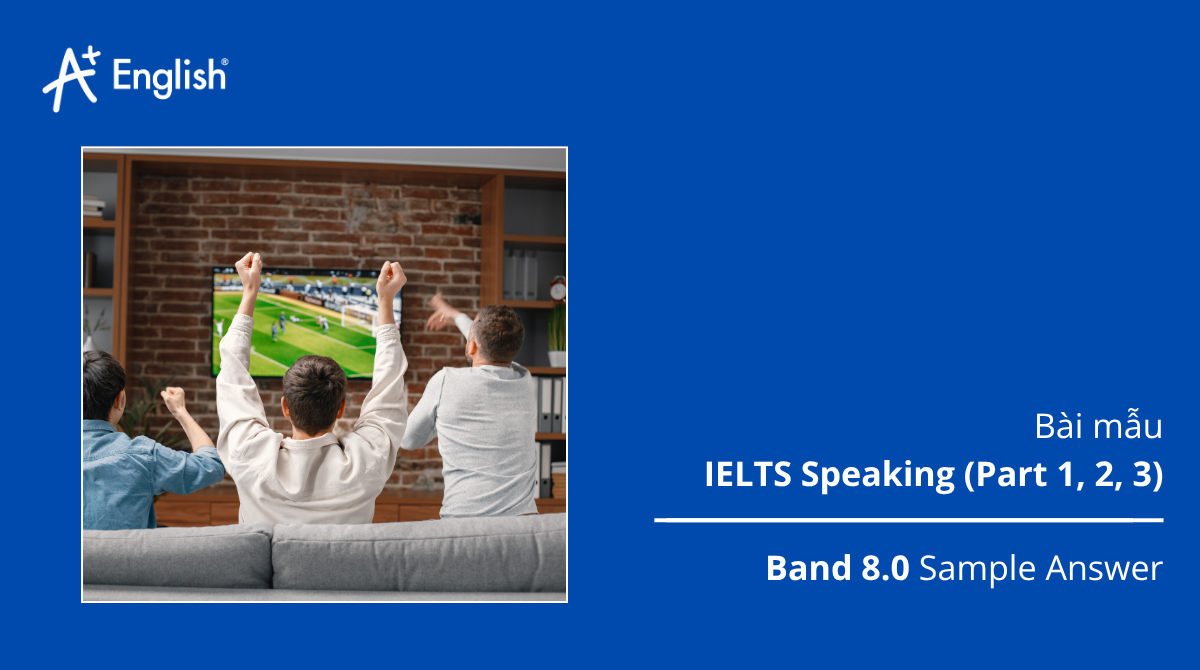
Task 2The sport I enjoy watching the most is football. Although I don’t often go outside or play sports regularly, football somehow has a special place in my heart. I usually watch it on TV or sometimes stream it online when there’s a big match. One of the most exciting matches I watched was last month, when the Vietnamese national team played in a regional tournament. Even though I was home alone, I felt like I was part of something bigger, like sharing the moment with millions of fans. To be honest, I don’t follow every game or know all the players, but whenever I watch football, I feel thrilled. It gives me goosebumps, especially during penalty shootouts or when the match is tied near the end. You could say it really keeps me on the edge of my seat. Sometimes I even kick a ball around with my classmates during recess at school—it’s not serious, but it’s a good way to blow off some steam. I think what makes football so interesting is that it’s easy to understand, yet full of strategy. Watching the players work together reminds me that “teamwork makes the dream work.” It’s not only entertaining, but it also teaches a lot about coordination, patience, and never giving up. All things considered, watching football is like hitting two birds with one stone—it gives me both entertainment and inspiration, even if I’m more of an introvert who spends time indoors. |
Task 3Which sports do many people enjoy playing in your country?Hmm, let me think… In Vietnam, football is undoubtedly the most popular sport. You can often see people of all ages playing in open fields or even on the streets. Aside from that, badminton and volleyball also have a significant following, especially among students and young adults. I guess it’s because these sports are accessible and require minimal equipment, which makes them appealing to many. What can people learn from playing team sports?Well, that’s a good question… Engaging in team sports teaches a lot of valuable life lessons. For one thing, players learn the importance of teamwork, communication, and trust. You know, it’s like saying—”a chain is only as strong as its weakest link”—which really highlights how collective effort is more important than individual skill. On top of that, dealing with both wins and losses helps people develop resilience and good sportsmanship. Should all children learn to play sports at school? Why?Absolutely, and here’s why… Including sports in school curricula doesn’t just promote physical health—it also builds discipline and character. It’s not only about winning or losing, but also about learning the ropes of teamwork, perseverance, and fair play. What’s more, some students might discover a real passion or hidden talent, which could even shape their future careers. Why are top sports people paid so much?Hmm, let me think for a second… I’d say it mostly comes down to the value they bring. Top athletes generate huge revenue through ticket sales, sponsorships, and merchandise. I mean, their skills and dedication put them in a league of their own, which makes them extremely valuable to teams and brands. It’s kind of like that old saying, “you reap what you sow”—years of hard work eventually lead to big rewards. Disadvantages of being a top sportsperson?That’s an interesting one… Even though fame and wealth sound appealing, top athletes do face several downsides. For starters, there’s a lot of pressure to constantly perform at a high level. Not to mention, their personal lives are often public, which means very little privacy. And of course, the physical strain can lead to injuries, and their careers usually don’t last very long. So yeah, it’s not always a bed of roses, despite how glamorous it might look from the outside. Why are extreme sports growing in popularity?Hmm, let me think about that… I guess extreme sports attract people because they offer a thrill that regular sports often can’t. For some, it’s about testing their limits and chasing that adrenaline rush. And to be honest, social media plays a big role too—people love sharing exciting, daring moments online. It’s like they want to show they’re living on the edge. Should governments ban dangerous extreme sports?That’s a tough one… I don’t think banning is the best solution. Instead, governments should focus on strict safety measures and education. You know, it’s important to strike a balance between personal freedom and public safety. If you think about it, making sure people are well-informed and properly equipped can really reduce the risks involved. |
Dịch
| Task 1
Quê hương/bạn đang sống ở đâu? Có điều gì đặc biệt về nơi đó? Bạn có muốn thay đổi điều gì ở quê hương/thành phố của mình không? Khi còn nhỏ bạn thường xuyên đi công viên không? Bây giờ bạn có thích đến công viên không? Bạn có nghĩ rằng thành phố của bạn có đủ công viên và vườn cây không? |
| Task 2
Môn thể thao mà mình thích xem nhất là bóng đá. Dù mình không thường ra ngoài hay chơi thể thao thường xuyên, nhưng bóng đá lại chiếm một vị trí đặc biệt trong tim mình. Mình thường xem bóng đá trên TV hoặc đôi khi xem online khi có trận đấu lớn. Một trong những trận hay nhất mà mình từng xem là vào tháng trước, khi đội tuyển Việt Nam thi đấu trong một giải khu vực. Dù chỉ xem ở nhà một mình, mình vẫn cảm thấy như đang được chia sẻ khoảnh khắc đó với hàng triệu người hâm mộ khác. Thật lòng mà nói, mình không theo dõi hết tất cả các trận hay biết rõ mọi cầu thủ, nhưng mỗi lần xem bóng đá mình đều cảm thấy hồi hộp. Mình nổi da gà, nhất là khi đá luân lưu hoặc lúc trận đang hoà ở những phút cuối. Có thể nói nó thực sự khiến mình “ngồi không yên trên ghế”. Thỉnh thoảng mình còn đá bóng chơi vui với bạn học trong giờ ra chơi – không nghiêm túc đâu, nhưng cũng là cách để xả stress. Mình nghĩ điều khiến bóng đá hấp dẫn là vì nó dễ hiểu, nhưng lại đầy chiến thuật. Nhìn các cầu thủ phối hợp với nhau khiến mình nhận ra rằng “làm việc nhóm là chìa khóa để thành công”. Nó không chỉ giải trí mà còn dạy mình nhiều điều như sự phối hợp, kiên nhẫn và không bỏ cuộc. Tóm lại, xem bóng đá giống như “một mũi tên trúng hai đích” – vừa giải trí, vừa truyền cảm hứng, ngay cả với một người hướng nội như mình, thường thích ở trong nhà. |
| Task 3
Những môn thể thao nào được nhiều người chơi ở nước bạn? Mọi người có thể học được gì từ việc chơi thể thao đồng đội? Có nên cho tất cả trẻ em học thể thao ở trường không? Tại sao? Tại sao các vận động viên nổi tiếng lại được trả lương cao như vậy? Những bất lợi khi trở thành vận động viên chuyên nghiệp là gì? Tại sao các môn thể thao mạo hiểm ngày càng phổ biến? Chính phủ có nên cấm các môn thể thao mạo hiểm không? |
4. Từ vựng (Vocabulary)
- Strategy /ˈstræt.ə.dʒi/ – B2
Part of Speech: Noun
Meaning: Chiến lược
Collocations: long-term strategy (chiến lược dài hạn), business strategy (chiến lược kinh doanh)
Example Sentence: Football is easy to understand, yet full of strategy.
Translation: Bóng đá dễ hiểu nhưng lại đầy tính chiến lược. - Coordination /kəʊˌɔː.dɪˈneɪ.ʃən/ – B2
Part of Speech: Noun
Meaning: Sự phối hợp
Collocations: team coordination (phối hợp nhóm), improve coordination (cải thiện sự phối hợp)
Example Sentence: Sports can help improve coordination and teamwork.
Translation: Thể thao có thể giúp cải thiện sự phối hợp và làm việc nhóm. - Resilience /rɪˈzɪl.jəns/ – B2
Part of Speech: Noun
Meaning: Sự kiên cường, khả năng hồi phục
Collocations: show resilience (thể hiện sự kiên cường), build resilience (rèn luyện sự bền bỉ)
Example Sentence: Playing team sports teaches resilience and perseverance.
Translation: Chơi các môn thể thao đồng đội dạy ta sự kiên cường và bền bỉ. - Discipline /ˈdɪs.ə.plɪn/ – B2
Part of Speech: Noun
Meaning: Kỷ luật
Collocations: strict discipline (kỷ luật nghiêm khắc), self-discipline (tự giác)
Example Sentence: Sports in schools help students develop discipline.
Translation: Thể thao trong trường học giúp học sinh rèn luyện tính kỷ luật. - Revenue /ˈrev.ən.juː/ – B2
Part of Speech: Noun
Meaning: Doanh thu
Collocations: generate revenue (tạo ra doanh thu), tax revenue (doanh thu từ thuế)
Example Sentence: Sports events generate significant revenue for the city.
Translation: Các sự kiện thể thao tạo ra doanh thu đáng kể cho thành phố. - Endorsement /ɪnˈdɔːs.mənt/ – B2
Part of Speech: Noun
Meaning: Sự chứng thực (quảng bá)
Collocations: celebrity endorsement (người nổi tiếng quảng bá), product endorsement (chứng thực sản phẩm)
Example Sentence: Famous athletes often earn money through endorsements.
Translation: Các vận động viên nổi tiếng thường kiếm tiền nhờ quảng bá sản phẩm. - Scrutiny /ˈskruː.tɪ.ni/ – B2
Part of Speech: Noun
Meaning: Sự giám sát chặt chẽ
Collocations: under scrutiny (bị giám sát kỹ), public scrutiny (sự soi xét của công chúng)
Example Sentence: Top athletes live under constant media scrutiny.
Translation: Các vận động viên hàng đầu sống dưới sự soi xét liên tục của truyền thông. - Implement /ˈɪm.plɪ.ment/ – B2
Part of Speech: Verb
Meaning: Thực hiện, thi hành
Collocations: implement a policy (thi hành chính sách), implement changes (thực hiện thay đổi)
Example Sentence: The government should implement safety regulations for extreme sports.
Translation: Chính phủ nên thực hiện các quy định an toàn cho thể thao mạo hiểm. - Regulation /ˌreɡ.jəˈleɪ.ʃən/ – B2
Part of Speech: Noun
Meaning: Quy định, điều lệ
Collocations: safety regulations (quy định an toàn), strict regulations (quy định nghiêm ngặt)
Example Sentence: Sports facilities must follow strict safety regulations.
Translation: Các cơ sở thể thao phải tuân thủ quy định an toàn nghiêm ngặt. - Inspiration /ˌɪn.spɪˈreɪ.ʃən/ – B2
Part of Speech: Noun
Meaning: Cảm hứng
Collocations: a source of inspiration (nguồn cảm hứng), find inspiration (tìm thấy cảm hứng)
Example Sentence: Watching football gives me both entertainment and inspiration.
Translation: Xem bóng đá mang lại cho tôi cả sự giải trí và cảm hứng.
5. Thành ngữ (Idioms)
- On the edge of my seat : Hồi hộp, phấn khích đến mức không thể rời mắt
Example Sentence: The match was so intense that it kept me on the edge of my seat.
Translation: Trận đấu căng thẳng đến mức khiến tôi không thể rời mắt. - Blow off some steam: Xả stress, giải tỏa căng thẳng
Example Sentence: After a long week of exams, playing football with friends helps me blow off some steam.
Translation: Sau một tuần thi cử căng thẳng, chơi bóng với bạn bè giúp tôi xả stress. - Teamwork makes the dream work : Làm việc nhóm mang lại thành công
Example Sentence: Our class project turned out great because we truly believed that teamwork makes the dream work.
Translation: Dự án lớp chúng tôi rất thành công vì chúng tôi thực sự tin rằng làm việc nhóm tạo nên thành công. - You reap what you sow : Gieo nhân nào gặt quả nấy
Example Sentence: He trained every day for years, and now he’s a champion—you reap what you sow.
Translation: Anh ấy tập luyện mỗi ngày trong nhiều năm, và giờ là nhà vô địch—gieo gì gặt nấy. - Not a bed of roses : Không dễ dàng, không phải lúc nào cũng suôn sẻ
Example Sentence: Being a famous athlete is not a bed of roses—it comes with pressure and sacrifices.
Translation: Là một vận động viên nổi tiếng không phải lúc nào cũng dễ dàng—nó đi kèm với áp lực và sự hy sinh.
6. Ngữ pháp
1. Cleft Sentence – Câu nhấn mạnh với “It is/was…”
- Công thức: It is/was + phần nhấn mạnh + that/who + phần còn lại
- Nghĩa: Nhấn mạnh một phần cụ thể trong câu
- Bối cảnh sử dụng: Dùng khi muốn làm rõ điều quan trọng nhất trong thông tin
- Câu ví dụ: It was last month that I watched the most exciting football match.
- Dịch: Chính vào tháng trước tôi đã xem trận bóng hấp dẫn nhất.
2. Present Perfect Passive – Bị động ở hiện tại hoàn thành
- Công thức: has/have + been + V3/ed
- Nghĩa: Diễn tả hành động đã xảy ra và có ảnh hưởng tới hiện tại, dưới dạng bị động
- Bối cảnh sử dụng: Nhấn mạnh kết quả hơn là người thực hiện hành động
- Câu ví dụ: Strict regulations have been implemented to ensure safety.
- Dịch: Các quy định nghiêm ngặt đã được thực hiện để đảm bảo an toàn.
3. Inversion with Negative Adverbs – Đảo ngữ với trạng từ phủ định
- Công thức: Negative Adverb + Auxiliary + Subject + Verb
- Nghĩa: Nhấn mạnh hành động bằng cách đảo ngữ
- Bối cảnh sử dụng: Khi muốn nhấn mạnh tình huống hiếm, mạnh mẽ, bất thường
- Câu ví dụ: Rarely have I seen such an exciting match!
- Dịch: Hiếm khi tôi được thấy một trận đấu hấp dẫn như vậy!
4. Verb + Gerund/Noun Clause
- Công thức: Động từ + V-ing / that + mệnh đề
- Nghĩa: Một số động từ được theo sau bởi V-ing hoặc mệnh đề danh từ
- Bối cảnh sử dụng: Diễn tả sở thích, cảm xúc, tư duy
- Câu ví dụ: I enjoy watching football because it makes me feel connected.
- Dịch: Tôi thích xem bóng đá vì nó khiến tôi cảm thấy có sự kết nối.
5. Emphatic Structures with “do/does/did”
- Công thức: S + do/does/did + V (nguyên thể)
- Nghĩa: Dùng để nhấn mạnh hành động trong câu
- Bối cảnh sử dụng: Khi bạn muốn thể hiện sự khẳng định mạnh mẽ
- Câu ví dụ: I do watch football whenever there’s a big match.
- Dịch: Tôi thật sự có xem bóng đá mỗi khi có trận đấu lớn.
7. Các hình thái thể hiện sự lưu loát
Use of Cohesive Devices (Logical Connectors, Pronouns, Conjunctions):
- Logical connectors: although, even though, but, so, not only… but also…, moreover
- Pronouns: I, it, they, you
- Conjunctions: and, or, because, especially, whenever
Spoken Language Style:
- Dùng nhiều phrases tự nhiên như “to be honest”, “you could say”, “I guess”, “like” → giúp tạo cảm giác thân mật.
- Ngắt câu bằng dấu chấm ngắn để nhấn mạnh: It gives me goosebumps. Especially during penalty shootouts.
- Câu đơn giản kết hợp câu phức nhẹ → dễ theo dõi, tự nhiên.
8. Phát âm
1. Meaningful Utterances (Chunks)
- Chia câu thành các cụm từ ngắn có nghĩa để giúp việc nói trôi chảy và tự nhiên hơn.
- Example:
- on the edge of my seat → chunk diễn đạt cảm xúc hồi hộp
- blow off some steam → cụm xả stress
- you reap what you sow → câu thành ngữ cần nhấn đều 4 từ chính
- part of something bigger → nên nói thành 1 cụm liền mạch
Rhythm:
- Nhấn mạnh các từ quan trọng như danh từ, động từ, tính từ.
- Giảm âm các từ chức năng như giới từ, mạo từ để nói tự nhiên hơn.
- Example:
- “It gives me goosebumps.” → trọng âm rơi vào “gives” và “goosebumps”
- “Watching football is both entertainment and inspiration.” → nhấn vào “entertainment” và “inspiration”
Elision/ Linking:
- Dropping unnecessary sounds in casual speech to produce smoother and faster speech.
- Example:
- “blow off some steam” → nối “off_some”
- “part of something” → nối “part_of”
- “Next time” → thường được nói là /nekstaim/
- “Used to” → thành /juːstə/
Stress and Intonation
- Nhấn mạnh từ quan trọng để thể hiện sự quan tâm hoặc cảm xúc.
- Example:
- “It gives me goosebumps, especially during penalty shootouts.” Từ được nhấn mạnh (stress): gives, goosebumps, especially, penalty, shootouts. Ngữ điệu (intonation):
→ Câu đi lên nhẹ ở “goosebumps” và cao hơn ở “penalty shootouts” để thể hiện cảm xúc cao trào.
Contrastive Stress
- Nhấn mạnh hai từ để làm nổi bật sự khác biệt hoặc tương phản.
- Example:
- “It’s not just about winning or losing, but about learning the ropes of cooperation and perseverance.” Từ được nhấn mạnh tương phản (contrastive stress): → not → winning or losing và → but → learning, cooperation, perseverance
9. Bài luyện tập (Practice Exercise)
Bài tập dịch từ tiếng Việt qua tiếng Anh:
Bài tập viết lại câu:
|
| KEY
Bài tập dịch từ tiếng Việt qua tiếng Anh:
Bài tập viết lại câu:
|
Sau khi tham khảo bài mẫu IELTS Speaking – Band 6.0, A+ English hy vọng các bạn sẽ hiểu rõ cách triển khai câu trả lời, phát triển ý tưởng mạch lạc. Đồng thời, các bạn cũng sẽ thu thập thêm nhiều từ vựng, cấu trúc hay và cách diễn đạt tự nhiên để áp dụng trong kỳ thi.
Nếu bạn đang tìm một khóa học IELTS chất lượng cao, phù hợp với trình độ của mình, hãy liên hệ ngay Tại đây để được tư vấn lộ trình học cá nhân hóa và nhận những tài liệu độc quyền mới nhất!
A+ English chúc các bạn học tập hiệu quả!