A+ English xin giới thiệu đến các bạn bài mẫu IELTS Speaking band 6.0 với những câu trả lời ấn tượng và tự nhiên, giúp thí sinh ghi điểm cao trong kỳ thi.
Bài mẫu không chỉ gợi ý cách triển khai ý tưởng mạch lạc mà còn cung cấp từ vựng phong phú, cấu trúc câu đa dạng và cách diễn đạt tự nhiên, giúp bạn tự tin giao tiếp và thuyết phục giám khảo.
Hãy cùng khám phá ngay để nâng tầm kỹ năng Speaking của bạn nhé!
1. Đề bài IELTS Speaking (Assignment)
| Task 1:
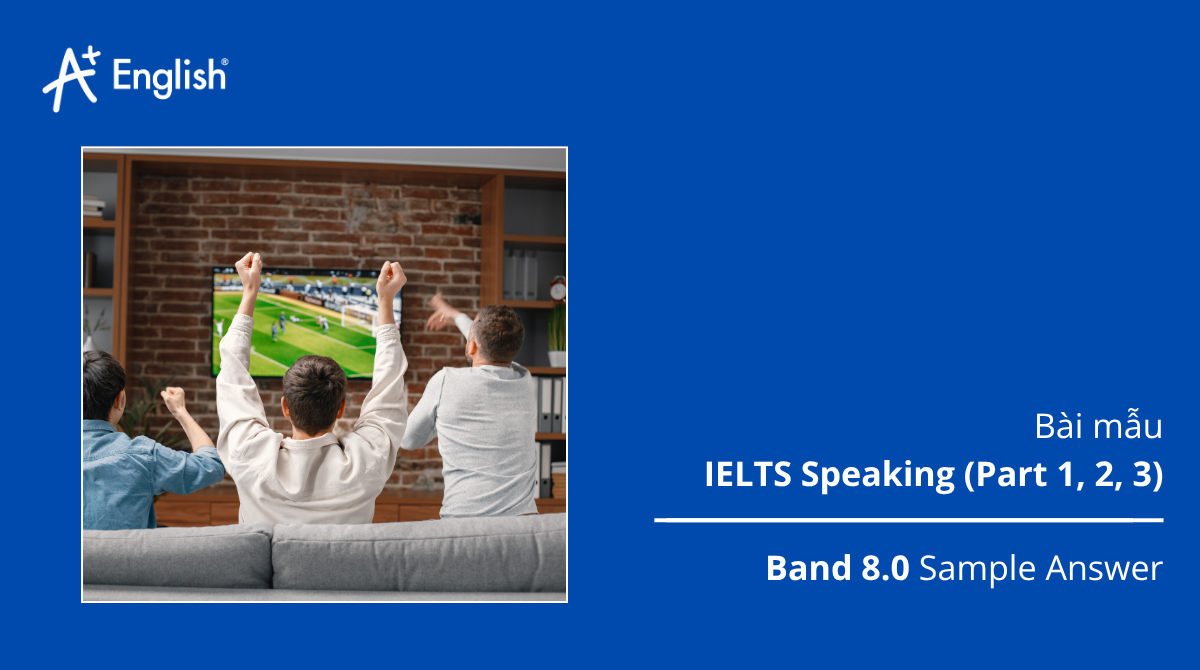
Where do you come from? Tell me about the place you grew up In. What did young people do in their free time there? How popular is sport in your country? Do most people play sport or watch it on TV? Why? Did you do any sport when you were a child? Which? Do you play any sport now? Why / Why not? Is sport important for people today? Why / Why not? |
| Task 2:
Describe a person that you met recently and liked.You should say: who this person is what you were doing at the time how you met him / her Explain why you liked this person. |
| Task 3 :
How do people usually meet new friends where you live? Is it easier for adults or children to make new friends? Why? How are relationships with friends different from relationships at work / college? Is it possible for people to be close friends with their boss or teacher? Why / Why not? Some people think that friends can never be as important as family. Do you agree? How are responsibilities towards friends and family different? Will the relative importance of friends and family change in future societies? |
Source: IELTS Practice test Plus 2 TEST 3
2. Phân tích câu hỏi – Lập dàn ý (Analyze the topic – Outline)
Task 1
Where do you come from?
Tôi đến từ đâu, giới thiệu ngắn gọn về quê hương (thành phố, vùng miền).
Tell me about the place you grew up in.
Miêu tả nơi mình lớn lên: yên bình, nhộn nhịp, nhiều kỷ niệm…
What did young people do in their free time there?
Người trẻ thường làm gì lúc rảnh: chơi thể thao, đi cafe, học thêm…
How popular is sport in your country?
Thể thao có phổ biến không? Môn nào được yêu thích?
Do most people play sport or watch it on TV? Why?
Người ta chơi hay xem thể thao? Lý do: giải trí, thiếu thời gian…
Did you do any sport when you were a child? Which?
Hồi nhỏ có chơi thể thao không? Chơi môn gì?
Do you play any sport now? Why / Why not?
Hiện tại có chơi thể thao không? Vì sao?
Is sport important for people today? Why / Why not?
Thể thao có quan trọng không? Vì sức khỏe, xã hội, tinh thần…
Task 2
Who this person is
Người đó là ai (bạn mới, đồng nghiệp, hàng xóm…)
What you were doing at the time
Gặp trong hoàn cảnh nào: đi học, đi làm, du lịch…
How you met him / her
Gặp qua ai, tình cờ hay có kế hoạch trước?
Task 3
How do people usually meet new friends where you live?
Qua trường học, công việc, mạng xã hội…
Is it easier for adults or children to make new friends? Why?
Trẻ dễ hơn vì ít lo lắng, người lớn có ít cơ hội…
How are relationships with friends different from relationships at work / college?
Bạn bè thân thiết hơn, thoải mái hơn; công việc thì lịch sự, giữ khoảng cách.
Is it possible for people to be close friends with their boss or teacher? Why / Why not?
Có thể, nếu có chung sở thích, nhưng thường có khoảng cách quyền lực.
Some people think that friends can never be as important as family. Do you agree?
Tùy người. Gia đình quan trọng hơn với một số người, nhưng bạn bè cũng có thể rất quan trọng.
How are responsibilities towards friends and family different?
Với gia đình: trách nhiệm dài lâu, chăm sóc. Với bạn: hỗ trợ tinh thần, chia sẻ.
Will the relative importance of friends and family change in future societies?
Có thể. Xã hội hiện đại, người trẻ sống xa gia đình, bạn bè ngày càng quan trọng hơn.
3. Bài Mẫu (Sample Essay) Band 6.0+
Task 1Where do you come from?I come from Ho Chi Minh City, a big and busy city in the south of Vietnam, where life is fast-paced and very modern. Tell me about the place you grew up in.I grew up in a crowded neighborhood full of tall buildings and small shops. It’s noisy, but I’ve gotten used to the hustle and bustle. What did young people do in their free time there?Young people often go to cafes, shopping malls, or play online games at home. Some also join sports clubs or take extra classes. How popular is sport in your country?Sport is really popular in Vietnam, especially football. People watch matches together and even play on the streets or school yards. Do most people play sports or watch it on TV? Why?Most people watch sports on TV because it’s convenient and exciting, especially when watching with friends or family during important matches. Did you do any sport when you were a child? Which?Yes, I played football with my classmates during recess at school. It was fun, even though I wasn’t really good at it. Do you play any sport now? Why / Why not?ot often now, because I prefer computer games. I only play football at school during break time with my classmates for a bit of fun. Is sport important for people today? Why / Why not?Yes, because sport helps people stay healthy, make friends, and release stress after studying or working hard. It’s really beneficial. |
Task 2Let me tell you about a person I met recently and really liked. His name is Minh, and he just transferred to my school a few weeks ago. I met him during our class orientation when everyone was introducing themselves. At first, I was shy and didn’t talk to many people because I’m a bit introverted. But Minh walked over to me and said he liked my backpack, which surprised me. We started talking and found out that we both enjoy the same online games, like Free Fire and Roblox. That was an instant connection. We even exchanged gamer tags and played together later that evening. Minh is very friendly, easy to talk to, and always has something funny to say. His jokes are never mean, just fun. One day during break time, I was feeling down because of a bad grade. Minh noticed and cheered me up. He told me, “When life gives you lemons, make lemonade.” That really stuck with me. Since then, we’ve been hanging out more during recess and sharing stories. What I really like about Minh is that he makes me feel comfortable being myself. As someone who usually keeps things bottled up, having a friend like Minh is like a breath of fresh air. He’s not just a classmate, but someone I can trust. To be honest, meeting him was a stroke of luck. |
Task 3How do people usually meet new friends where you live?Well, let me think for a second. In Ho Chi Minh City, people usually meet new friends at school, through extracurricular activities, or sometimes online while playing games. You know, social networks like Facebook and Zalo are also common ways. Since the city is large, people often build connections through shared hobbies or mutual friends. At the end of the day, it’s all about finding common ground. Is it easier for adults or children to make new friends? Why?That’s a good question. I’d say children definitely find it easier because they are more open and less judgmental. Adults often have busy lives, work pressure, and may feel awkward starting conversations. If you think about it, kids can become friends just by playing together. For adults, making friends sometimes feels like walking on eggshells. How are relationships with friends different from relationships at work/college?Let me see… Friendships are usually built on trust, shared values, and comfort, while relationships at work or college are more formal and focused on goals. With that said, with friends, you can let your hair down, but with colleagues or classmates, you often have to maintain a professional distance, even if you’re friendly. Is it possible for people to be close friends with their boss or teacher? Why / Why not?Hmm… that’s an interesting one. I think it’s possible, but quite rare. There’s usually a power gap that makes people hesitate to open up. That being said, if both sides are mature and respectful, a genuine friendship might grow over time — especially after one leaves the role of boss or teacher. Some people think that friends can never be as important as family. Do you agree?To be honest, I think both can be important in different ways. Family is blood, and they’re always there in tough times. But then again, close friends can sometimes understand you better than family. So, it’s not about who’s more important, but about who supports you when you need it most. In a way, friends are the family we choose. How are responsibilities towards friends and family different?Let me put it this way. With family, the responsibility is usually long-term, like caring for parents or siblings — it’s more about duty. For friends, it’s more about being emotionally available, keeping promises, and supporting them in social or personal matters. So basically, both are important, just in different ways. Will the relative importance of friends and family change in future societies?Hmm… I suppose it might. As people become more independent and move for work or study, friendships might take a bigger role in their emotional life. However, family will still remain important. I mean, the balance may shift, but both will continue to be pillars in a person’s life. |
Dịch
| Task 1
Bạn đến từ đâu? Hãy kể về nơi bạn lớn lên. Giới trẻ thường làm gì vào thời gian rảnh ở đó? Thể thao có phổ biến ở nước bạn không? Phần lớn mọi người chơi thể thao hay xem trên TV? Vì sao? Bạn có chơi môn thể thao nào khi còn nhỏ không? Môn nào? Bây giờ bạn có chơi thể thao không? Vì sao / Vì sao không? Thể thao có quan trọng với con người hiện nay không? Vì sao / Vì sao không? |
| Task 2
Hãy để tôi kể cho bạn nghe về một người tôi mới gặp gần đây và rất quý mến. Tên cậu ấy là Minh, và cậu ấy mới chuyển đến trường tôi vài tuần trước. Tôi gặp Minh trong buổi định hướng lớp học khi mọi người đang tự giới thiệu bản thân. Ban đầu, tôi khá nhút nhát và không nói chuyện với nhiều người vì tôi hơi hướng nội. Nhưng Minh đã tiến đến chỗ tôi và nói rằng cậu ấy thích chiếc ba lô của tôi, điều đó khiến tôi bất ngờ. Chúng tôi bắt đầu trò chuyện và phát hiện ra rằng cả hai đều thích những trò chơi online giống nhau như Free Fire và Roblox. Đó thực sự là một sự kết nối ngay lập tức. Tối hôm đó, chúng tôi đã đổi tên game và chơi cùng nhau. Minh rất thân thiện, dễ gần và luôn có những câu chuyện hài hước để kể. Mấy câu đùa của cậu ấy không bao giờ quá trớn, chỉ đơn giản là vui thôi. Một lần trong giờ ra chơi, tôi cảm thấy buồn vì bị điểm kém. Minh nhận ra và cố gắng làm tôi vui lên. Cậu ấy nói: “Khi cuộc sống đưa cho bạn chanh, hãy làm nước chanh.” Câu nói đó thật sự khiến tôi ấn tượng. Từ lúc đó, chúng tôi thân hơn, thường xuyên trò chuyện trong giờ nghỉ. Điều tôi thực sự thích ở Minh là cậu ấy khiến tôi cảm thấy thoải mái khi là chính mình. Là một người thường hay giữ mọi thứ trong lòng, có một người bạn như Minh thực sự như một làn gió mới. Cậu ấy không chỉ là bạn cùng lớp, mà là người tôi có thể tin tưởng. Thật lòng mà nói, gặp được cậu ấy giống như một món quà may mắn. |
| Task 3 Chủ đề: Tình bạn và gia đình
Mọi người thường gặp gỡ bạn mới như thế nào ở nơi bạn sống? Người lớn hay trẻ em dễ kết bạn hơn? Vì sao? Mối quan hệ bạn bè khác gì với quan hệ ở nơi làm việc hoặc đại học? Có thể làm bạn thân với sếp hoặc giáo viên không? Vì sao? Một số người cho rằng bạn bè không bao giờ quan trọng bằng gia đình. Bạn đồng ý không? Trách nhiệm với bạn bè và gia đình khác nhau thế nào? Trong tương lai, mức độ quan trọng của bạn bè và gia đình có thay đổi không? |
4. Từ vựng (Vocabulary)
- Beneficial /ˌben.ɪˈfɪʃ.əl/ –(B2,adj): Có lợi, mang lại lợi ích
Collocations: beneficial effect (hiệu ứng có lợi), mutually beneficial (có lợi cho cả hai bên)
Example Sentence: Regular exercise is beneficial to your health.
Translation: Tập thể dục thường xuyên có lợi cho sức khỏe của bạn. - Orientation /ˌɔː.ri.enˈteɪ.ʃən/ – (B2,n): Buổi định hướng, sự định hướng
Collocations: orientation session (buổi định hướng), career orientation (định hướng nghề nghiệp)
Example Sentence: The orientation week helps new students adapt to college life.
Translation: Tuần lễ định hướng giúp sinh viên mới thích nghi với cuộc sống đại học. - Instant /ˈɪn.stənt/ – (B1,adj,n): Ngay lập tức, tức thì
Collocations: instant noodles (mì ăn liền), instant reply (phản hồi ngay lập tức)
Example Sentence: She felt an instant connection with him.
Translation: Cô ấy cảm thấy một sự kết nối tức thì với anh ta. - Introvert /ˈɪn.trə.vɜːt/ – (C1,n): Người hướng nội
Collocations: shy introvert (người hướng nội nhút nhát), natural introvert (người hướng nội bẩm sinh)
Example Sentence: As an introvert, he prefers spending time alone.
Translation: Là một người hướng nội, anh ấy thích dành thời gian một mình. - Extracurricular /ˌek.strə.kəˈrɪk.jə.lər/ – (C1,adj): Ngoại khóa
Collocations: extracurricular activities (hoạt động ngoại khóa), extracurricular involvement (sự tham gia ngoại khóa)
Example Sentence: Students are encouraged to take part in extracurricular activities.
Translation: Học sinh được khuyến khích tham gia các hoạt động ngoại khóa. - Mutual /ˈmjuː.tʃu.əl/ – (B2,adj): Lẫn nhau, chung
Collocations:mutual respect (sự tôn trọng lẫn nhau), mutual understanding (sự thấu hiểu lẫn nhau)
Example Sentence: Their friendship is based on mutual trust.
Translation: Tình bạn của họ dựa trên sự tin tưởng lẫn nhau. - Awkward /ˈɔː.kwəd/ – (B2,dj): Ngượng ngùng, khó xử
Collocations: awkward situation (tình huống khó xử), feel awkward (cảm thấy ngượng ngùng)
Example Sentence: There was an awkward silence after his comment.
Translation: Có một sự im lặng ngượng ngùng sau lời nhận xét của anh ấy. - Hesitate /ˈhez.ɪ.teɪt/ – (B2,v): Do dự, lưỡng lự
Collocations: hesitate to ask (do dự để hỏi), hesitate for a moment (do dự một lúc)
Example Sentence: Don’t hesitate to contact us if you have any questions.
Translation: Đừng ngần ngại liên hệ với chúng tôi nếu bạn có bất kỳ câu hỏi nào. - Emotional /ɪˈməʊ.ʃən.əl/ – (B2,dj): Cảm xúc, dễ xúc động
Collocations:emotional response (phản ứng cảm xúc), become emotional (trở nên xúc động)
Example Sentence: It was an emotional farewell for everyone.
Translation: Đó là một cuộc chia tay đầy cảm xúc đối với mọi người. - Sibling /ˈsɪb.lɪŋ/ – (B2,n): Anh chị em ruột
Collocations: sibling rivalry (sự ganh đua giữa anh chị em), older/younger sibling (anh/chị hoặc em ruột)
Example Sentence: She has two siblings, an older brother and a younger sister.
Translation: Cô ấy có hai anh chị em ruột, một anh trai và một em gái.
5. Thành ngữ (Idioms)
- Step out of (one’s) comfort zone : Bước ra khỏi vùng an toàn
Example Sentence: It taught me that stepping out of my comfort zone can lead to enjoyable experiences.
Translation: Nó dạy tôi rằng bước ra khỏi vùng an toàn có thể mang lại những trải nghiệm thú vị. - A breath of fresh air : Một làn gió mới, người mang lại cảm giác dễ chịu và mới mẻ
Example Sentence: Having a friend like Minh is like a breath of fresh air.
Translation: Có một người bạn như Minh giống như một làn gió mới. - When life gives you lemons, make lemonade : Biến điều tồi tệ thành điều tích cực (tận dụng nghịch cảnh)
Example Sentence: He told me, “When life gives you lemons, make lemonade.”
Translation: Anh ấy nói với tôi: “Khi cuộc sống đưa cho bạn chanh, hãy làm nước chanh.” - Let your hair down: Thoải mái, thư giãn, không cần giữ hình tượng
Example Sentence: With friends, you can let your hair down.
Translation: Với bạn bè, bạn có thể thoải mái là chính mình. - Walking on eggshells: Hành xử cẩn trọng, dè dặt vì sợ làm phật lòng ai đó
Example Sentence: For adults, making friends sometimes feels like walking on eggshells.
Translation: Với người lớn, việc kết bạn đôi khi giống như bước đi trên vỏ trứng.
6. Ngữ pháp
1. “Used to + V”
- Công thức chung: used to + V (bare infinitive)
- Nghĩa tiếng Việt: Đã từng (làm gì đó trong quá khứ, hiện tại không còn)
- Bối cảnh sử dụng: “I’ve gotten used to the hustle and bustle.”
- Câu ví dụ: I used to play football every day when I was a child.
- Dịch câu: Tôi đã từng chơi bóng đá mỗi ngày khi còn nhỏ.
2. “Prefer + V-ing / to V”
- Công thức chung: prefer + V-ing / prefer + to V
- Nghĩa tiếng Việt: Thích làm gì hơn
- Bối cảnh sử dụng: “I prefer computer games.”
- Câu ví dụ: I prefer staying at home to going out.
- Dịch câu: Tôi thích ở nhà hơn là ra ngoài.
3. “Not only… but also…”
- Công thức chung: Not only + auxiliary + S + V, but also + S + V
- Nghĩa tiếng Việt: Không chỉ… mà còn…
- Bối cảnh sử dụng: He’s not just a classmate, but someone I can trust.
- Câu ví dụ: Not only did she help me study, but she also cheered me up.
- Dịch câu: Cô ấy không chỉ giúp tôi học mà còn động viên tôi nữa.
4. “When + clause, S + V” (Time clause)
- Công thức chung: When + mệnh đề chỉ thời gian, mệnh đề chính
- Nghĩa tiếng Việt: Khi…, thì…
- Bối cảnh sử dụng: “When life gives you lemons, make lemonade.”
- Câu ví dụ: When I feel sad, I usually listen to music.
- Dịch câu: Khi tôi buồn, tôi thường nghe nhạc.
5. “Make someone + adj/feel + adj”
- Công thức chung: Make + O + adj / Make + O + feel + adj
- Nghĩa tiếng Việt: Làm ai đó cảm thấy thế nào
- Bối cảnh sử dụng: “He makes me feel comfortable being myself.”
- Câu ví dụ: This movie made me feel emotional.
- Dịch câu: Bộ phim này khiến tôi cảm thấy xúc động.
7. Các hình thái thể hiện sự lưu loát
Use of Cohesive Devices (Logical Connectors, Pronouns, Conjunctions):
- Logical connectors: not only… but also, to some extent, since then, that said
- Pronouns: he, it, they, this, that
- Conjunctions: and, but, because, so, although
Spoken Language Style:
- Sử dụng cụm rút gọn hoặc câu ngắn: “To be honest, meeting him was a stroke of luck.”
- Câu cảm thán thể hiện cảm xúc: “That really stuck with me.”, “It was fun.”
- Dùng thành ngữ, tục ngữ: “When life gives you lemons, make lemonade.”
8. Phát âm
1. Meaningful Utterances (Chunks)
- Chia câu thành các cụm từ ngắn có nghĩa để giúp việc nói trôi chảy và tự nhiên hơn.
- Example:
- a big and busy city
- play online games
- an instant connection
- a breath of fresh air
Rhythm:
- Nhấn mạnh các từ quan trọng như danh từ, động từ, tính từ.
- Giảm âm các từ chức năng như giới từ, mạo từ để nói tự nhiên hơn.
- Example:
- “He’s not just a classmate, but someone I can trust.” → Giải thích: Các từ quan trọng như “living”, “great job opportunities”, “trust” được nhấn nhịp đều để truyền tải nội dung chính.
Elision:
- Dropping unnecessary sounds in casual speech to produce smoother and faster speech.
- Example:
- next day → nex day
- used to → use to
- go_to school, play_online games
3. Stress and Intonation
- Nhấn mạnh từ quan trọng để thể hiện sự quan tâm hoặc cảm xúc.
- Example:
- “To be honest, meeting him was a stroke of luck.” → Giải thích: Nhấn vào từ “really”, “stroke of luck” để thể hiện cảm xúc, ngữ điệu đi xuống khi kết thúc câu mang tính khẳng định.
Contrastive Stress
- Nhấn mạnh hai từ để làm nổi bật sự khác biệt hoặc tương phản.
- Example:
- “Family is blood, but close friends can sometimes understand you better.” → Giải thích: Nhấn vào “prefer”, “friends”, “better” để làm nổi bật sự đối lập với phần trước.
9. Bài luyện tập (Practice Exercise)
Bài tập dịch từ tiếng Việt qua tiếng Anh:
Bài tập viết lại câu:
|
KEYBài tập dịch từ tiếng Việt qua tiếng Anh
Bài tập viết lại câu:
|
Sau khi tham khảo bài mẫu IELTS Speaking – Band 6.0, A+ English hy vọng các bạn sẽ hiểu rõ cách triển khai câu trả lời, phát triển ý tưởng mạch lạc. Đồng thời, các bạn cũng sẽ thu thập thêm nhiều từ vựng, cấu trúc hay và cách diễn đạt tự nhiên để áp dụng trong kỳ thi.
Nếu bạn đang tìm một khóa học IELTS chất lượng cao, phù hợp với trình độ của mình, hãy liên hệ ngay Tại đây để được tư vấn lộ trình học cá nhân hóa và nhận những tài liệu độc quyền mới nhất!
A+ English chúc các bạn học tập hiệu quả!