A+ English xin giới thiệu đến các bạn bài mẫu IELTS Speaking band 6.0 với những câu trả lời ấn tượng và tự nhiên, giúp thí sinh ghi điểm cao trong kỳ thi.
Bài mẫu không chỉ gợi ý cách triển khai ý tưởng mạch lạc mà còn cung cấp từ vựng phong phú, cấu trúc câu đa dạng và cách diễn đạt tự nhiên, giúp bạn tự tin giao tiếp và thuyết phục giám khảo.
Hãy cùng khám phá ngay để nâng tầm kỹ năng Speaking của bạn nhé!
1. Đề bài IELTS Speaking (Assignment)
| Task 1:
Did your parents read to you when you were a child? Why/Why not? Do you read for pleasure very often? Why/Why not? What kind of books or magazines do you buy? Why/Why not? Which do you find easier, reading in English or writing in English? Why? |
| Task 2:
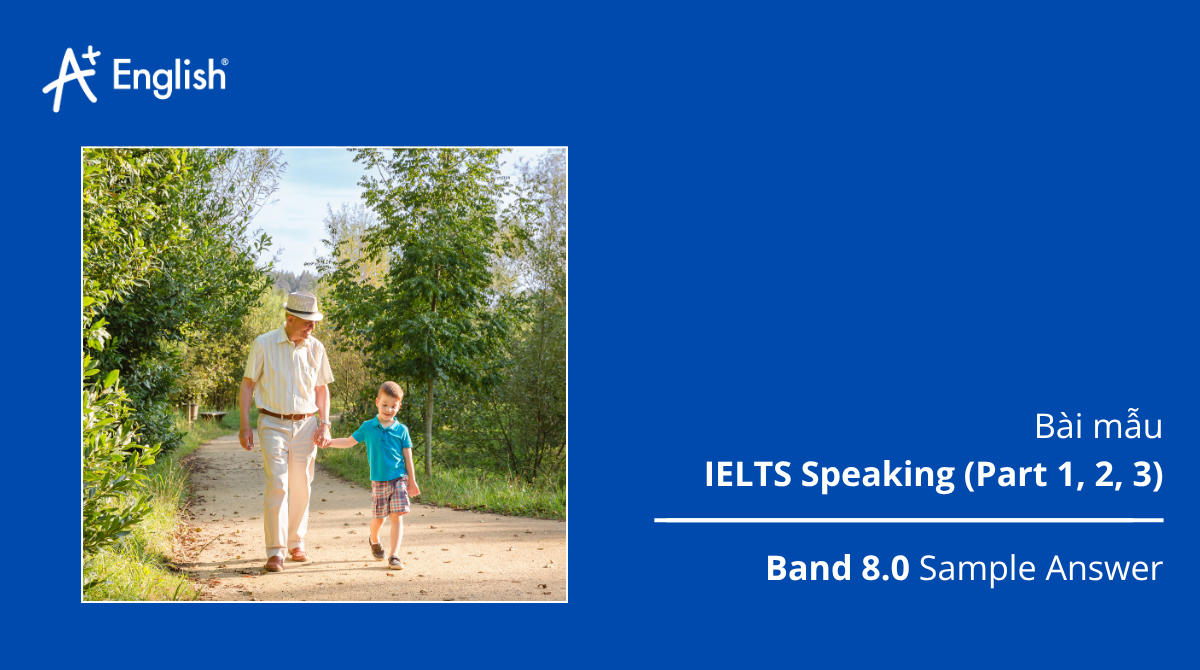
Describe an elderly person in your family who you enjoy talking to.
And explain why you enjoy talking to this person. |
| Task 3:
In your country, do most grandparents live in the same house as their children and grandchildren? Why/Why not? What are the advantages and disadvantages for grandparents of living in the same house as their children and grandchildren? Do you think some people retire from their jobs too early? Why/Why not? Why do you think some people feel unhappy when they first retire from work? What types of hobbies do people enjoy doing after they have retired from work? What kinds of problems can be caused when the proportion of elderly people in a country keeps rising? In what ways might the lives of elderly people be different in the future? Why/Why not? |
Source: IELTS Practice test Plus 3 TEST 3
2. Phân tích câu hỏi – Lập dàn ý (Analyze the topic – Outline)
Task 1
Did your parents read to you when you were a child? Why/Why not?
Có / Không. Ví dụ: Cha/mẹ đọc truyện cổ tích trước khi ngủ gắn kết tình cảm, giúp phát triển trí tưởng tượng.
Do you read for pleasure very often? Why/Why not?
Có: đọc tiểu thuyết, truyện ngắn để thư giãn.
Không: bận rộn, thích các hoạt động giải trí khác hơn.
What kind of books or magazines do you buy? Why/Why not?
Sách phát triển bản thân, truyện trinh thám, tạp chí du lịch phù hợp sở thích, giúp mở rộng kiến thức.
Which do you find easier, reading in English or writing in English? Why?
Đọc dễ hơn: hiểu ý, học từ vựng.
Viết khó hơn: phải nghĩ ý tưởng, ngữ pháp chính xác.
Task 2
Who the person is: Người: ông/bà/cha/mẹ.
What he/she is like: Tính cách: hiền hậu, hiểu biết, kể chuyện hay.
How often you see him/her: Gặp: thường xuyên vào cuối tuần hoặc hàng ngày.
Why you enjoy talking to this person: Lý do thích nói chuyện: học hỏi kinh nghiệm sống, cảm thấy ấm áp và được yêu thương.
Task 3
In your country, do most grandparents live in the same house as their children and grandchildren? Why/Why not?
Có: truyền thống gia đình gắn bó.
Không: thế hệ mới muốn sống riêng, tự lập.
What are the advantages and disadvantages for grandparents of living in the same house as their children and grandchildren?
Lợi: gần gũi gia đình, giúp chăm cháu.
Hại: thiếu riêng tư, khác biệt thế hệ.
Do you think some people retire from their jobs too early? Why/Why not?
Có: chưa tận dụng hết khả năng, kinh nghiệm.
Không: cần nghỉ ngơi, tận hưởng cuộc sống.
Why do you think some people feel unhappy when they first retire from work?
Mất thói quen làm việc, cảm giác vô dụng, cô đơn.
What types of hobbies do people enjoy doing after they have retired from work?
Làm vườn, du lịch, chơi thể thao nhẹ, đọc sách, chơi với cháu.
What kinds of problems can be caused when the proportion of elderly people in a country keeps rising?
Gánh nặng tài chính (lương hưu, y tế), thiếu lao động trẻ, chi phí chăm sóc cao.
In what ways might the lives of elderly people be different in the future? Why/Why not?
Sống lâu hơn, khỏe hơn nhờ y tế; công nghệ giúp giao tiếp, giải trí tốt hơn.
3. Bài Mẫu (Sample Essay) Band 6.0+
Task 1Did your parents read to you when you were a child? Why/Why not?No, my parents didn’t read to me because they were often busy with work. I usually watched cartoons or played with toys before going to bed instead Do you read for pleasure very often? Why/Why not?Not really. I prefer playing games like Free Fire or Roblox. Reading is okay, but it’s hard for me to focus for a long time. What kind of books or magazines do you buy? Why/Why not?I don’t buy books or magazines because I mostly read online. If I read, I prefer short articles about games or fun facts on my phone. Which do you find easier, reading in English or writing in English? Why?I think reading in English is easier. I can guess the meaning from the context, but writing needs grammar and spelling, which I’m still practicing. |
Task 2I would like to talk about my grandfather, who is one of the elderly people I enjoy talking to. He is about 70 years old and lives with us in the same house in Ho Chi Minh City. Even though I don’t go out much, I still spend some time with him at home, especially after dinner or during weekends. He is a very calm and kind person. He always tells me stories about his childhood, about life in the past when there were no phones or computers. I find those stories interesting and fun to listen to. Sometimes he also gives me advice about school or life. Even though I’m quite introverted, I feel comfortable talking to him because he always listens and never judges me. We usually talk while watching TV or eating together. He enjoys traditional Vietnamese music and often explains the meaning of the lyrics to me. I think it’s really cool that he knows so much. He also sometimes helps me cook simple dishes, and we laugh a lot when things go wrong. To sum up, my grandfather is someone I really respect and enjoy spending time with. Talking to him is both relaxing and meaningful. He always teaches me something new, and I feel lucky to have him in my life. |
Task 3In your country, do most grandparents live in the same house as their children and grandchildren? Why/Why not?Hmm, let me think… Yes, in Vietnam, many grandparents still live with their children. It’s really part of our tradition and family culture. You know, living together helps them feel less lonely, and they can also help take care of the grandchildren. But nowadays, I guess some young families prefer to live separately for more independence and space. What are the advantages and disadvantages for grandparents of living in the same house as their children and grandchildren?Well, I suppose one big advantage is that grandparents feel more connected and cared for. They can share advice and help raise the kids, which is quite meaningful. But on the other hand, different generations might not always agree on things, and that can lead to arguments. Also, I think lack of privacy can be an issue—for both the grandparents and the parents. Do you think some people retire from their jobs too early? Why/Why not?That’s an interesting question. In some cases, yes—I think some people retire too early and end up feeling bored at home, especially if they don’t have a clear plan for their time. They might still have the energy and experience to work. But then again, some people retire early because of health problems or stress, so they really need rest and peace. Why do you think some people feel unhappy when they first retire from work?Hmm, I’d say it’s mainly because after retirement, people suddenly have a lot of free time but no clear routine. They might miss their coworkers or the feeling of being useful. If they don’t have hobbies or family around, it can feel quite lonely and boring. That’s probably why some retirees end up feeling unhappy or even depressed. What types of hobbies do people enjoy doing after they have retired from work?Let me think for a second… Many retired people enjoy simple hobbies like gardening, walking, or cooking. Some of them join clubs or try something new, like painting or playing a musical instrument. Others just spend more time with their families or go travelling. I think having a hobby is really important—it helps keep their minds active and makes life more enjoyable. What kinds of problems can be caused when the proportion of elderly people in a country keeps rising?Well, I guess there are a few problems. First of all, when there are too many elderly people, the government has to spend more money on pensions and healthcare. Also, with fewer young people working, it can slow down the economy. Hospitals might become overcrowded, and families might struggle to take care of elderly relatives without enough support. In what ways might the lives of elderly people be different in the future? Why/Why not?That’s a really interesting point. I think in the future, elderly people might live longer and healthier lives, mostly thanks to improvements in medical technology. They might also use smartphones or other smart devices to stay connected and active. But at the same time, if society doesn’t support them well, they could still feel lonely. So I believe both families and the government will need to play a bigger role in helping them. |
Dịch
| Task 1
Khi bạn còn nhỏ, ba mẹ bạn có đọc sách cho bạn nghe không? Tại sao/có hay không? Bạn có thường đọc sách vì sở thích không? Tại sao/có hay không? Bạn thường mua loại sách hay tạp chí nào? Tại sao/có hay không? Bạn thấy kỹ năng nào dễ hơn: đọc tiếng Anh hay viết tiếng Anh? Tại sao? |
| Task 2
Mình muốn nói về ông nội của mình, là một trong những người lớn tuổi mà mình rất thích trò chuyện. Ông khoảng 70 tuổi và sống cùng nhà với gia đình mình ở TP. Hồ Chí Minh. Dù mình không hay ra ngoài, mình vẫn dành thời gian nói chuyện với ông ở nhà, đặc biệt là sau bữa tối hoặc vào cuối tuần. Ông là người rất điềm đạm và tốt bụng. Ông thường kể cho mình nghe những câu chuyện thời thơ ấu, về cuộc sống ngày xưa khi chưa có điện thoại hay máy tính. Mình thấy những câu chuyện đó rất thú vị và vui. Đôi khi ông cũng cho mình lời khuyên về việc học hay cuộc sống. Mặc dù mình khá hướng nội, nhưng mình cảm thấy rất thoải mái khi nói chuyện với ông vì ông luôn lắng nghe và không bao giờ phán xét. Bọn mình thường trò chuyện khi xem TV hoặc ăn cơm cùng nhau. Ông rất thích nhạc truyền thống Việt Nam và thường giải thích ý nghĩa lời bài hát cho mình nghe. Mình thấy thật tuyệt vì ông biết rất nhiều thứ. Thỉnh thoảng ông cũng giúp mình nấu mấy món đơn giản, và tụi mình cười rất nhiều khi làm hỏng gì đó. Tóm lại, ông nội là người mà mình rất kính trọng và thích dành thời gian bên cạnh. Nói chuyện với ông vừa thư giãn vừa ý nghĩa. Mỗi lần như vậy mình đều học được điều gì đó mới, và mình cảm thấy rất may mắn khi có ông trong đời. |
| Task 3
Ở nước bạn, có phải hầu hết ông bà sống chung nhà với con cháu không? Tại sao/có hay không? Những lợi ích và bất lợi của việc ông bà sống cùng con cháu là gì? Bạn có nghĩ một số người nghỉ hưu quá sớm không? Tại sao/có hay không? Tại sao bạn nghĩ một số người cảm thấy không vui khi mới nghỉ hưu? Người nghỉ hưu thường thích làm những hoạt động nào? Khi tỷ lệ người già trong một quốc gia ngày càng tăng, điều đó có thể gây ra những vấn đề gì? Theo bạn, cuộc sống của người cao tuổi trong tương lai có thể khác như thế nào? Tại sao/có hay không? |
4. Từ vựng (Vocabulary)
- Analyze /ˈæn.əl.aɪz/ – (B2,v): Phân tích
Collocations: analyze data (phân tích dữ liệu). analyze results (phân tích kết quả)
Example Sentence: The scientist will analyze the samples in the lab.
Translation: Nhà khoa học sẽ phân tích các mẫu trong phòng thí nghiệm. - Approach /əˈprəʊtʃ/ – (B2,n): Phương pháp, cách tiếp cận
Collocations: a new approach (một cách tiếp cận mới), take an approach (áp dụng một phương pháp)
Example Sentence: We need a different approach to solve this problem.
Translation: Chúng ta cần một cách tiếp cận khác để giải quyết vấn đề này. - Aspect /ˈæs.pekt/ – (B2,n): Khía cạnh
Collocations: important aspect (khía cạnh quan trọng), every aspect (mọi khía cạnh)
Example Sentence: Every aspect of the project needs careful planning.
Translation: Mọi khía cạnh của dự án cần được lên kế hoạch cẩn thận. - Impact /ˈɪm.pækt/ – (B2,n): Tác động
Collocations: significant impact (tác động đáng kể), negative impact (tác động tiêu cực)
Example Sentence: The new law had a significant impact on small businesses.
Translation: Luật mới có tác động đáng kể đến các doanh nghiệp nhỏ. - Maintain /meɪnˈteɪn/ – (B2,v): Duy trì
Collocations: maintain health (duy trì sức khỏe), maintain balance (duy trì sự cân bằng)
Example Sentence: It’s important to maintain a healthy diet.
Translation: Việc duy trì chế độ ăn uống lành mạnh là quan trọng. - Require /rɪˈkwaɪər/ – (B2,v): Yêu cầu
Collocations: require attention (yêu cầu sự chú ý), require effort (yêu cầu nỗ lực)
Example Sentence: This job requires a lot of experience.
Translation: Công việc này yêu cầu nhiều kinh nghiệm. - Significant /sɪɡˈnɪf.ɪ.kənt/ – (B2,adj):Đáng kể
Collocations: significant change (sự thay đổi đáng kể), significant difference (sự khác biệt đáng kể)
Example Sentence: There has been a significant improvement in her performance.
Translation: Đã có sự cải thiện đáng kể trong hiệu suất của cô ấy. - Judge /dʒʌdʒ/ – (B2,v): Phán xét, đánh giá
Collocations: judge fairly (đánh giá công bằng), judge someone by appearance (đánh giá ai đó qua vẻ ngoài)
Example Sentence: Don’t judge people too quickly by their looks.
Translation: Đừng vội đánh giá người khác qua vẻ bề ngoài. - Retirement /rɪˈtaɪə.mənt/ –(B2,n): Sự nghỉ hưu
Collocations: early retirement (nghỉ hưu sớm), plan for retirement (lên kế hoạch nghỉ hưu)
Example Sentence: Many people feel lost after retirement if they don’t have hobbies.
Translation: Nhiều người cảm thấy lạc lõng sau khi nghỉ hưu nếu họ không có sở thích. - Argument /ˈɑːɡ.jə.mənt/ – (B2,n): Cuộc tranh cãi, sự tranh luận
Collocations: heated argument (cuộc tranh cãi gay gắt). win/lose an argument (thắng/thua trong một cuộc tranh luận)
Example Sentence: A small argument can cause tension in the family.
Translation: Một cuộc tranh cãi nhỏ có thể gây căng thẳng trong gia đình.
5. Thành ngữ (Idioms)
- Feel under the weather: Cảm thấy không khỏe
Example Sentence: I’m feeling under the weather today, so I’ll stay home.
Translation: Hôm nay tôi cảm thấy không khỏe, nên tôi sẽ ở nhà. - Once in a blue moon : Rất hiếm khi
Example Sentence: He visits his grandparents once in a blue moon.
Translation: Anh ấy hiếm khi thăm ông bà của mình. - Break the ice: Phá vỡ sự ngại ngùng ban đầu
Example Sentence: Telling a joke can help break the ice at parties.
Translation: Kể một câu chuyện cười có thể giúp phá vỡ sự ngại ngùng ban đầu tại các bữa tiệc. - Cost an arm and a leg: Rất đắt đỏ
Example Sentence: That designer bag costs an arm and a leg.
Translation: Chiếc túi hàng hiệu đó rất đắt đỏ. - Hit the nail on the head: Nói đúng trọng tâm
Example Sentence: You really hit the nail on the head with your analysis.
Translation: Bạn thực sự đã nói đúng trọng tâm với phân tích của mình.
6. Ngữ pháp
1. Even though + S + V (Mệnh đề nhượng bộ)
- Công thức chung: Even though + S + V
- Nghĩa tiếng Việt: Mặc dù…
- Bối cảnh sử dụng: Dùng để thể hiện sự tương phản giữa hai mệnh đề
- Câu ví dụ: Even though I’m quite introverted, I feel comfortable talking to him.
- Dịch câu: Mặc dù tôi khá hướng nội, tôi vẫn cảm thấy thoải mái khi nói chuyện với ông.
2. One of + the + so sánh nhất + danh từ số nhiều
- Công thức chung: One of + the + adj (so sánh nhất) + plural noun
- Nghĩa tiếng Việt: Một trong những … nhất
- Bối cảnh sử dụng: Nhấn mạnh sự nổi bật trong một nhóm
- Câu ví dụ: He is one of the kindest people I know.
- Dịch câu: Ông là một trong những người tốt bụng nhất mà tôi biết.
3. Prefer + V-ing/N + to + V-ing/N (Diễn đạt sở thích)
- Công thức chung: Prefer + danh động từ/danh từ + to + danh động từ/danh từ
- Nghĩa tiếng Việt: Thích cái gì hơn cái gì
- Bối cảnh sử dụng: Nói về sự ưu tiên hoặc lựa chọn giữa hai hành động/sự vật
- Câu ví dụ: I prefer reading short articles to buying books.
- Dịch câu: Tôi thích đọc các bài ngắn hơn là mua sách.
4. The reason why + S + V + is that… (Mệnh đề lý do)
- Công thức chung: The reason why + S + V + is that + mệnh đề
- Nghĩa tiếng Việt: Lý do mà… là vì…
- Bối cảnh sử dụng: Giải thích nguyên nhân cụ thể của một sự việc
- Câu ví dụ: The reason why some people feel unhappy after retirement is that they miss their routine.
- Dịch câu: Lý do một số người cảm thấy không vui sau khi nghỉ hưu là vì họ nhớ thói quen thường ngày.
5. If + S + V (hiện tại), S + will/can + V (Câu điều kiện loại 1)
- Công thức chung: If + S + V (hiện tại), S + will/can + V
- Nghĩa tiếng Việt: Nếu… thì sẽ…
- Bối cảnh sử dụng: Nói về điều kiện thực tế có thể xảy ra trong tương lai
- Câu ví dụ: If society doesn’t support them well, they might still feel lonely.
- Dịch câu: Nếu xã hội không hỗ trợ họ tốt, họ vẫn có thể cảm thấy cô đơn.
7. Các hình thái thể hiện sự lưu loát
Use of Cohesive Devices (Logical Connectors, Pronouns, Conjunctions):
- Logical connectors: To sum up, On the other hand, In the future
- Pronouns: he, them, it
- Conjunctions: Even though, Because, So, But, When
Spoken Language Style:
- Sử dụng câu ngắn, đơn giản nhưng đầy cảm xúc → phù hợp phong cách nói: “He always listens and never judges me.” (đơn giản nhưng ấm áp)
- Cách diễn đạt tự nhiên như: “We laugh a lot when things go wrong.” – dùng từ thông dụng, không quá trang trọng.
8. Phát âm
1. Meaningful Utterances (Chunks)
- Chia câu thành các cụm từ ngắn có nghĩa để giúp việc nói trôi chảy và tự nhiên hơn.
- Example:
- “Even though I’m quite introverted”
- “He always listens / and never judges me”
- “In the future, elderly people might live longer”
Rhythm:
- Nhấn mạnh các từ quan trọng như danh từ, động từ, tính từ.
- Giảm âm các từ chức năng như giới từ, mạo từ để nói tự nhiên hơn.
- Example:
- HE always TELLS me STORies about his CHILDhood→ Nhấn mạnh vào: He – tells – stories – childhood. Những từ như “always”, “me”, “about”, “his” được nói nhanh và nhẹ hơn
- MANy reTIRED PEOple enJOY GARDening, WALKing, or COOKing → Nhấn vào các hoạt động chính: enjoy – gardening – walking – cooking
Elision/Linking
- Dropping unnecessary sounds in casual speech to produce smoother and faster speech.
- Example:
- “laugh a” → “lafa” → Âm /f/ được giữ, nhưng âm /h/ trong “a” nhẹ, gần như nuốt mất.
- “go wrong” cũng có thể phát âm liên tục như /gəʊrɒŋ/
- “played with” → /pleɪd_wɪð/
- “to bed” → /tə bed/ (nối âm /ə/ và /b/)
Stress and Intonation
- Nhấn mạnh từ quan trọng để thể hiện sự quan tâm hoặc cảm xúc.
- Example:
- “Reading is okay, but it’s hard for me to focus for a long time.” (ngữ điệu giảm dần ở phần cuối thể hiện sự thật)
- “If they don’t have hobbies or family nearby, it can feel very lonely and boring.”
Contrastive Stress
- Nhấn mạnh hai từ để làm nổi bật sự khác biệt hoặc tương phản.
- Example:
- “I prefer playing games like Free Fire to reading.” (nhấn vào to)
- “They might still have the energy and experience to work.” (nhấn to work để tương phản với nghỉ hưu)
9. Bài luyện tập (Practice Exercise)
Bài tập dịch từ tiếng Việt qua tiếng Anh:
Bài tập viết lại câu:
|
KEY Bài tập dịch từ tiếng Việt qua tiếng Anh:
Bài tập viết lại câu:
|
Sau khi tham khảo bài mẫu IELTS Speaking – Band 6.0, A+ English hy vọng các bạn sẽ hiểu rõ cách triển khai câu trả lời, phát triển ý tưởng mạch lạc. Đồng thời, các bạn cũng sẽ thu thập thêm nhiều từ vựng, cấu trúc hay và cách diễn đạt tự nhiên để áp dụng trong kỳ thi.
Nếu bạn đang tìm một khóa học IELTS chất lượng cao, phù hợp với trình độ của mình, hãy liên hệ ngay Tại đây để được tư vấn lộ trình học cá nhân hóa và nhận những tài liệu độc quyền mới nhất!
A+ English chúc các bạn học tập hiệu quả!