A+ English xin giới thiệu đến các bạn bài mẫu IELTS Speaking band 8.0 với những câu trả lời ấn tượng và tự nhiên, giúp thí sinh ghi điểm cao trong kỳ thi.
Bài mẫu không chỉ gợi ý cách triển khai ý tưởng mạch lạc mà còn cung cấp từ vựng phong phú, cấu trúc câu đa dạng và cách diễn đạt tự nhiên, giúp bạn tự tin giao tiếp và thuyết phục giám khảo.
Hãy cùng khám phá ngay để nâng tầm kỹ năng Speaking của bạn nhé!
1. Đề bài IELTS Speaking (Assignment)
| PART 1
People you study/work with Who do you spend most time studying/working with? [Why?] What kinds of things do you study/work on with other people? [Why?] Are there times when you study/work better by yourself? [Why/Why not?] ls it important to like the people you study/work with? [Why/Why not?] |
| PART 2
Describe a tourist attraction you enjoyed visiting. You should say:
and explain why you enjoyed visiting this tourist attraction |
| PART 3 Discussion topics:
Different kinds of tourist attractions Example questions: What are the most popular tourist attractions in your country? How do the types of tourist attractions that younger people like to visit compare with those that older people like to visit? Do you agree that some tourist attractions (e.g. national museums/galleries) should befree to visit? The importance of international tourism Example questions: Why is tourism important to a country? What are the benefits to individuals of visiting another country as tourists? How necessary is it for tourists to learn the language of the country they’re visiting? |
Source: CAMBRIDGE 16 TEST 1
2. Phân tích câu hỏi – Lập dàn ý (Analyze the topic – Outline)
PART 1 People you study/work with
Who do you spend most time studying/working with? [Why?]
- Main idea: Close classmates/colleagues.
- Reason: Share similar goals, responsibilities, and tasks.
What kinds of things do you study/work on with other people? [Why?]
- Main idea: Group projects, problem-solving, brainstorming.
- Reason: Collaboration brings diverse ideas and efficient solutions.
Are there times when you study/work better by yourself? [Why/Why not?]
- Main idea: Yes, during tasks requiring focus or creativity.
- Reason: Fewer distractions and more independence.
Is it important to like the people you study/work with? [Why/Why not?]
- Main idea: Yes, it creates a positive environment.
- Reason: Better teamwork, motivation, and communication.
PART 2: Describe a tourist attraction you enjoyed visiting
What this tourist attraction is
- Example: A famous historical site, nature spot, or amusement park.
When and why you visited it
- Time: A recent holiday or a special occasion.
- Reason: To relax, explore culture, or spend time with family/friends.
What you did there
- Activities: Sightseeing, taking photos, learning history, or enjoying local food.
Why you enjoyed visiting this tourist attraction
- Reasons: Unique experience, beautiful scenery, or meaningful memories.
PART 3: Discussion topics
Different kinds of tourist attractions
- Most popular tourist attractions in your country:
Cultural sites, natural landmarks, entertainment venues (e.g., temples, beaches, amusement parks). - Comparing younger vs. older people’s preferences:
- Younger people: Prefer modern attractions (e.g., theme parks, nightlife).
- Older people: Favor cultural/historical sites for learning and relaxation.
- Should some tourist attractions be free?
- Agree: Encourages public education and accessibility for all.
- Disagree: Maintenance costs require funding from visitors.
The importance of international tourism
- Why is tourism important to a country?
- Economic benefits: Increases revenue, creates jobs.
- Cultural exchange: Promotes understanding and appreciation.
- Benefits to individuals of visiting another country as tourists:
- Exposure to new cultures, languages, and cuisines.
- Personal growth and memorable experiences.
- How necessary is it for tourists to learn the language?
- Necessary for basic communication and respect for locals.
- Not always essential with guides or translation tools.
3. Bài Mẫu (Sample Essay) Band 8.0+
Task 1Who do you spend most time studying/working with? [Why?]I usually study with my classmates because we often have group projects and help each other out. What kinds of things do you study/work on with other people? [Why?]Mostly assignments and presentations. It’s easier when we divide the work and share ideas. Are there times when you study/work better by yourself? [Why/Why not?]Yes, especially when studying for exams. I can focus more and don’t get distracted. Is it important to like the people you study/work with? [Why/Why not?]Yes, because it creates a good atmosphere and makes teamwork smoother. |
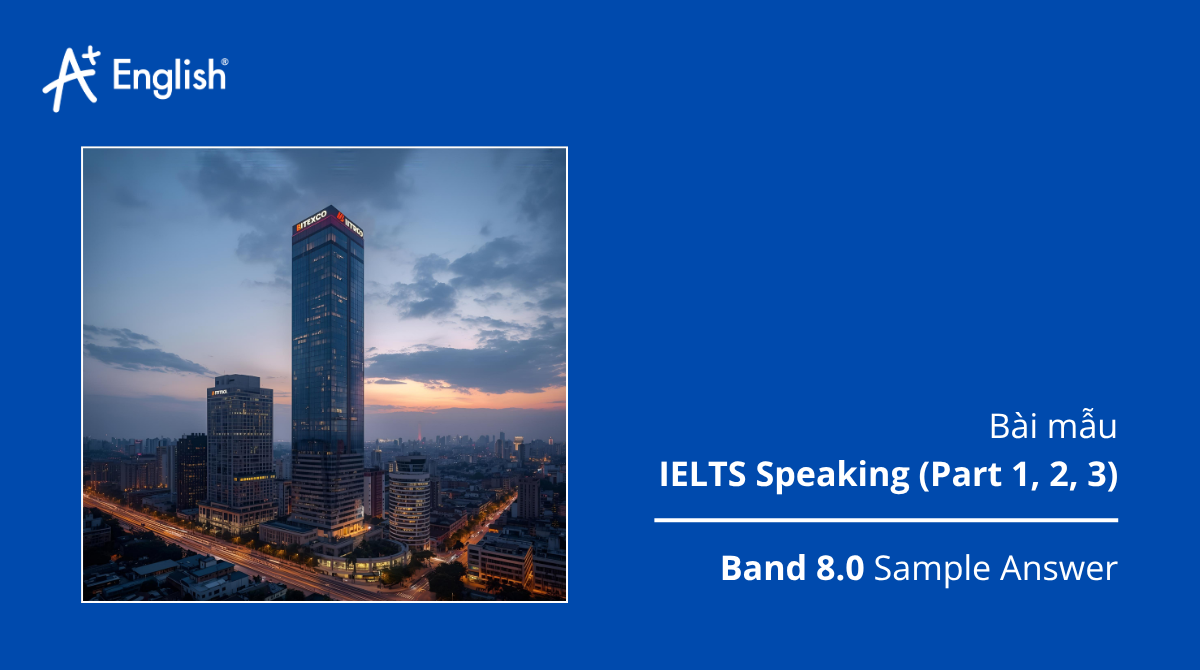
Task 2One of the most memorable tourist attractions I’ve visited is the Bitexco Financial Tower in Ho Chi Minh City. I visited it last year with my family during a school break. Since I’m not someone who goes out often, this was a chance to step out of my comfort zone. The experience was truly “a breath of fresh air.” We took an elevator to the observation deck, and the view was nothing short of breathtaking. From there, I could see the bustling city with its mix of modern skyscrapers and traditional houses. It was as if “I had the world at my feet.” I also got to try some Vietnamese desserts at a café inside the tower, which was “the icing on the cake.”I enjoyed visiting this place because it gave me a new perspective on the city I’ve grown up in. It was like seeing Ho Chi Minh City through a completely different lens. Even though I’m more of a homebody, moments like these remind me that “a change is as good as a rest.” Overall, it was a perfect blend of relaxation and excitement, and I’d definitely recommend it to anyone visiting the city. |
Task 3Different kinds of tourist attractionsWhat are the most popular tourist attractions in your country?In Vietnam, places like Ha Long Bay, Hoi An Ancient Town, and the Cu Chi Tunnels are quite popular. Each of them offers something unique—Ha Long Bay is famous for its stunning natural beauty, while Hoi An reflects the country’s rich history. Cu Chi Tunnels, on the other hand, highlight the resilience of the Vietnamese people. These attractions “draw people like moths to a flame” because of their beauty and cultural significance. How do the types of tourist attractions that younger people like to visit compare with those that older people like to visit?Younger people usually prefer more modern, exciting attractions, like amusement parks or trendy cafés. Older people, however, often go for cultural or historical sites that offer peace and knowledge. It’s “like chalk and cheese” because their interests are so different. Do you agree that some tourist attractions (e.g., national museums/galleries) should be free to visit?I agree to some extent. Free entry to museums and galleries ensures that everyone has access to knowledge and culture. But, as they say, “there’s no such thing as a free lunch.” Maintenance costs are high, so donations or affordable tickets might be necessary. The importance of international tourismWhy is tourism important to a country?Tourism is “the lifeblood” of many economies, including Vietnam’s. It generates income, creates jobs, and promotes cultural exchange. It’s also a great way to showcase a country’s heritage to the world. What are the benefits to individuals of visiting another country as tourists?Traveling abroad broadens horizons and allows people to “see the world through different eyes.” It also helps individuals learn new cultures and languages, which can be enriching and fulfilling. How necessary is it for tourists to learn the language of the country they’re visiting?It’s not strictly necessary, but learning basic phrases is always a “feather in one’s cap.” It shows respect to the locals and makes communication easier. However, with translation apps, language barriers are not “the end of the world.”
|
Dịch
| Task 1
Who do you spend most time studying/working with? [Why?] What kinds of things do you study/work on with other people? [Why?] Are there times when you study/work better by yourself? [Why/Why not?] Is it important to like the people you study/work with? [Why/Why not?] |
| Task 2
Một trong những điểm du lịch đáng nhớ nhất mà tôi từng ghé thăm là Tòa tháp Tài chính Bitexco ở Thành phố Hồ Chí Minh. Tôi đã đến đó vào năm ngoái cùng gia đình trong kỳ nghỉ học. Vì tôi không phải là người thường xuyên đi ra ngoài, đây là cơ hội để bước ra khỏi vùng an toàn của mình. Trải nghiệm này thực sự là một “làn gió mới”. Chúng tôi đi thang máy lên đài quan sát, và quang cảnh thật sự khiến tôi kinh ngạc. Từ đó, tôi có thể nhìn thấy thành phố nhộn nhịp với sự pha trộn giữa các tòa nhà chọc trời hiện đại và những ngôi nhà truyền thống. Như thể tôi đang đứng trên đỉnh thế giới. Tôi cũng đã thử một số món tráng miệng Việt Nam tại một quán cà phê trong tòa tháp, điều đó thực sự là “phần tuyệt nhất của chuyến đi.”Tôi thích thăm nơi này vì nó mang lại cho tôi một góc nhìn mới về thành phố nơi tôi lớn lên. Như thể tôi đang nhìn Thành phố Hồ Chí Minh qua một lăng kính hoàn toàn khác. Mặc dù tôi là người thích ở nhà, những khoảnh khắc như thế này nhắc nhở tôi rằng “thay đổi cũng tốt như nghỉ ngơi.” Tổng thể, đó là sự kết hợp hoàn hảo giữa thư giãn và phấn khích, và tôi chắc chắn sẽ giới thiệu nơi này cho bất cứ ai đến thăm thành phố. |
| Task 3
Different kinds of tourist attractions What are the most popular tourist attractions in your country? How do the types of tourist attractions that younger people like to visit compare with those that older people like to visit? Do you agree that some tourist attractions (e.g., national museums/galleries) should be free to visit? The importance of international tourism Why is tourism important to a country? What are the benefits to individuals of visiting another country as tourists? How necessary is it for tourists to learn the language of the country they’re visiting? |
4. Từ vựng (Vocabulary)
- Memorable /ˈmem.ər.ə.bəl/ B2 (adj): đáng nhớ
Collocations:memorable experience (trải nghiệm đáng nhớ),memorable moment (khoảnh khắc đáng nhớ)
Câu ví dụ: Visiting the Bitexco Tower was a truly memorable experience.
Dịch câu: Tham quan tòa nhà Bitexco thực sự là một trải nghiệm đáng nhớ. - Perspective /pəˈspek.tɪv/ C1 (n): quan điểm, góc nhìn
Collocations:new perspective (góc nhìn mới),different perspective (góc nhìn khác biệt)
Câu ví dụ: The visit gave me a new perspective on my hometown.
Dịch câu: Chuyến đi đã mang lại cho tôi một góc nhìn mới về quê hương mình. - Observation /ˌɒb.zəˈveɪ.ʃən/ C1 (n): sự quan sát
Collocations:keen observation (sự quan sát tinh tường),scientific observation (quan sát khoa học)
Câu ví dụ: From the observation deck, the city looked absolutely stunning.
Dịch câu: Từ đài quan sát, thành phố trông thật sự tuyệt đẹp. - Resilience /rɪˈzɪl.i.əns/ C1 (n): sự kiên cường
Collocations:human resilience (sự kiên cường của con người),resilience to stress (khả năng chịu đựng áp lực)
Câu ví dụ: The Cu Chi Tunnels highlight the resilience of the Vietnamese people.
Dịch câu: Địa đạo Củ Chi thể hiện sự kiên cường của người dân Việt Nam.
- Showcase /ˈʃəʊ.keɪs/ C1 (v): trưng bày, giới thiệu
Collocations:showcase talents (giới thiệu tài năng),showcase culture (giới thiệu văn hóa)
Câu ví dụ: Tourism is a great way to showcase a country’s heritage.
Dịch câu: Du lịch là một cách tuyệt vời để giới thiệu di sản của một quốc gia. - Breathtaking /ˈbreθˌteɪ.kɪŋ/ B2 (adj): ngoạn mục, đẹp đến ngỡ ngàng
Collocations:breathtaking view (cảnh đẹp ngoạn mục),breathtaking scenery (phong cảnh đẹp đến ngỡ ngàng)
Câu ví dụ: The view from the observation deck was absolutely breathtaking.
Dịch câu: Cảnh nhìn từ đài quan sát thực sự ngoạn mục. - Perspective /pəˈspek.tɪv/ C1 (n): quan điểm, góc nhìn
Collocations:new perspective (góc nhìn mới),global perspective (góc nhìn toàn cầu)
Câu ví dụ: Visiting cultural sites helps people gain a global perspective.
Dịch câu: Thăm các địa điểm văn hóa giúp mọi người có được góc nhìn toàn cầu.
- Economic /ˌiː.kəˈnɒm.ɪk/ B2 (adj): thuộc về kinh tế
Collocations:economic growth (tăng trưởng kinh tế),economic benefits (lợi ích kinh tế)
Câu ví dụ: Tourism contributes greatly to economic growth.
Dịch câu: Du lịch đóng góp rất lớn vào tăng trưởng kinh tế. - Horizon /həˈraɪ.zən/ C1 (n): tầm nhìn, chân trời
Collocations:broaden horizons (mở rộng tầm nhìn),on the horizon (sắp xảy ra)
Câu ví dụ: Traveling abroad helps people broaden their horizons.
Dịch câu: Đi du lịch nước ngoài giúp mọi người mở rộng tầm nhìn. - Accessible /əkˈses.ə.bəl/ B2 (adj): có thể tiếp cận, dễ sử dụng
Collocations:accessible to the public (công chúng có thể tiếp cận),easily accessible (dễ dàng tiếp cận)
Câu ví dụ: Museums should be accessible to everyone regardless of income.
Dịch câu: Các bảo tàng nên dễ tiếp cận với mọi người, bất kể thu nhập.
5. Thành ngữ (Idioms)
- A breath of fresh air : Một điều gì đó mới mẻ và thú vị
Câu ví dụ: Visiting the Bitexco Tower was a breath of fresh air for me.
Dịch câu: Tham quan tòa nhà Bitexco là một điều mới mẻ đối với tôi. - The icing on the cake: Điều làm cho một thứ vốn đã tốt trở nên hoàn hảo hơn
Câu ví dụ: Trying Vietnamese desserts was the icing on the cake during my visit.
Dịch câu: Thử các món tráng miệng Việt Nam là điều làm cho chuyến đi của tôi trở nên hoàn hảo. - A change is as good as a rest : Thay đổi đôi khi cũng tốt như nghỉ ngơi
Câu ví dụ: Although I’m introverted, this trip reminded me that a change is as good as a rest.
Dịch câu: Dù tôi hướng nội, chuyến đi này nhắc nhở tôi rằng thay đổi đôi khi cũng tốt như nghỉ ngơi. - Like chalk and cheese : Hoàn toàn khác biệt
Câu ví dụ: The preferences of younger and older people are like chalk and cheese.
Dịch câu: Sở thích của người trẻ và người lớn tuổi hoàn toàn khác biệt. - A feather in one’s cap : Một thành tích đáng tự hào
Câu ví dụ: Learning a few local phrases is always a feather in your cap when traveling.
Dịch câu: Học vài câu địa phương luôn là một thành tích đáng tự hào khi đi du lịch.
6. Ngữ pháp
Cấu trúc 1: Conditional Sentences Type 2
- Công thức chung: If + past simple, would + base verb
- Nghĩa: Điều kiện không có thật ở hiện tại hoặc giả định một tình huống không thực tế.
- Bối cảnh sử dụng: Dùng khi nói về những trải nghiệm không phổ biến hoặc những tình huống giả định.
- Câu ví dụ: If I went out more often, I would have more experiences with outdoor activities.
- Dịch câu: Nếu tôi ra ngoài thường xuyên hơn, tôi sẽ có nhiều trải nghiệm hơn với các hoạt động ngoài trời.
Cấu trúc 2: Relative Clauses
- Công thức chung: Noun + who/that/which + verb
- Nghĩa: Mệnh đề quan hệ dùng để bổ sung thông tin cho danh từ đứng trước.
- Bối cảnh sử dụng: Miêu tả thêm thông tin về người hoặc vật.
- Câu ví dụ: The Cu Chi Tunnels, which highlight the resilience of Vietnamese people, are very popular.
- Dịch câu: Địa đạo Củ Chi, nơi thể hiện sự kiên cường của người dân Việt Nam, rất nổi tiếng.
Cấu trúc 3: Emphatic Structures – It is/was … that
- Công thức chung: It is/was + focus + that + clause
- Nghĩa: Nhấn mạnh một thành phần trong câu.
- Bối cảnh sử dụng: Dùng khi muốn làm nổi bật một đối tượng hoặc hành động cụ thể.
- Câu ví dụ: It was the view from the top that made the visit unforgettable.
- Dịch câu: Chính cảnh từ trên cao đã làm cho chuyến tham quan trở nên không thể quên.
Cấu trúc 4: Gerund as Subject
- Công thức chung: Gerund + verb
- Nghĩa: Sử dụng danh động từ làm chủ ngữ của câu.
- Bối cảnh sử dụng: Dùng khi nói về sở thích hoặc thói quen.
- Câu ví dụ: Traveling abroad broadens horizons and enriches knowledge.
- Dịch câu: Du lịch nước ngoài mở rộng tầm nhìn và làm giàu kiến thức.
Cấu trúc 5: Passive Voice
- Công thức chung: Object + to be + past participle + (by agent)
- Nghĩa: Thể bị động, nhấn mạnh hành động hoặc đối tượng chịu tác động.
- Bối cảnh sử dụng: Nhấn mạnh di sản hoặc những điều đã được tạo ra.
- Câu ví dụ: Museums should be made accessible to everyone.
- Dịch câu: Các bảo tàng nên được làm cho dễ tiếp cận với tất cả mọi người.
7. Các hình thái thể hiện sự lưu loát
Use of Cohesive Devices (Liên từ và cấu trúc liên kết)
Logical Connectors:
- Because (bởi vì), although (mặc dù), however (tuy nhiên).
- Ví dụ: Although I’m introverted, this trip reminded me that a change is as good as a rest.
- Giải thích: Cụm từ “although” kết nối ý tưởng trái ngược, tăng sự mạch lạc.
Pronouns:
- It, they, this, that để thay thế danh từ, tránh lặp từ.
- Ví dụ: I visited it last year with my family.
- Giải thích: “It” thay thế “Bitexco Tower” để tránh lặp từ.
Conjunctions:
- And, but, or để nối các câu ngắn.
- Ví dụ: It was relaxing, and the view was breathtaking.
Văn phong nói
Ngắt câu (Pausing):
- Dùng dấu câu để tạo nhấn mạnh: I visited it last year. With my family.
- Giúp người nói nhấn mạnh ý chính, tạo nhịp điệu tự nhiên.
Lên và xuống giọng (Intonation):
- Lên giọng khi đặt câu hỏi: Isn’t it amazing to see the city from above?
- Xuống giọng khi đưa ra kết luận: It was a perfect experience.
Âm nối và âm đuôi:
- Nối âm giữa từ có phụ âm đứng trước và nguyên âm đứng sau: The icing_on the cake.
- Lược bỏ âm trong “casual speech”: I’m gonna visit the museum.
8. Phát âm
Chunks for Meaningful Utterances
Phrases for stress:
- Breathtaking view
- A feather in one’s cap
Chunking: Nhóm từ để dễ nói:
- “The Cu Chi Tunnels / highlight / the resilience / of Vietnamese people.”
Rhythm and Stress Timing
Nhấn mạnh từ quan trọng trong câu:
- Example: “The view was absolutely breathtaking.”
- Explanation: Nhấn vào “view” và “breathtaking” để làm nổi bật ý chính.
Stress and Intonation
Contrastive Stress:
- “Younger people prefer modern attractions, but older people enjoy historical sites.”
- Giải thích: Nhấn vào “younger” và “older” để tạo sự so sánh.
Emphatic Intonation:
- “It’s a once-in-a-lifetime experience!”
- Giải thích: Nhấn mạnh cảm xúc trong câu.
9. Bài luyện tập (Practice Exercise)
A. Dịch câu từ tiếng Việt sang tiếng Anh
B. Viết lại câu áp dụng ngữ pháp và từ vựng
|
| KEY
Bài tập dịch từ tiếng Việt qua tiếng Anh: I would have more experiences if I went out more often. It was the view from above that made the trip unforgettable. Museums should be made easily accessible to everyone. Visiting the Cu Chi Tunnels helps me understand the resilience of Vietnamese people. Traveling abroad broadens horizons and enriches knowledge. Bài tập viết lại câu: It was the view that was breathtaking. Museums should be made free for everyone. Traveling abroad broadens one’s perspective. Ha Long Bay, which is famous for its beauty, attracts many visitors. If I went out, I would meet more people. |
Sau khi tham khảo bài mẫu IELTS Speaking – Band 8.0, A+ English hy vọng các bạn sẽ hiểu rõ cách triển khai câu trả lời, phát triển ý tưởng mạch lạc. Đồng thời, các bạn cũng sẽ thu thập thêm nhiều từ vựng, cấu trúc hay và cách diễn đạt tự nhiên để áp dụng trong kỳ thi.
Nếu bạn đang tìm một khóa học IELTS chất lượng cao, phù hợp với trình độ của mình, hãy liên hệ ngay Tại đây để được tư vấn lộ trình học cá nhân hóa và nhận những tài liệu độc quyền mới nhất!
A+ English chúc các bạn học tập hiệu quả!