A+ English xin giới thiệu đến các bạn bài mẫu IELTS Speaking band 8.0 với những câu trả lời ấn tượng và tự nhiên, giúp thí sinh ghi điểm cao trong kỳ thi.
Bài mẫu không chỉ gợi ý cách triển khai ý tưởng mạch lạc mà còn cung cấp từ vựng phong phú, cấu trúc câu đa dạng và cách diễn đạt tự nhiên, giúp bạn tự tin giao tiếp và thuyết phục giám khảo.
Hãy cùng khám phá ngay để nâng tầm kỹ năng Speaking của bạn nhé!
1. Đề bài IELTS Speaking (Assignment)
| PART 1
Where do you live? What family members do you live with? What are you studying? What do you like about your studies? What do you like about learning English? How often do you use English? |
| PART 2:
Describe a city you have visited which has impressed you. You should say:
At the end of your talk, the examiner will ask one or two brief questions to signal that it is time to stop talking. For example, he or she might ask you:
|
| PART 3:
A city you have visited advantages of living in a big city negative aspects of crowded cities architectural design paying for the services transport |
Source: IELTS PRACTICE TEST PLUS 1 TEST 1
2. Phân tích câu hỏi – Lập dàn ý (Analyze the topic – Outline)
PART 1 Personal Information
Where do you live?
- Main point: Ho Chi Minh City, Vietnam.
- Reason: It is a large, dynamic city with many opportunities.
Family members you live with?
- Main point: Parents and younger sister.
- Reason: Family provides support and a comfortable home.
What are you studying?
- Main point: Secondary school subjects.
- Reason: Covers core subjects like math, science, literature, and English.
What do you like about your studies?
- Main point: Learning new things and improving skills.
- Reason: Helps prepare for the future and builds knowledge.
What do you like about learning English?
- Main point: Helps with communication, entertainment, and career opportunities.
- Reason: English is a global language, useful for travel and work.
How often do you use English?
- Main point: Almost every day.
- Reason: Used in school, online, and for entertainment like movies or games.
PART 2: Describe a City You Have Visited That Impressed You
- Where it is: [E.g., Da Nang, Hanoi, Singapore, Tokyo]
- Why you visited it: Family trip, vacation, school trip, or competition
- What you liked about it: Clean streets, modern buildings, beautiful scenery, delicious food, friendly people
Follow-up Questions:
Do you like cities generally?
- Main point: Yes, cities are exciting and full of opportunities.
- Reason: There are many things to do, and life is fast-paced.
Would you like to live in the city you spoke about?
- Main point: Maybe, if given the chance.
- Reason: Offers better services, but may be expensive or crowded.
PART 3
Advantages of living in a big city
- Main point: Better job opportunities, healthcare, education, entertainment.
- Reason: Cities have more resources and facilities.
Negative aspects of crowded cities
- Main point: Traffic jams, pollution, high cost of living.
- Reason: Overpopulation leads to stress and environmental issues.
Architectural design in cities
- Main point: Mix of modern and traditional styles.
- Reason: Cities preserve history while developing new infrastructure.
Paying for services in cities
- Main point: Expensive utilities, rent, and transportation.
- Reason: High demand makes services costly, but quality is better.
Transportation in big cities
- Main point: Public transport, traffic congestion, road conditions.
- Reason: Many people rely on buses, metros, and motorbikes to move around.
3. Bài Mẫu (Sample Essay) Band 8.0+
Task 1Personal Information Where do you live?I live in Ho Chi Minh City, Vietnam, which is one of the most vibrant and dynamic cities in the country. It is known for its fast-paced lifestyle, diverse culture, and modern infrastructure. Despite the traffic congestion and noise, it offers great opportunities for education, jobs, and entertainment. Family members you live with?I live with my parents and younger sister, who is still in elementary school. Our family life is quite simple and comfortable, though I don’t always share a lot with them since I am more introverted. However, they are always there for me when I need support, which makes our home a safe and warm place. What are you studying?I am currently studying core subjects like math, science, literature, and English in secondary school. These subjects help build a strong academic foundation and prepare me for future opportunities. While some subjects can be challenging, they push me to develop important skills and knowledge. What do you like about your studies?I enjoy the process of learning new things and gaining useful skills for the future. Some subjects, like English and science, are particularly interesting because they allow me to explore different perspectives and understand the world better. Though studying can be stressful at times, it helps me grow intellectually. What do you like about learning English?English is an essential global language that opens doors to new opportunities in education, travel, and future careers. I also enjoy watching movies, playing games, and reading books in English, which makes learning more engaging and enjoyable. Since English is widely used in many fields, mastering it will give me a competitive edge in the future. How often do you use English?I use English almost every day in different situations, from school assignments to online activities. Whether I am playing games, watching videos, or reading articles, I constantly encounter English. Even though I am not fluent yet, I try to practice and improve my skills whenever possible. |
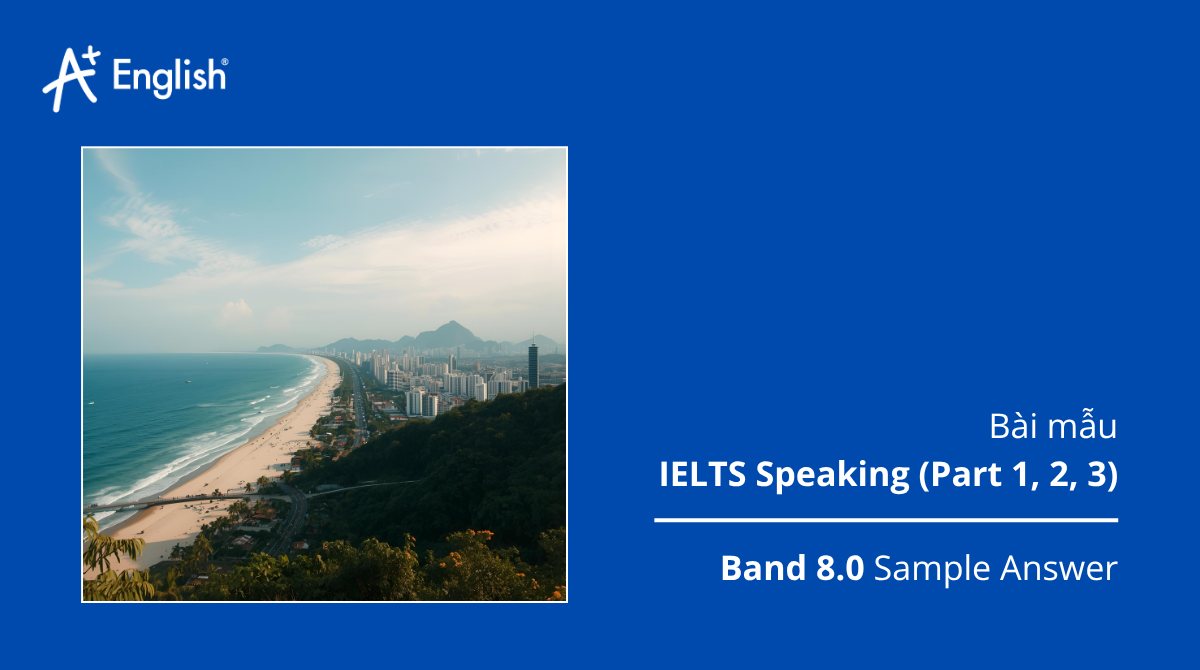
Task 2Describe a City You Have Visited That Impressed YouOne city that left a strong impression on me is Da Nang, Vietnam. I visited it last summer with my family during a short vacation, and I must say, it was a breath of fresh air compared to the hustle and bustle of Ho Chi Minh City. What stood out to me first was how clean and organized the city was. Unlike many big cities, Da Nang has wide roads, less traffic, and a much calmer atmosphere. It was a pleasure to walk around without worrying about congestion or pollution. The air was fresh and refreshing, especially near the beach. Speaking of which, My Khe Beach was absolutely breathtaking, with its golden sand, clear blue water, and gentle waves. It felt like paradise. The food was another highlight of the trip. I tried Mi Quang, a traditional noodle dish, and it was incredibly flavorful and rich. The seafood was also top-notch, freshly caught and well-prepared. Every meal was a gastronomic delight, and I loved exploring the local food markets. Aside from that, Da Nang’s architecture and attractions were fascinating. The Dragon Bridge, which lights up at night and even breathes fire, was mesmerizing. I also visited the Linh Ung Pagoda, which had a massive Buddha statue overlooking the sea. The city offers the perfect blend of modernity and tradition, making it a must-visit destination. Follow-up Questions Do you like cities generally?Yes, I enjoy cities because they are lively, exciting, and full of opportunities. There is always something new to explore, whether it’s food, entertainment, or culture. However, I do sometimes wish for more peaceful and relaxing places, as city life can be quite overwhelming. Would you like to live in Da Nang?Maybe, because Da Nang has a great quality of life, with clean streets, beautiful scenery, and a relaxed atmosphere. However, since it’s smaller than Ho Chi Minh City, it may not have as many educational and career opportunities. I think it would be a great place for a vacation or retirement, but I might prefer a bigger city for work and study. |
Task 3Advantages of Living in a Big CityWell, if I think about it, living in a big city definitely comes with many advantages. First of all, there are better job opportunities, advanced healthcare, and high-quality education, which are essential for personal and professional growth. Another thing worth mentioning is that cities offer a wide range of entertainment options, from shopping malls and movie theaters to sports events and concerts, so you’ll never run out of things to do. On top of that, public services are usually more efficient, with better transport systems and modern infrastructure that make life more convenient. What’s more, cities provide a diverse and multicultural environment, allowing people to experience different cultures, traditions, and cuisines. That being said, while city life can be exciting and full of opportunities, it’s important to recognize that it also comes with certain downsides and challenges. Negative Aspects of Crowded CitiesHmm, let me think for a moment. One of the biggest downsides of overcrowded cities is definitely the heavy traffic and pollution, which can lead to stress and serious health problems. On top of that, the cost of living is significantly higher, making it difficult for many people to make ends meet. Another thing to consider is that finding personal space and privacy can be quite challenging, as cities tend to be densely populated. Not to mention, the fast-paced and highly competitive nature of city life can cause anxiety and burnout, especially for those who struggle to keep up. Having said that, despite these challenges, cities still attract people because of their exciting and modern lifestyle, offering countless opportunities that smaller towns simply cannot provide. Architectural Design in CitiesWell, that’s an interesting question. I’d say that architecture in modern cities is often a blend of old and new, with traditional buildings standing alongside futuristic skyscrapers. Many cities make a great effort to preserve historical landmarks while at the same time embracing modern designs to attract investment and tourism. If I think about it, sustainable architecture is also becoming more and more popular, focusing on eco-friendly materials and energy-efficient buildings. Some cities are even working on creating more green spaces, such as parks and rooftop gardens, to help improve residents’ quality of life. At the end of the day, well-planned architecture not only makes a city aesthetically pleasing but also helps make it more functional and livable. Paying for Services in CitiesThat’s a good point, and to be honest, I have to say that living in a city can be financially demanding, as almost everything comes with a hefty price tag. Let me put it this way—rent, transportation, and daily necessities tend to be far more expensive compared to rural areas, which puts a lot of pressure on city dwellers. Another thing to keep in mind is that many people find themselves paying through the nose for basic services like healthcare and utilities, which can be quite frustrating. While it’s true that cities do provide high-quality services, the reality is that not everyone can afford them, leading to economic inequality. So, in the end, many people struggle with urban living, as wages do not always keep up with the rising cost of services. Transportation in Big CitiesHmm, that’s a tricky one. On one hand, public transportation is absolutely essential in big cities, but on the other hand, it’s often overcrowded and inefficient. Many cities have metro systems, buses, and ride-sharing services, but traffic congestion remains a persistent issue, making daily commutes a nightmare for many people. Some governments have tried to alleviate the problem by expanding public transport networks, but the demand keeps increasing rapidly, so the solutions are not always effective. Another thing to consider is that motorbikes and bicycles have become popular alternatives, as they offer more flexibility in navigating through congested streets. In the grand scheme of things, though, cities are continuously investing in modern transportation solutions to create a more sustainable and accessible urban environment. |
Dịch
| Task 1
Personal Information Where do you live? Tôi sống ở Thành phố Hồ Chí Minh, Việt Nam, một trong những thành phố sôi động và năng động nhất của đất nước. Thành phố này nổi tiếng với nhịp sống nhanh, nền văn hóa đa dạng và cơ sở hạ tầng hiện đại. Dù có tình trạng kẹt xe và tiếng ồn, nhưng nơi đây mang đến nhiều cơ hội tuyệt vời về giáo dục, việc làm và giải trí. Family members you live with? Tôi sống cùng bố mẹ và em gái, người vẫn đang học tiểu học. Cuộc sống gia đình tôi khá đơn giản và thoải mái, dù tôi không hay chia sẻ nhiều với họ vì tôi khá hướng nội. Tuy nhiên, họ luôn ở bên khi tôi cần sự hỗ trợ, điều này khiến ngôi nhà trở thành một nơi an toàn và ấm áp. What are you studying? Hiện tại, tôi đang học các môn học cốt lõi như toán, khoa học, văn học và tiếng Anh tại trường trung học cơ sở. Những môn học này giúp tôi xây dựng một nền tảng học thuật vững chắc và chuẩn bị cho các cơ hội trong tương lai. Dù một số môn khá khó, nhưng chúng giúp tôi phát triển kỹ năng và kiến thức quan trọng. What do you like about your studies? Tôi thích quá trình học hỏi những điều mới và tích lũy các kỹ năng hữu ích cho tương lai. Một số môn như tiếng Anh và khoa học đặc biệt thú vị vì chúng giúp tôi khám phá nhiều góc nhìn khác nhau và hiểu thêm về thế giới. Mặc dù việc học đôi khi căng thẳng, nhưng nó giúp tôi trưởng thành về mặt trí tuệ. What do you like about learning English? Tiếng Anh là một ngôn ngữ toàn cầu quan trọng, mở ra nhiều cơ hội trong giáo dục, du lịch và sự nghiệp tương lai. Tôi cũng thích xem phim, chơi game và đọc sách bằng tiếng Anh, điều này khiến việc học trở nên thú vị và hấp dẫn hơn. Vì tiếng Anh được sử dụng rộng rãi trong nhiều lĩnh vực, việc thành thạo nó sẽ giúp tôi có lợi thế cạnh tranh trong tương lai. How often do you use English? Tôi sử dụng tiếng Anh gần như mỗi ngày trong nhiều tình huống khác nhau, từ bài tập ở trường đến các hoạt động trực tuyến. Khi chơi game, xem video hoặc đọc bài viết, tôi thường xuyên tiếp xúc với tiếng Anh. Dù chưa thực sự trôi chảy, tôi vẫn cố gắng luyện tập và cải thiện kỹ năng của mình bất cứ khi nào có thể. |
| Task 2
Describe a City You Have Visited That Impressed You Một thành phố để lại ấn tượng mạnh với tôi là Đà Nẵng, Việt Nam. Tôi đã đến đó vào mùa hè năm ngoái cùng gia đình trong một chuyến du lịch ngắn ngày, và phải nói rằng, đây thực sự là một làn gió mới so với sự nhộn nhịp của Thành phố Hồ Chí Minh. Điều đầu tiên làm tôi ấn tượng là sự sạch sẽ và có tổ chức của thành phố. Không giống như nhiều đô thị lớn, Đà Nẵng có những con đường rộng, ít kẹt xe và không khí yên bình hơn nhiều. Tôi rất thích đi dạo mà không phải lo lắng về tắc đường hay ô nhiễm. Không khí ở đây trong lành, đặc biệt là gần bãi biển. Nói đến biển, Bãi biển Mỹ Khê thực sự tuyệt đẹp, với cát vàng, nước biển trong xanh và những con sóng dịu dàng. Cảm giác giống như đang ở thiên đường vậy. Ẩm thực là một điểm nhấn khác của chuyến đi. Tôi đã thử Mì Quảng, một món ăn truyền thống, và nó rất đậm đà, hấp dẫn. Hải sản ở đây cũng rất tươi ngon, được chế biến cẩn thận. Mỗi bữa ăn đều là một trải nghiệm tuyệt vời, và tôi thích thú khi khám phá các khu chợ ẩm thực địa phương. Ngoài ra, kiến trúc và các địa điểm tham quan của Đà Nẵng rất thú vị. Cầu Rồng, một cây cầu phát sáng vào ban đêm và thậm chí có thể phun lửa, khiến tôi mê mẩn. Tôi cũng đã ghé thăm Chùa Linh Ứng, nơi có bức tượng Phật khổng lồ nhìn ra biển. Thành phố này có sự kết hợp hoàn hảo giữa hiện đại và truyền thống, khiến nó trở thành một điểm đến không thể bỏ qua. Follow-up Questions Do you like cities generally? Có, tôi thích thành phố vì chúng sôi động, thú vị và đầy cơ hội. Luôn có điều gì đó mới mẻ để khám phá, từ ẩm thực, giải trí đến văn hóa. Tuy nhiên, đôi khi tôi cũng mong muốn có những nơi yên bình và thư giãn hơn vì cuộc sống đô thị có thể khá căng thẳng. Would you like to live in Da Nang? Có thể, vì Đà Nẵng có chất lượng cuộc sống tốt, đường phố sạch sẽ, phong cảnh đẹp và không khí thoải mái. Tuy nhiên, vì thành phố nhỏ hơn Thành phố Hồ Chí Minh, nên có thể sẽ không có nhiều cơ hội về giáo dục và sự nghiệp. Tôi nghĩ Đà Nẵng là một nơi tuyệt vời để du lịch hoặc nghỉ dưỡng, nhưng có lẽ tôi vẫn thích một thành phố lớn hơn để học tập và làm việc. |
| Task 3
Advantages of Living in a Big City Ừm, nếu nghĩ về nó, sống ở một thành phố lớn chắc chắn có nhiều lợi ích. Trước hết, có nhiều cơ hội việc làm hơn, cùng với dịch vụ y tế tiên tiến và giáo dục chất lượng cao, giúp mọi người phát triển cả về cá nhân và nghề nghiệp. Một điều đáng nói nữa là thành phố mang đến nhiều lựa chọn giải trí, từ trung tâm mua sắm, rạp chiếu phim đến các sự kiện thể thao và ca nhạc, vì vậy bạn sẽ không bao giờ thấy nhàm chán. Ngoài ra, hệ thống giao thông công cộng thường tốt hơn, giúp việc đi lại thuận tiện hơn. Hơn nữa, các thành phố có môi trường đa văn hóa, nơi bạn có thể trải nghiệm những nền văn hóa, truyền thống và ẩm thực khác nhau. Mặc dù cuộc sống thành phố rất thú vị và nhiều cơ hội, nhưng nó cũng đi kèm với những thách thức nhất định. Negative Aspects of Crowded Cities Hmm, để tôi nghĩ xem. Một trong những vấn đề lớn nhất của thành phố đông đúc là tắc nghẽn giao thông và ô nhiễm, có thể gây căng thẳng và ảnh hưởng đến sức khỏe. Hơn nữa, chi phí sinh hoạt cao, khiến nhiều người gặp khó khăn về tài chính. Một điểm khác cần cân nhắc là việc tìm không gian riêng tư khá khó khăn, vì thành phố thường có mật độ dân số cao. Ngoài ra, nhịp sống nhanh và sự cạnh tranh khốc liệt có thể gây áp lực và kiệt sức. Dù có những thách thức này, thành phố vẫn thu hút nhiều người nhờ lối sống hiện đại và những cơ hội mà nó mang lại. Architectural Design in Cities Ồ, đó là một câu hỏi thú vị. Tôi nghĩ rằng kiến trúc ở các thành phố hiện đại là sự kết hợp giữa cổ điển và hiện đại, với những tòa nhà lịch sử nằm cạnh các tòa nhà chọc trời. Nhiều thành phố đang cố gắng bảo tồn di sản văn hóa trong khi vẫn phát triển các công trình hiện đại để thu hút đầu tư và du lịch. Hơn nữa, kiến trúc bền vững đang trở nên phổ biến, tập trung vào vật liệu thân thiện với môi trường và các tòa nhà tiết kiệm năng lượng. Một số thành phố còn phát triển không gian xanh như công viên và vườn trên mái, giúp nâng cao chất lượng cuộc sống. Cuối cùng, một thành phố có quy hoạch tốt không chỉ đẹp về mặt thẩm mỹ mà còn tạo điều kiện sống thoải mái và tiện nghi hơn. Paying for Services in Cities Đó là một ý hay, và thành thật mà nói, tôi phải thừa nhận rằng sống ở thành phố rất tốn kém, vì hầu như mọi thứ đều có giá cao. Để tôi lấy ví dụ—tiền thuê nhà, chi phí đi lại và các nhu cầu thiết yếu thường đắt hơn nhiều so với ở vùng nông thôn. Một vấn đề khác là các dịch vụ y tế và tiện ích cơ bản có thể rất đắt đỏ, gây khó khăn cho những người có thu nhập thấp. Mặc dù đúng là thành phố cung cấp dịch vụ chất lượng cao, nhưng không phải ai cũng đủ khả năng chi trả, dẫn đến sự chênh lệch kinh tế. Vì vậy, nhiều người gặp khó khăn khi sống ở thành phố, vì mức lương không phải lúc nào cũng theo kịp chi phí sinh hoạt tăng cao. Transportation in Big Cities Hmm, đó là một vấn đề khá phức tạp. Một mặt, giao thông công cộng rất quan trọng trong các thành phố lớn, nhưng mặt khác, nó thường xuyên quá tải và kém hiệu quả. Nhiều thành phố có hệ thống tàu điện ngầm, xe buýt và dịch vụ gọi xe, nhưng tắc đường vẫn là một vấn đề dai dẳng, khiến việc đi lại trở thành cơn ác mộng đối với nhiều người. Một số chính phủ đã cố gắng mở rộng mạng lưới giao thông công cộng, nhưng nhu cầu đi lại vẫn tiếp tục tăng, khiến giải pháp chưa thực sự hiệu quả. Ngoài ra, xe máy và xe đạp đang trở thành phương tiện phổ biến hơn, vì chúng giúp di chuyển linh hoạt hơn trong những con đường đông đúc. Tuy nhiên, về tổng thể, các thành phố vẫn đang đầu tư vào giải pháp giao thông hiện đại để hướng đến một môi trường đô thị bền vững và dễ tiếp cận hơn. |
4. Từ vựng (Vocabulary)
- Vibrant /ˈvaɪ.brənt/ – C1 – Tính từ – Sôi động
Collocations: vibrant city (thành phố sôi động), vibrant culture (văn hóa sôi động), vibrant community (cộng đồng sôi động)
Ví dụ: “Ho Chi Minh City is a vibrant metropolis with a bustling nightlife.”
Dịch: “Thành phố Hồ Chí Minh là một đô thị sôi động với cuộc sống về đêm nhộn nhịp.” - Exorbitant /ɪɡˈzɔː.bɪ.tənt/ – C2 – Tính từ – Cắt cổ, quá đắt đỏ
Collocations: exorbitant prices (giá cả cắt cổ), exorbitant cost (chi phí đắt đỏ), exorbitant rent (giá thuê nhà quá cao)
Ví dụ: “The cost of living in some major cities is exorbitant, making it hard for many residents to afford basic necessities.”
Dịch: “Chi phí sinh hoạt ở một số thành phố lớn quá đắt đỏ, khiến nhiều cư dân khó có thể chi trả những nhu cầu cơ bản.” - Infrastructure /ˈɪn.frəˌstrʌk.tʃər/ – C1 – Danh từ – Cơ sở hạ tầng
Collocations: modern infrastructure (cơ sở hạ tầng hiện đại), infrastructure development (phát triển cơ sở hạ tầng), infrastructure investment (đầu tư cơ sở hạ
tầng)
Ví dụ: “The government’s focus on infrastructure development has improved transportation.”
Dịch: “Sự tập trung của chính phủ vào phát triển cơ sở hạ tầng đã cải thiện giao thông.” - Congestion /kənˈdʒes.tʃən/ – C1 – Danh từ – Sự tắc nghẽn
Collocations: traffic congestion (ùn tắc giao thông), urban congestion (tắc nghẽn đô thị), reduce congestion (giảm tắc nghẽn)
Ví dụ: “Traffic congestion during peak hours is a major issue in big cities.”
Dịch: “Ùn tắc giao thông trong giờ cao điểm là một vấn đề lớn ở các thành phố lớn.” - Perspective /pəˈspek.tɪv/ – C1 – Danh từ – Góc nhìn, quan điểm
Collocations: different perspective (góc nhìn khác), broaden perspective (mở rộng quan điểm), from a global perspective (từ góc nhìn toàn cầu)
Ví dụ: “Studying abroad can help students gain a broader perspective on life.”
Dịch: “Du học có thể giúp sinh viên có được góc nhìn rộng hơn về cuộc sống.” - Engaging /ɪnˈɡeɪ.dʒɪŋ/ – C1 – Tính từ – Hấp dẫn, lôi cuốn
Collocations: engaging content (nội dung hấp dẫn), engaging personality (tính cách lôi cuốn), engaging discussion (cuộc thảo luận thú vị)
Ví dụ: “The teacher used engaging methods to keep the students interested.”
Dịch: “Giáo viên đã sử dụng các phương pháp hấp dẫn để giữ cho học sinh quan tâm.” - Mesmerizing /ˈmez.mə.raɪ.zɪŋ/ – C2 – Tính từ – Mê hoặc, quyến rũ
Collocations: mesmerizing performance (màn trình diễn mê hoặc), mesmerizing beauty (vẻ đẹp quyến rũ), mesmerizing effect (hiệu ứng mê hoặc)
Ví dụ: “The dancer’s performance was so mesmerizing that the audience couldn’t take their eyes off her.”
Dịch: “Màn trình diễn của vũ công mê hoặc đến mức khán giả không thể rời mắt.” - Multicultural /ˌmʌl.tiˈkʌl.tʃər.əl/ – C1 – Tính từ – Đa văn hóa
Collocations: multicultural society (xã hội đa văn hóa), multicultural community (cộng đồng đa văn hóa), multicultural environment (môi trường đa văn hóa)
Ví dụ: “Living in a multicultural city exposes you to various traditions and cuisines.”
Dịch: “Sống trong một thành phố đa văn hóa giúp bạn tiếp xúc với nhiều truyền thống và ẩm thực khác nhau.” - Alleviate /əˈliː.vi.eɪt/ – C1 – Động từ – Làm giảm bớt, xoa dịu
Collocations: alleviate congestion (giảm ùn tắc), alleviate stress (giảm căng thẳng), alleviate poverty (giảm nghèo đói)
Ví dụ: “The government is working to alleviate traffic congestion in urban areas.”
Dịch: “Chính phủ đang nỗ lực giảm ùn tắc giao thông tại các khu đô thị.” - Overwhelming /ˌəʊ.vəˈwel.mɪŋ/ – C1 – Tính từ – Áp đảo, quá tải, ngợp
Collocations: overwhelming experience (trải nghiệm quá sức), overwhelming emotions (cảm xúc áp đảo), overwhelming pressure (áp lực lớn)
Ví dụ: “The overwhelming pace of city life can be stressful for many people.”
Dịch: “Nhịp sống quá nhanh ở thành phố có thể gây căng thẳng cho nhiều người.”
5. Thành ngữ (Idioms)
- A breath of fresh air – Một điều gì đó mới mẻ và tích cực
Ví dụ: “Visiting Da Nang was a breath of fresh air compared to the hustle and bustle of Ho Chi Minh City.”
Dịch: “Thăm Đà Nẵng thực sự là một làn gió mới so với sự hối hả và nhộn nhịp của Thành phố Hồ Chí Minh.” - Hustle and bustle – Sự ồn ào và nhộn nhịp của cuộc sống đô thị
Ví dụ: “Despite the hustle and bustle of city life, I enjoy the energy it brings.”
Dịch: “Mặc dù cuộc sống thành phố rất ồn ào và nhộn nhịp, tôi vẫn thích nguồn năng lượng mà nó mang lại.” - Make ends meet – Kiếm đủ tiền để sống
Ví dụ: “With the rising cost of living, many people struggle to make ends meet.”
Dịch: “Với chi phí sinh hoạt ngày càng tăng, nhiều người gặp khó khăn trong việc kiếm đủ tiền để sống.” - Pay through the nose – Trả giá quá cao cho một thứ gì đó
Ví dụ: “In big cities, people often have to pay through the nose for rent.”
Dịch: “Ở các thành phố lớn, người ta thường phải trả giá cắt cổ để thuê nhà.”
- A double-edged sword – Con dao hai lưỡi, có cả mặt lợi và hại
Ví dụ: “Living in a big city is a double-edged sword—it offers opportunities, but also comes with high stress.”
Dịch: “Sống ở một thành phố lớn là con dao hai lưỡi—nó mang lại cơ hội nhưng cũng đi kèm với áp lực cao.”
6. Ngữ pháp
- Relative Clause (Mệnh đề quan hệ)
- Công thức chung: Main Clause + Relative Pronoun (who/which/that/whose) + Relative Clause
- Nghĩa tiếng Việt: Mệnh đề quan hệ được dùng để bổ sung thông tin về danh từ trong câu.
- Bối cảnh sử dụng: Dùng để thêm chi tiết về người hoặc sự vật được đề cập trước đó.
- Ví dụ: “Da Nang, which is known for its beautiful beaches, is a must-visit destination.”
- Dịch: “Đà Nẵng, nơi nổi tiếng với những bãi biển tuyệt đẹp, là một điểm đến không thể bỏ qua.”
- “Despite” + noun phrase (Contrasting Clause – Câu chỉ sự đối lập)
- Công thức chung: Despite / In spite of + noun phrase (cụm danh từ) + main clause (mệnh đề chính)
- Nghĩa tiếng Việt: Despite và In spite of đều mang nghĩa “mặc dù” hoặc “bất chấp”, được sử dụng để diễn tả sự đối lập giữa hai ý tưởng trong câu. Sau Despite / In spite of, KHÔNG dùng một mệnh đề hoàn chỉnh mà phải đi kèm với một danh từ hoặc cụm danh từ.
- Bối cảnh sử dụng: Dùng để thể hiện sự đối lập giữa hai sự kiện hoặc hai yếu tố khác nhau trong cùng một câu. Thường được dùng trong văn viết hoặc văn nói trang trọng để làm câu văn tự nhiên và mạch lạc hơn.
- Ví dụ: Despite his lack of experience, he managed to get the job.
- Dịch: Mặc dù thiếu kinh nghiệm, anh ấy vẫn có thể nhận được công việc đó.
- “Since” + dependent clause (Reason Clause – Câu chỉ nguyên nhân)
- Công thức chung: Since / As / Because + subject + verb (mệnh đề nguyên nhân) + main clause (mệnh đề chính)
- Nghĩa tiếng Việt: “Since”, “As”, và “Because” đều có nghĩa là “bởi vì”, dùng để giải thích nguyên nhân của một sự kiện hoặc tình huống trong câu. “Since” và “As” thường được dùng trong văn viết học thuật hoặc văn phong trang trọng, trong khi “Because” phổ biến hơn trong giao tiếp hàng ngày.
- Bối cảnh sử dụng: Dùng để giải thích lý do hoặc nguyên nhân dẫn đến một hành động, quyết định hoặc kết quả nào đó. “Since” thường xuất hiện ở đầu câu để nhấn mạnh nguyên nhân trước khi đề cập đến kết quả.
- Ví dụ: Since it was raining heavily, we decided to stay indoors.
- Dịch: Vì trời mưa rất to, chúng tôi quyết định ở trong nhà.
7. Các hình thái thể hiện sự lưu loát
Use of Cohesive Devices (Logical Connectors, Pronouns, Conjunctions):
➡ Logical Connectors (Linking Words)
Used for structuring spoken responses naturally:
“On top of that, public services are usually more efficient, with better transport systems and modern infrastructure.”
“That being said, while city life can be exciting, it also comes with certain downsides and challenges.”
Purpose: These discourse markers help transition between ideas, making the speech more natural and fluent.
➡ Pronouns for Cohesion
Used to avoid repetition and make speech flow better:
“Since it is widely used in many fields, mastering it will give me a competitive edge.” (it refers to English)
“Despite the traffic congestion and noise, the city still attracts many tourists.” (the city maintains the topic)
Purpose: Helps the speaker avoid repeating full nouns, making speech more efficient.
➡ Conjunctions (Spoken vs. Written Usage)
In spoken English, coordinating conjunctions like “and,” “but,” “so,” “because” are more common at the start of sentences:
“But the cost of living is really high, so many people struggle to make ends meet.”
“Because the air quality is declining, people are more worried about their health.”
Purpose: This differs from formal writing, where sentences would typically avoid starting with “but” or “because”.
Features of Spoken English That Differ from Written English
- Sentence Pauses for Emphasis (Stopping at Punctuation)
In speaking, short pauses are natural at punctuation marks, creating rhythm and clarity:
“The air was fresh and refreshing. (Pause) Especially near the beach.”
“The city is crowded. (Pause) But people still love it.”
Purpose: This mirrors spoken conversation rather than written text, where long sentences are preferred.
- Intonation Patterns (Rising/Falling Tone)
Rising tone (↗) used for listing or showing uncertainty:
“I think it’s because of… (↗) the job opportunities, the infrastructure, and… the entertainment.” (↗)
Falling tone (↘) used to signal completion:
“That’s why people still move to the city. (↘)”
Purpose: These intonation shifts make spoken language sound more natural and engaging.
- Contractions and Informal Structures in Speech
Contractions make speech more natural and faster:
Written: “I am not sure if I would live in Da Nang.”
Spoken: “I’m not sure if I’d live in Da Nang.”
Purpose: In casual speech, contractions like “I’d,” “gonna,” “wanna” are used far more than in writing.
- Sound Linking and Connected Speech (Elision, Assimilation, Linking Sounds)
Native speakers often blend words together when speaking quickly:
“What do you think about it?” → “Whaddaya think about it?”
“It is important.” → “It’s important.”
Purpose: These reductions and sound links make speech more fluid and natural.
8. Phát âm
Meaningful Utterances and Chunks
Fluent speech groups words into “thought units” (chunks) instead of saying each word separately:
Slow, unnatural: “The | city | is | very | crowded | and | noisy.”
Natural chunking: “The city | is very crowded | and noisy.”
Purpose: This improves clarity and fluency, making speech sound more native-like.
Rhythm and Stress in English (Stress-timed Language)
English is a stress-timed language, meaning that stressed words are emphasized, and unstressed words are shortened.
“The CITY is really CROWDED, but the JOB market is GREAT.”
“That BEING said, it’s STILL a NICE place to LIVE.”
Purpose: Speakers lengthen stressed syllables and reduce unstressed words like “is,” “but,” “a.”
Linking Sounds for Natural Flow
Linking Consonant to Vowel Sounds
“Go on” → “Gowon”
“Take it” → “Take-it”
Elision (Dropping Sounds)
“Next day” → “Nex’ day”
“I don’t know” → “I dunno”
Purpose: These reductions make speech faster and more natural.
Use of Stress and Intonation for Meaning
Emphatic Stress for Contrast
“I wanted to live in a SMALL town, not a BIG one.”
“It’s NOT just about the JOBS, it’s about the LIFESTYLE.”
Rising and Falling Intonation
Falling (↘) for statements: “I love living in a big city. (↘)”
Rising (↗) for uncertainty or lists: “Maybe… in Da Nang? (↗)”
9. Bài luyện tập (Practice Exercise)
Bài tập dịch từ tiếng Việt qua tiếng Anh:
Bài tập viết lại câu:
|
| KEY
Bài tập dịch từ tiếng Việt qua tiếng Anh:
Bài tập viết lại câu:
|
Sau khi tham khảo bài mẫu IELTS Speaking – Band 8.0, A+ English hy vọng các bạn sẽ hiểu rõ cách triển khai câu trả lời, phát triển ý tưởng mạch lạc. Đồng thời, các bạn cũng sẽ thu thập thêm nhiều từ vựng, cấu trúc hay và cách diễn đạt tự nhiên để áp dụng trong kỳ thi.
Nếu bạn đang tìm một khóa học IELTS chất lượng cao, phù hợp với trình độ của mình, hãy liên hệ ngay Tại đây để được tư vấn lộ trình học cá nhân hóa và nhận những tài liệu độc quyền mới nhất!
A+ English chúc các bạn học tập hiệu quả!