A+ English xin giới thiệu đến các bạn bài mẫu IELTS Speaking band 6.0 với những câu trả lời ấn tượng và tự nhiên, giúp thí sinh ghi điểm cao trong kỳ thi.
Bài mẫu không chỉ gợi ý cách triển khai ý tưởng mạch lạc mà còn cung cấp từ vựng phong phú, cấu trúc câu đa dạng và cách diễn đạt tự nhiên, giúp bạn tự tin giao tiếp và thuyết phục giám khảo.
Hãy cùng khám phá ngay để nâng tầm kỹ năng Speaking của bạn nhé!
1. Đề bài IELTS Speaking (Assignment)
| Task 1:
What do you remember about your first school, when you were a child? In what ways did life at school change as you became older? What was your favourite subject? Why? What experience do you have of travelling to other countries? Which country would you especially like to visit? Why? What are the best ways to get to know a country? What are the biggest cultural differences between your country and English-speaking countries? What sort of television programmes do you like watching? How has television in your country changed in recent years? Which do you prefer: the cinema, the theatre, or live music? Why? Tell me about a popular form of public entertainment in your country. |
| Task 2:
Describe a place that has a special meaning to you. You should say:
and explain why you particularly like the place. |
| Task 3:
Why do many people leave home when they are still quite young? What personal qualities do you feel are required for a young person to live on their own? In many countries there has been large-scale migration from the countryside to the cities. Do you think this is positive or negative? Do you think that the possibility of working from home via the Internet will lead to many people going back to the countryside? In what ways do the new megacities of Asia, Africa, and South America differ from older ones such as London or New York? Should there be a limit on the size of cities? |
Source: Oxford IELTS Practice Tests TEST 3
2. Phân tích câu hỏi – Lập dàn ý (Analyze the topic – Outline)
Task 1
What do you remember about your first school, when you were a child?
Tên trường, thầy cô, bạn bè, cảm giác ngày đầu
In what ways did life at school change as you became older?
Học nặng hơn, nhiều môn, trách nhiệm cao hơn
What was your favourite subject? Why?
Môn yêu thích, lý do (giáo viên, nội dung thú vị)
What experience do you have of travelling to other countries?
Từng đi nước nào, trải nghiệm nổi bật, học được điều gì
Which country would you especially like to visit? Why?
Quốc gia mong muốn, lý do (văn hóa, thắng cảnh)
What are the best ways to get to know a country?
Giao tiếp người địa phương, ăn món địa phương, thăm bảo tàng
What are the biggest cultural differences between your country and English-speaking countries?
Cách giao tiếp, ẩm thực, lối sống, ứng xử xã hội
What sort of television programmes do you like watching?
Chương trình thể loại yêu thích (phim, tài liệu, giải trí)
How has television in your country changed in recent years?
Nhiều kênh hơn, nội dung đa dạng, công nghệ hiện đại hơn
Which do you prefer: the cinema, the theatre, or live music? Why?
Chọn 1 hình thức yêu thích, lý do (không khí, trải nghiệm, tương tác)
Tell me about a popular form of public entertainment in your country.
Thể loại giải trí công cộng phổ biến (lễ hội, ca nhạc đường phố, hội chợ)
Task 2
Loại địa điểm, ở đâu
Mô tả ngắn (ngoại hình, cảnh quan)
Âm thanh đặc trưng
Lý do đặc biệt yêu thích địa điểm này (kỉ niệm, cảm giác)
Task 3
Why do many people leave home when they are still quite young?
Học tập, việc làm, độc lập, trải nghiệm mới
What personal qualities do you feel are required for a young person to live on their own?
Tự lập, quản lý thời gian, kỹ năng quản lý tài chính
In many countries there has been large-scale migration from the countryside to the cities. Do you think this is positive or negative?
Tích cực: kinh tế phát triển, cơ hội
tiêu cực: quá tải đô thị, mất cân bằng dân cư
Do you think that the possibility of working from home via the Internet will lead to many people going back to the countryside?
Đồng ý: chi phí thấp, chất lượng sống tốt hơn
không đồng ý: hạn chế cơ hội nghề nghiệp, tiện ích
In what ways do the new megacities of Asia, Africa, and South America differ from older ones such as London or New York?
Cơ sở hạ tầng, mật độ dân số, quy hoạch đô thị, văn hóa, lịch sử
Should there be a limit on the size of cities?
Nên: giảm áp lực giao thông, bảo vệ môi trường
không nên: tự nhiên phát triển, lợi ích kinh tế
3. Bài Mẫu (Sample Essay) Band 6.0+
Task 1What do you remember about your first school, when you were a childI remember my first school was cozy and small. My teachers were kind, and I spent breaks happily chasing friends around the playground every day. In what ways did life at school change as you became older?As I got older, school became stressful with difficult subjects, more homework, and exams. There’s less free time for fun and games these days. What was your favourite subject? Why?My favourite subject is English because I find it quite easy, enjoyable, and helpful, especially since I often play games which require English communication skills. What experience do you have of travelling to other countries?To be honest, I’ve never travelled abroad. My family rarely travels far, so most of my experiences are just within Ho Chi Minh City itself. Which country would you especially like to visit? Why?I’d really love to visit Japan someday because I’m fascinated by their unique culture, delicious food, and the anime and gaming world there looks incredible. What are the best ways to get to know a country?I believe the best way to know a country is online exploration—watching YouTube videos, documentaries, playing games and interacting with international friends on social media. What are the biggest cultural differences between your country and English-speaking countries?One significant difference might be communication. Vietnamese are generally reserved, while people from English-speaking countries express their feelings more openly and freely in public spaces. What sort of television programmes do you like watching?I mostly prefer cartoons and gaming livestreams because they’re relaxing, entertaining, and fit my interests, especially since gaming is my favorite leisure activity at home. How has television in your country changed in recent years?Recently, television here has changed significantly. Traditional channels have become less popular as most young people, including me, prefer online streaming platforms like YouTube. Which do you prefer: the cinema, the theatre, or live music? Why?I’d definitely choose the cinema because movies offer amazing visual effects, a comfortable atmosphere, and I enjoy watching new action or animated films with friends occasionally. Tell me about a popular form of public entertainment in your country.Karaoke is extremely popular here as it lets everyone relax, sing loudly, and have fun together. It’s common at birthday parties or family gatherings. |
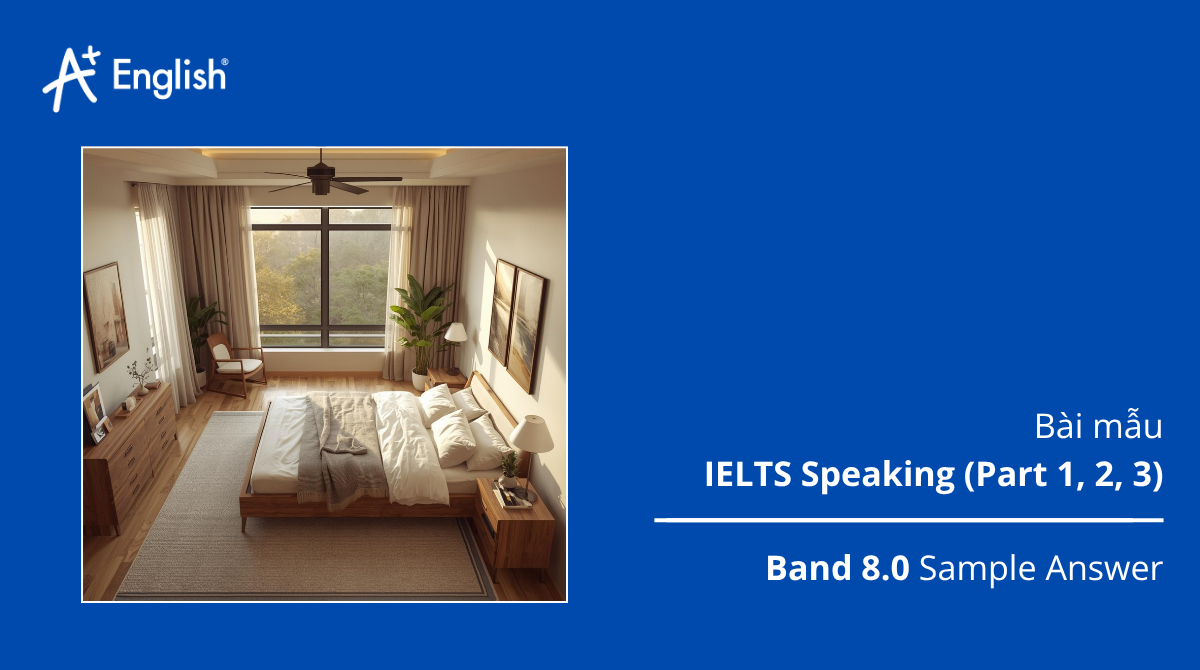
Task 2A place that means the world to me is my small gaming corner in my bedroom, right here in Ho Chi Minh city. If I’m being honest, it’s nothing fancy—just a desk, my computer, some posters on the wall, and an old comfy chair—but to me, it’s my own little kingdom. To describe it briefly, it’s located in the quietest corner of my bedroom. There’s a shelf filled with my favourite books and a neat stack of video games. The computer has colorful RGB lights that brighten up the room when it’s dark outside, and the screen usually glows with graphics from Roblox, Free Fire or Rise of Kingdoms. The sounds I associate with this place are mostly the quiet hum of my computer’s fan, the gentle clicks of the mouse, or the voices of my classmates coming through Discord when we play together. I sometimes hear the muffled noises from the living room, my younger sister watching cartoons, or mum preparing dinner. To put it in a nutshell, I particularly cherish this corner as it’s where I can be myself without worrying about what anyone thinks. When life gets tough or schoolwork piles up, this spot is my safe haven to clear my head. After all, as people often say, home is where the heart is—and for me, this corner is exactly that. |
Task 3Why do many people leave home when they are still quite young?Well, you know, young people often fly the nest to seek independence, education or better job opportunities. To be honest, some friends of mine want freedom from parental rules, to experience new things, and grow up quicker by taking responsibility for their own lives. What personal qualities do you feel are required for a young person to live on their own?Hmm, let me think… Personally, I think being independent, responsible, and financially sensible are essential. If you ask me, if they don’t know how to handle money carefully or manage their time wisely, life might become a nightmare—as they say, a real baptism by fire. In many countries there has been large-scale migration from the countryside to the cities. Do you think this is positive or negative?Well, that’s a good question. On the one hand, it can boost economies and offer people better jobs and educational chances, as city life is always buzzing with opportunities. But then again, cities can become overcrowded, leading to pollution and high living costs. So overall, it’s a mixed blessing, I’d say. Do you think that the possibility of working from home via the Internet will lead to many people going back to the countryside?Yeah, absolutely! I mean, the pandemic has proven that working remotely is feasible. If you think about it, it’s a golden opportunity to return to rural areas where life is calmer, more affordable, and healthier. People can enjoy the best of both worlds—earning city salaries while living country lifestyles. In what ways do the new megacities of Asia, Africa, and South America differ from older ones such as London or New York?Well, let me see… Frankly speaking, newer megacities tend to have rapid development but often lack organized infrastructure and good public transport. Older cities like London or New York usually have better planning, richer history, more developed public services, and a unique charm shaped by their long history. That said, the hustle and bustle might feel quite similar everywhere, I suppose. Should there be a limit on the size of cities?That’s an interesting point. On the one hand, limiting city size could solve issues like overcrowding, traffic jams, or pollution—making them more livable. But then again, such limits could stifle economic growth and limit opportunities for people. At the end of the day, I reckon it’s easier said than done. Maybe careful urban planning is more practical than imposing a strict size limit. |
Dịch
| Task 1
Bạn nhớ gì về ngôi trường đầu tiên của mình khi còn nhỏ? Cuộc sống học đường đã thay đổi như thế nào khi bạn lớn lên? Môn học yêu thích của bạn là gì? Tại sao? Bạn có kinh nghiệm gì về việc du lịch nước ngoài không? Quốc gia nào bạn đặc biệt muốn đến thăm? Vì sao? Cách tốt nhất để hiểu một đất nước là gì? Sự khác biệt văn hóa lớn nhất giữa nước bạn và các quốc gia nói tiếng Anh là gì? Bạn thích xem loại chương trình truyền hình nào? Truyền hình ở nước bạn đã thay đổi như thế nào trong những năm gần đây? Bạn thích rạp chiếu phim, nhà hát hay âm nhạc sống hơn? Tại sao? Hãy kể về một hình thức giải trí công cộng phổ biến ở nước bạn. |
| Task 2
Một nơi rất đặc biệt với tôi là góc chơi game nhỏ trong phòng ngủ của mình, ngay tại TP. Hồ Chí Minh. Thật lòng mà nói, nó chẳng có gì sang trọng—chỉ là một cái bàn, máy tính, vài tấm poster treo tường và chiếc ghế cũ êm ái—nhưng với tôi, đó là vương quốc riêng của mình. Nói ngắn gọn thì góc này nằm ở chỗ yên tĩnh nhất trong phòng. Có một cái kệ sách với mấy cuốn tôi yêu thích và một chồng game được xếp gọn gàng. Máy tính thì có đèn RGB nhiều màu khiến căn phòng sáng rực lên vào ban đêm, và màn hình thường hiện lên hình ảnh của Roblox, Free Fire hoặc Rise of Kingdoms. Âm thanh tôi hay nghe thấy ở đây là tiếng quạt của máy tính chạy rì rì, tiếng nhấp chuột nhẹ nhàng, hoặc giọng bạn bè vang lên từ Discord khi bọn tôi chơi cùng nhau. Thỉnh thoảng, tôi cũng nghe thấy tiếng TV vọng lại từ phòng khách, em gái tôi đang xem hoạt hình, hay tiếng mẹ đang nấu bữa tối. Tóm lại, tôi đặc biệt quý trọng góc nhỏ này vì đó là nơi tôi được là chính mình mà không cần quan tâm người khác nghĩ gì. Khi cuộc sống khó khăn hay bài vở chồng chất, góc này là nơi tôi có thể “xả stress”. Rốt cuộc, như người ta hay nói: “Nhà là nơi trái tim thuộc về”—và với tôi, chính góc này là nơi ấy. |
| Task 3
Tại sao nhiều người rời khỏi nhà khi còn khá trẻ? Theo bạn, những phẩm chất cá nhân nào là cần thiết để sống một mình? Bạn nghĩ việc di cư từ nông thôn ra thành phố là tích cực hay tiêu cực? Bạn có nghĩ làm việc tại nhà qua Internet sẽ khiến nhiều người quay về nông thôn không? Các siêu đô thị mới ở châu Á, châu Phi và Nam Mỹ khác gì so với những thành phố lâu đời như London hay New York? Có nên giới hạn quy mô của các thành phố không? |
4. Từ vựng (Vocabulary)
- Stressful /ˈstres.fəl/ – (B2,adj): Gây căng thẳng
Collocations: stressful job (công việc căng thẳng), stressful situation (tình huống căng thẳng)
Example Sentence: School became stressful with difficult subjects and more homework.
Translation: Trường học trở nên căng thẳng với các môn học khó và nhiều bài tập hơn. - Reserved /rɪˈzɜːvd/ – (B2,adj): Kín đáo, dè dặt
Collocations:reserved personality (tính cách dè dặt), reserved manner (cách ứng xử kín đáo)
Example Sentence: Vietnamese people are generally reserved compared to Westerners.
Translation: Người Việt nhìn chung dè dặt hơn so với người phương Tây. - Opportunity /ˌɒp.əˈtjuː.nə.ti/ –(B2,n): Cơ hội
Collocations: golden opportunity (cơ hội vàng), missed opportunity (cơ hội bị bỏ lỡ)
Example Sentence: It’s a golden opportunity to return to rural areas.
Translation: Đó là cơ hội vàng để trở về các vùng nông thôn. - Independence /ˌɪn.dɪˈpen.dəns/ – (B2,n): Sự độc lập
Collocations: gain independence (giành độc lập), financial independence (độc lập tài chính)
Example Sentence: Young people often leave home seeking independence.
Translation: Người trẻ thường rời nhà để tìm kiếm sự độc lập - Affordable /əˈfɔː.də.bəl/ – (B2,adj): Giá cả phải chăng
Collocations:affordable housing (nhà ở giá hợp lý), affordable price (giá cả phải chăng)
Example Sentence: Living in rural areas is more affordable than in cities.
Translation: Sống ở vùng nông thôn có giá cả phải chăng hơn ở thành phố. - Infrastructure /ˈɪn.frəˌstrʌk.tʃər/ – (B2,n): Cơ sở hạ tầng
Collocations: transport infrastructure (cơ sở hạ tầng giao thông), public infrastructure (cơ sở hạ tầng công cộng)
Example Sentence: Newer megacities often lack organized infrastructure.
Translation: Các siêu đô thị mới thường thiếu cơ sở hạ tầng được tổ chức tốt. - Overcrowded /ˌəʊ.vəˈkraʊ.dɪd/ – (B2,adj): Quá đông đúc
Collocations: overcrowded city (thành phố quá đông đúc), overcrowded classroom (lớp học quá đông)
Example Sentence: Cities become overcrowded, causing pollution.
Translation: Các thành phố trở nên quá đông đúc, gây ô nhiễm. - Livable /ˈlɪv.ə.bəl/ –(B2,adj): Đáng sống, dễ sống
Collocations: livable city (thành phố đáng sống), livable environment (môi trường sống dễ chịu)
Example Sentence: Limiting city size makes them more livable.
Translation: Giới hạn kích thước thành phố giúp chúng dễ sống hơn. - Fascinate /ˈfæs.ən.eɪt/ – (B2,v): Mê hoặc, cuốn hút
Collocations: deeply fascinated (bị mê hoặc sâu sắc), completely fascinated (hoàn toàn bị cuốn hút)
Example Sentence: I’m fascinated by Japan’s culture and gaming scene.
Translation: Tôi bị cuốn hút bởi văn hóa và thế giới game của Nhật Bản. - Interaction /ˌɪn.təˈræk.ʃən/ – (B2,n): Sự tương tác
Collocations: social interaction (tương tác xã hội), human interaction (tương tác con người)
Example Sentence: Playing games online allows interaction with international friends.
Translation: Chơi game trực tuyến cho phép tương tác với bạn bè quốc tế.
5. Thành ngữ (Idioms)
- Fly the nest : rời khỏi nhà để sống độc lập
Example Sentence: “Young people often fly the nest to seek independence.”
Translation: “Người trẻ thường rời nhà để tìm kiếm sự độc lập.” - Baptism by fire : lần đầu trải nghiệm khó khăn
Example Sentence: “Living alone can be a real baptism by fire for some young people.”
Translation: “Sống một mình có thể là thử thách lớn đầu đời đối với một số người trẻ.” - Best of both worlds : hưởng lợi từ cả hai phía
Example Sentence: “People can enjoy the best of both worlds—earning city salaries while living country lifestyles.”
Translation: “Mọi người có thể tận hưởng lợi ích từ cả hai phía—kiếm lương thành phố trong khi sống theo phong cách nông thôn.” - Mixed blessing : vừa có lợi vừa có hại
Example Sentence: “Migration to cities is a mixed blessing.”
Translation: “Di cư vào thành phố vừa có lợi vừa có hại.” - Easier said than done : nói dễ hơn làm
Example Sentence: “Limiting city size is easier said than done.”
Translation: “Giới hạn quy mô thành phố là điều nói thì dễ nhưng làm thì khó.”
6. Ngữ pháp
1. Become + Adjective (Diễn tả sự thay đổi trạng thái)
- Công thức chung: S + became + tính từ
- Nghĩa tiếng Việt: Trở nên…
- Bối cảnh sử dụng: Dùng khi mô tả một sự thay đổi về trạng thái, cảm xúc, tính chất
- Câu ví dụ: School became stressful because of homework and difficult subjects.
- Dịch câu: Trường học trở nên căng thẳng vì bài tập về nhà và các môn học khó.
2. So sánh hơn (Comparative)
- Công thức chung: S + be + more + adj + than + N
- Nghĩa tiếng Việt: … hơn
- Bối cảnh sử dụng: Dùng để so sánh hai nhóm đối tượng về mức độ tính chất nào đó
- Câu ví dụ: Vietnamese people are more reserved than people from Western cultures.
- Dịch câu: Người Việt thường kín đáo hơn so với người phương Tây.
3. It’s + adj + to V (Cấu trúc đánh giá hành động)
- Công thức chung: It’s + tính từ + to + động từ nguyên thể
- Nghĩa tiếng Việt: (Thật là) … để làm gì
- Bối cảnh sử dụng: Diễn đạt quan điểm, đánh giá về mức độ dễ/khó/quan trọng của một hành động
- Câu ví dụ: It’s hard to live alone if you’re not careful with money.
- Dịch câu: Thật khó để sống một mình nếu bạn không cẩn thận với tiền bạc.
4. Danh từ trừu tượng – Seeking independence
- Công thức chung: S + be + (often) + V-ing + danh từ trừu tượng
- Nghĩa tiếng Việt: Đang tìm kiếm…
- Bối cảnh sử dụng: Dùng để nói về mục tiêu, khát vọng, xu hướng hành động của ai đó
- Câu ví dụ: Young people are often seeking independence and want to live by themselves.
- Dịch câu: Giới trẻ thường tìm kiếm sự độc lập và muốn sống tự lập.
5. The more…, the more… (Cấu trúc so sánh kép)
- Công thức chung: The more + S + V, the more + S + V
- Nghĩa tiếng Việt: Càng… thì càng…
- Bối cảnh sử dụng: Diễn tả mối quan hệ nhân quả giữa hai yếu tố
- Câu ví dụ: The more people cities have, the worse pollution and traffic become.
- Dịch câu: Thành phố càng đông người thì ô nhiễm và giao thông càng tệ hơn.
7. Các hình thái thể hiện sự lưu loát
Use of Cohesive Devices (Logical Connectors, Pronouns, Conjunctions):
- Logical connectors: as, however, on the one hand…on the other hand, after all
- Pronouns: he, it, they, this, that
- Conjunctions: and, but, because, so, although
Spoken Language Style:
- Câu không luôn theo cấu trúc ngữ pháp chuẩn mà ngắn gọn, tự nhiên:
-
- “I mean, the pandemic has proven…”
- “After all, as people often say, home is where the heart is…”
- Sử dụng expressions như:
-
- “I suppose,” “frankly speaking,” “I’d say,” “if I’m being honest” → đây là “spoken discourse markers”.
- Sự ngắt câu tự nhiên bằng dấu “,” hoặc “—” để nhấn mạnh:
-
- “…right here in Ho Chi Minh City — if I’m being honest, it’s nothing fancy…”
8. Phát âm
1. Meaningful Utterances (Chunks)
- Chia câu thành các cụm từ ngắn có nghĩa để giúp việc nói trôi chảy và tự nhiên hơn.
- Example:
- “A place that means the world to me // is my small gaming corner // in my bedroom.”
- “Life might become a nightmare // a real baptism by fire.”
Rhythm:
- Nhấn mạnh các từ quan trọng như danh từ, động từ, tính từ.
- Giảm âm các từ chức năng như giới từ, mạo từ để nói tự nhiên hơn.
- Example:
- Tăng âm: “Roblox, Free Fire, or Rise of Kingdoms?
- Giảm âm: “After all, as people often say, home is where the heart is.”
Elision/ Linking:
- Dropping unnecessary sounds in casual speech to produce smoother and faster speech.
- Example:
- “most of my experiences” → thường nói là /məʊstəv/ chứ không tách từng từ rõ ràng.
- “kind and I” → /kaɪn.dənd.aɪ/
- “watching cartoons” → /ˈwɒʧɪŋ kɑːˈtuːnz/
3. Stress and Intonation
- Nhấn mạnh từ quan trọng để thể hiện sự quan tâm hoặc cảm xúc.
- Example:
- “It’s nothing fancy — but to me, it’s my own little kingdom.”
- “Roblox, Free Fire, or Rise of Kingdoms?”
Contrastive Stress
- Nhấn mạnh hai từ để làm nổi bật sự khác biệt hoặc tương phản.
- Example:
- “It’s nothing FANCY — but to ME, it’s my own little kingdom.” Từ “fancy” được nhấn để đối lập với từ “kingdom” trong cảm nhận cá nhân.
- “It’s not just a corner — it’s THE corner I go to when life gets tough.”Từ “THE” được nhấn để thể hiện rằng đây không phải góc bất kỳ, mà là góc quan trọng duy nhất có ý nghĩa.
9. Bài luyện tập (Practice Exercise)
Bài tập dịch từ tiếng Việt qua tiếng Anh:
Bài tập viết lại câu:
|
| KEY
Bài tập dịch từ tiếng Việt qua tiếng Anh:
Bài tập viết lại câu:
|
Sau khi tham khảo bài mẫu IELTS Speaking – Band 6.0, A+ English hy vọng các bạn sẽ hiểu rõ cách triển khai câu trả lời, phát triển ý tưởng mạch lạc. Đồng thời, các bạn cũng sẽ thu thập thêm nhiều từ vựng, cấu trúc hay và cách diễn đạt tự nhiên để áp dụng trong kỳ thi.
Nếu bạn đang tìm một khóa học IELTS chất lượng cao, phù hợp với trình độ của mình, hãy liên hệ ngay Tại đây để được tư vấn lộ trình học cá nhân hóa và nhận những tài liệu độc quyền mới nhất!
A+ English chúc các bạn học tập hiệu quả!