A+ English xin giới thiệu đến các bạn bài mẫu IELTS Speaking band 6.0 với những câu trả lời ấn tượng và tự nhiên, giúp thí sinh ghi điểm cao trong kỳ thi.
Bài mẫu không chỉ gợi ý cách triển khai ý tưởng mạch lạc mà còn cung cấp từ vựng phong phú, cấu trúc câu đa dạng và cách diễn đạt tự nhiên, giúp bạn tự tin giao tiếp và thuyết phục giám khảo.
Hãy cùng khám phá ngay để nâng tầm kỹ năng Speaking của bạn nhé!
1. Đề bài IELTS Speaking (Assignment)
| Task 1:
How much free time do you normally have? Why/Why not? What do you usually do in your free time? Who do you spend your free time with? Do you wish you had more free time? Why/Why not? Is it important to you to wear clothes that are comfortable? Are you interested in fashion? Why/Why not? Were you interested in clothes when you were a child? What are your favourite clothes like now? |
| Task 2:
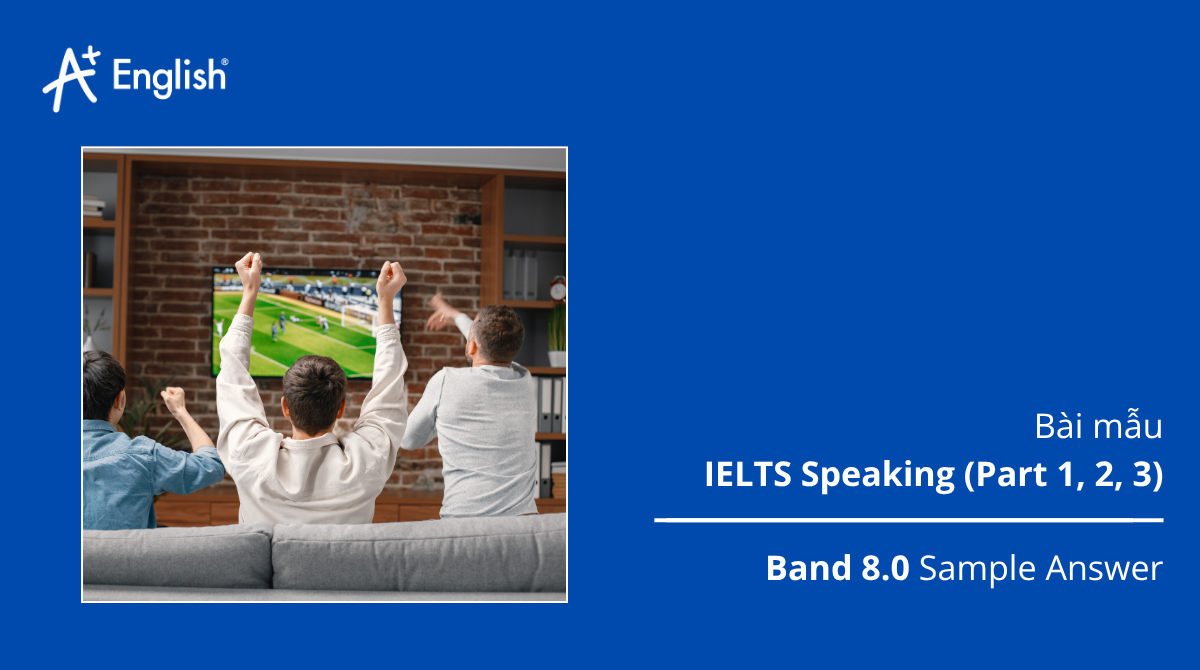
Describe a TV series which you enjoy watching. You should say:
And explain why you enjoy watching the series so much. |
| Task 3:
What kind of foreign TV programmes are popular in your country? What are the advantages of having foreign-made programmes on TV? Some people think governments should control the number of foreign-made TV programmes being shown. Do you agree? Why? What do you think are the qualities of a good children’s TV programme? What are the educational benefits on children watching TV? Many people think adults should influence what children watch. Do you agree? Why? What do you think are the advantages and disadvantages of having TV broadcast 24 hours a day? In what ways have advances in technology influenced the way people watch TV? What changes do you think will occur in broadcast media in the next 20 years? |
Source: IELTS Practice test Plus 3 TEST 2
2. Phân tích câu hỏi – Lập dàn ý (Analyze the topic – Outline)
Task 1
How much free time do you normally have? Why/Why not?
Thời gian rảnh trung bình mỗi ngày? Vì sao có/không?
What do you usually do in your free time?
Hoạt động thường làm khi rảnh (xem phim, nghe nhạc, đọc sách…)
Who do you spend your free time with?
Thường dành thời gian rảnh với ai? (gia đình, bạn bè…)
Do you wish you had more free time? Why/Why not?
Có muốn nhiều thời gian rảnh hơn không? Lý do?
Is it important to you to wear clothes that are comfortable?
Bạn có coi trọng sự thoải mái khi mặc đồ không?
Are you interested in fashion? Why/Why not?
Có quan tâm đến thời trang không? Lý do?
Were you interested in clothes when you were a child?
Hồi nhỏ có thích quần áo/thời trang không?
What are your favourite clothes like now?
Mô tả loại quần áo yêu thích hiện nay.
Task 2
What the series is about: Tóm tắt nội dung phim
Who presents/acts in it: Diễn viên chính
How often it is on: Tần suất chiếu (hàng tuần, mỗi ngày…)
Why you enjoy it: Lý do thích (giải trí, hấp dẫn, diễn viên…)
Task 3
What kind of foreign TV programmes are popular in your country?
Loại chương trình nước ngoài phổ biến (phim Hàn, TV show Mỹ…)
What are the advantages of having foreign-made programmes on TV?
Lợi ích của chương trình nước ngoài (đa dạng, học ngoại ngữ…)
Some people think governments should control the number of foreign-made TV programmes being shown. Do you agree? Why?
Đồng ý hay không? Vì sao? (bảo vệ văn hóa bản địa và tự do lựa chọn)
What do you think are the qualities of a good children’s TV programme?
Chất lượng chương trình thiếu nhi tốt (giáo dục, giải trí, an toàn)
What are the educational benefits on children watching TV?
Lợi ích giáo dục khi trẻ xem TV (học kỹ năng, ngôn ngữ…)
Many people think adults should influence what children watch. Do you agree? Why?
Người lớn nên kiểm soát nội dung trẻ xem? Lý do?
What do you think are the advantages and disadvantages of having TV broadcast 24 hours a day?
Lợi và hại của TV phát 24h (nhiều lựa chọn và ảnh hưởng sức khỏe)
In what ways have advances in technology influenced the way people watch TV?
Công nghệ ảnh hưởng như thế nào (xem trên điện thoại, theo yêu cầu…)
What changes do you think will occur in broadcast media in the next 20 years?
Dự đoán thay đổi tương lai (AI, cá nhân hóa, thực tế ảo…)
3. Bài Mẫu (Sample Essay) Band 6.0+
Task 1How much free time do you normally have? Why/Why not?I normally have around one hour of free time every day because school keeps me busy and I often have homework or other things to take care of. What do you usually do in your free time?I usually play mobile games like Free Fire or Roblox because they are fun and help me relax after a long day at school. Who do you spend your free time with?Most of the time, I spend my free time alone in my room, but sometimes I play games or talk with my younger sister after dinner. Do you wish you had more free time? Why/Why not?Yes, I really wish I had more free time so I could try new things like learning guitar or watching more movies with my friends. Is it important to you to wear clothes that are comfortable?Yes, comfort is very important to me because I don’t like feeling restricted. I prefer clothes that let me move easily and feel relaxed all day. Are you interested in fashion? Why/Why not?To be honest, I’m not very interested in fashion. I prefer wearing simple and comfortable clothes, and I don’t really follow the latest styles. Were you interested in clothes when you were a child?No, I didn’t care much about clothes when I was a child. My parents chose what I wore and I just focused on playing or watching cartoons. What are your favourite clothes like now?My favourite clothes now are simple and easy to wear, like T-shirts and shorts. I also like wearing hoodies when the weather is a bit cold. |
Task 2One of the TV series that I really enjoy watching is Stranger Things. It is a science fiction series set in a small American town during the 1980s. The story revolves around a group of kids who try to solve strange events in their neighborhood, including the disappearance of one of their friends and the appearance of a mysterious girl with supernatural powers. The series features young but talented actors such as Millie Bobby Brown and Finn Wolfhard. They play their roles very naturally, which makes the story feel real and emotional. The series is available on Netflix and new seasons are released every couple of years. I usually watch it on weekends or holidays when I have more free time. What makes me love this series so much is its mix of mystery, friendship, and a bit of horror. The atmosphere is dark but exciting, and every episode ends with a cliffhanger, so I always want to watch more. The friendship between the characters also reminds me of how important it is to support each other. Also, the show gives me something to talk about with my classmates, especially those who also enjoy science fiction. When I watch Stranger Things, I can forget about school stress and just dive into another world. All in all, it’s a series that keeps me on the edge of my seat, and I would definitely recommend it to anyone who enjoys stories full of adventure and mystery. |
Task 3What kind of foreign TV programmes are popular in your country?Well, let me think… In Vietnam, Korean dramas and American TV shows are very popular. Many people enjoy watching Korean love stories because they are emotional and dramatic. And, you know, young people also like American series like Friends or Stranger Things because of their exciting stories and great acting. These programmes bring something new that’s quite different from local shows. What are the advantages of having foreign-made programmes on TV?Hmm, that’s a good question. I guess one big advantage is that foreign-made programmes allow us to explore other cultures and lifestyles. They also help improve our English listening skills, especially when we watch with subtitles. And if you think about it, these programmes can introduce new ideas and fresh styles of storytelling, which can actually help local shows improve too. It’s like having a window to the world right in our living room. Some people think governments should control the number of foreign-made TV programmes being shown. Do you agree? Why?Well, I see both sides of the argument. On the one hand, too many foreign shows might make people forget about local culture, which isn’t good. But on the other hand, if we control them too much, it may limit creativity and people’s freedom to choose what they want to watch. Personally, I think instead of strict control, it’s better to support both local and foreign programmes equally—so we get the best of both worlds without losing our cultural identity What do you think are the qualities of a good children’s TV programme?Let me see… I’d say a good children’s programme should be fun, colorful, and easy to understand. It should also teach good values like kindness, honesty, and teamwork. And ideally, it includes songs or games to keep children engaged. Most importantly, it should be age-appropriate so that kids can enjoy learning while having fun. What are the educational benefits on children watching TV?Hmm, that’s an interesting one. I think educational TV can really help kids learn language, numbers, and even social skills. For example, shows like Dora the Explorer are great for building English vocabulary. They also teach problem-solving and creativity. But of course, it all depends on what they watch, so I think parents should guide children to choose the right programmes to get the most benefit. Many people think adults should influence what children watch. Do you agree? Why?Yes, I completely agree with that. You know, children are still learning and don’t always know what’s good or bad for them. If adults don’t check, kids might end up watching violent or scary things. But when adults help choose good programmes, children can have fun and learn useful things at the same time. So yeah, it’s really important for their safety and development. hat do you think are the advantages and disadvantages of having TV broadcast 24 hours a day?Well, on the one hand, having TV available 24/7 means people can watch whenever they want, even really late at night. That’s super convenient. But on the other hand, it can create bad habits—especially for kids who stay up too late. It can also encourage laziness. So, while it has its benefits, I think people need to be careful and manage their screen time wisely. In what ways have advances in technology influenced the way people watch TV?Oh, that’s a great question. These days, people don’t just watch TV on a television anymore. They use phones, tablets, and laptops. And thanks to streaming services like Netflix or YouTube, you don’t have to wait for a show to come on—you just watch what you want, when you want. So yeah, watching TV has become way more flexible and convenient compared to the past. What changes do you think will occur in broadcast media in the next 20 years?Hmm, that’s a tricky one, but really interesting. I think in the future, most TV content will be online instead of traditional broadcast. We might even have more virtual reality shows, where viewers feel like they’re inside the programme. Also, with AI becoming more advanced, it might suggest shows based on how we’re feeling. So overall, I think everything will be more personal, interactive, and high-tech. |
Dịch
| Task 1
Bạn thường có bao nhiêu thời gian rảnh? Tại sao/có hay không? Bạn thường làm gì trong thời gian rảnh? Bạn dành thời gian rảnh với ai? Bạn có ước mình có nhiều thời gian rảnh hơn không? Tại sao/có hay không? Việc mặc quần áo thoải mái có quan trọng với bạn không? Bạn có hứng thú với thời trang không? Tại sao/có hay không? Khi còn nhỏ bạn có thích quần áo không? Bây giờ bộ quần áo yêu thích của bạn trông như thế nào? |
| Task 2
Một trong những bộ phim truyền hình mà mình rất thích xem là Stranger Things. Đây là một bộ phim khoa học viễn tưởng lấy bối cảnh ở một thị trấn nhỏ của Mỹ vào những năm 1980. Câu chuyện xoay quanh một nhóm trẻ em cố gắng giải quyết những sự kiện kỳ lạ trong khu phố của mình, bao gồm việc một người bạn biến mất và sự xuất hiện của một cô bé bí ẩn có sức mạnh siêu nhiên. Bộ phim có sự tham gia của các diễn viên trẻ nhưng rất tài năng như Millie Bobby Brown và Finn Wolfhard. Họ diễn rất tự nhiên, khiến câu chuyện trở nên chân thật và xúc động. Phim được phát trên Netflix và mỗi vài năm sẽ có mùa mới. Mình thường xem vào cuối tuần hoặc dịp nghỉ lễ khi có nhiều thời gian hơn. Điều khiến mình yêu thích bộ phim này là sự kết hợp giữa bí ẩn, tình bạn và một chút kinh dị. Bầu không khí của phim vừa u ám vừa hấp dẫn, và mỗi tập đều kết thúc bằng một chi tiết hồi hộp khiến mình luôn muốn xem tiếp. Tình bạn giữa các nhân vật cũng làm mình nhớ rằng việc hỗ trợ nhau là điều rất quan trọng. Ngoài ra, bộ phim còn giúp mình có thêm chuyện để nói với bạn cùng lớp, đặc biệt là những người cũng yêu thích thể loại khoa học viễn tưởng. Khi xem Stranger Things, mình có thể tạm quên áp lực học hành và đắm mình vào một thế giới khác. Tóm lại, đây là một bộ phim khiến mình hồi hộp đến phút cuối, và mình chắc chắn sẽ giới thiệu cho bất kỳ ai yêu thích những câu chuyện phiêu lưu và bí ẩn. |
| Task 3
Những chương trình truyền hình nước ngoài nào phổ biến ở nước bạn? Những lợi ích của việc có chương trình truyền hình nước ngoài trên TV là gì? Một số người cho rằng chính phủ nên kiểm soát số lượng chương trình truyền hình nước ngoài được chiếu. Bạn có đồng ý không? Tại sao? Theo bạn, chương trình truyền hình dành cho trẻ em nên có những đặc điểm gì? Trẻ em xem TV có lợi ích giáo dục gì? Nhiều người cho rằng người lớn nên định hướng cho trẻ em xem gì. Bạn có đồng ý không? Tại sao? Theo bạn, ưu điểm và nhược điểm của việc truyền hình 24 giờ mỗi ngày là gì? Sự phát triển công nghệ đã ảnh hưởng đến cách người ta xem TV như thế nào? Theo bạn, truyền thông truyền hình sẽ thay đổi như thế nào trong 20 năm tới? |
4. Từ vựng (Vocabulary)
- Appearance /əˈpɪə.rəns/ – (B2,n): Sự xuất hiện
Collocations: sudden appearance (sự xuất hiện bất ngờ), public appearance (sự xuất hiện trước công chúng)
Example Sentence: The appearance of a mysterious girl changed everything in the town.
Translation: Sự xuất hiện của một cô gái bí ẩn đã thay đổi mọi thứ trong thị trấn. - Supernatural /ˌsuː.pəˈnætʃ.ər.əl/ – (B2,n): Siêu nhiên
Collocations: supernatural powers (năng lực siêu nhiên), supernatural events (sự kiện siêu nhiên)
Example Sentence: The girl in Stranger Things has supernatural powers.
Translation: Cô gái trong Stranger Things có những năng lực siêu nhiên. - Feature /ˈfiː.tʃər/ – (B2,n): Có sự góp mặt, bao gồm
Collocations: feature someone in a film (có ai đó tham gia trong phim), feature prominently (nổi bật trong)
Example Sentence: The series features young but talented actors.
Translation: Bộ phim có sự góp mặt của những diễn viên trẻ nhưng tài năng. - Release /rɪˈliːs/ – (B2,n): Phát hành
Collocations: release a film (phát hành phim), release a new season (phát hành mùa mới)
Example Sentence: New seasons are released every couple of years.
Translation: Các mùa mới được phát hành sau mỗi vài năm. - Subtitles /ˈsʌb.taɪ.təlz/ – (B2,n): Phụ đề
Collocations: watch with subtitles (xem có phụ đề), English subtitles (phụ đề tiếng Anh)
Example Sentence: We can improve our English by watching with subtitles.
Translation: Chúng ta có thể cải thiện tiếng Anh bằng cách xem có phụ đề. - Identity /aɪˈden.tə.ti/ – (B2,n): Bản sắc
Collocations: cultural identity (bản sắc văn hóa), lose/keep one’s identity (đánh mất/giữ bản sắc)
Example Sentence: We should enjoy foreign shows without losing our identity.
Translation: Chúng ta nên tận hưởng các chương trình nước ngoài mà không đánh mất bản sắc. - Appropriate /əˈprəʊ.pri.ət/ – (B2,adj):: Phù hợp
Collocations: age-appropriate (phù hợp với độ tuổi), appropriate behavior (hành vi phù hợp)
Example Sentence: The show should be age-appropriate for children.
Translation: Chương trình nên phù hợp với độ tuổi của trẻ em. - Flexible /ˈflek.sə.bəl/ – (B2,adj): Linh hoạt
Collocations: flexible schedule (lịch trình linh hoạt), flexible viewing (xem linh hoạt)
Example Sentence: People can now watch TV in a more flexible way.
Translation: Giờ đây mọi người có thể xem TV linh hoạt hơn. - Interactive /ˌɪn.təˈræk.tɪv/ – (B2,adj): Có tính tương tác
Collocations: interactive learning (học tập tương tác), interactive shows (chương trình có tính tương tác)
Example Sentence: Future TV may be more interactive and personalized.
Translation: TV trong tương lai có thể mang tính tương tác và cá nhân hóa hơn. - Kindness /ˈkaɪnd.nəs/ – (B2,n): Lòng tốt
Collocations: act of kindness (hành động tử tế), show kindness (thể hiện lòng tốt)
Example Sentence: Children’s shows should teach values like kindness.
Translation: Các chương trình cho trẻ nên dạy những giá trị như lòng tốt.
5. Thành ngữ (Idioms)
- On the edge of (one’s) seat: Cực kỳ hồi hộp, háo hức
Example Sentence: It’s a series that keeps me on the edge of my seat.
Translation: Đó là một loạt phim khiến tôi hồi hộp đến nghẹt thở. - Dive into (something) : Đắm chìm vào một hoạt động nào đó
Example Sentence: When I watch Stranger Things, I can forget about school stress and just dive into another world.
Translation: Khi xem Stranger Things, tôi có thể quên đi căng thẳng ở trường và hoàn toàn đắm chìm vào một thế giới khác. - Bring something to the table : Đóng góp điều gì có giá trị
Example Sentence: These programmes bring something new that’s different from local shows.
Translation: Những chương trình này mang đến điều mới mẻ, khác biệt so với các chương trình trong nước. - A window to the world : Cơ hội tiếp cận, khám phá thế giới
Example Sentence: It’s like having a window to the world right in our living room.
Translation: Nó giống như có một ô cửa sổ mở ra thế giới ngay trong phòng khách của chúng ta. - The best of both worlds: Lấy được lợi ích từ cả hai phía
Example Sentence: It’s better to support both local and foreign programmes equally, so we get the best of both worlds.
Translation: Tốt hơn là hỗ trợ cả chương trình trong nước lẫn nước ngoài, để chúng ta được hưởng lợi từ cả hai.
6. Ngữ pháp
1. So + adj + that (câu nguyên nhân – kết quả)
- Công thức chung: So + Tính từ + that + S + V
- Nghĩa tiếng Việt: Quá… đến nỗi mà…
- Bối cảnh sử dụng: Nhấn mạnh mức độ dẫn đến kết quả cụ thể
- Câu ví dụ: It’s so exciting that I always want to watch more.
- Dịch câu: Nó hấp dẫn đến mức tôi luôn muốn xem tiếp.
2. Wish + S + V2 (câu ước ở hiện tại)
- Công thức chung: Wish + S + V (quá khứ đơn)
- Nghĩa tiếng Việt: Ước điều gì đó không có thật ở hiện tại
- Bối cảnh sử dụng: Diễn tả mong muốn trái với thực tế
- Câu ví dụ: I wish I had more free time.
- Dịch câu: Tôi ước mình có nhiều thời gian rảnh hơn.
3. Relative clause – mệnh đề quan hệ
- Công thức chung: S + V + N (who/which/that + V…)
- Nghĩa tiếng Việt: Mô tả người/vật được nói đến
- Bối cảnh sử dụng: Thêm thông tin về danh từ
- Câu ví dụ: A group of kids who try to solve strange events.
- Dịch câu: Một nhóm trẻ cố gắng giải quyết những sự kiện kỳ lạ.
4. Conditional sentence type 2 (câu điều kiện loại 2)
- Công thức chung: If + S + V2, S + would/could + V
- Nghĩa tiếng Việt: Nếu… thì đã… (không có thật ở hiện tại)
- Bối cảnh sử dụng: Nói về điều tưởng tượng trái với thực tế
- Câu ví dụ: If I had more time, I would learn guitar.
- Dịch câu: Nếu tôi có nhiều thời gian, tôi sẽ học guitar.
5. What + S + V (mệnh đề danh từ)
- Công thức chung: What + S + V
- Nghĩa tiếng Việt: Điều mà…, cái mà…
- Bối cảnh sử dụng: Dùng như chủ ngữ hoặc tân ngữ trong câu
- Câu ví dụ: What makes me love this series so much is its mix of mystery and friendship.
- Dịch câu: Điều khiến tôi yêu thích loạt phim này là sự kết hợp giữa bí ẩn và tình bạn.
7. Các hình thái thể hiện sự lưu loát
Use of Cohesive Devices (Logical Connectors, Pronouns, Conjunctions):
- Logical connectors: because, although, so, instead of, however
- Pronouns: they, it, those, these
- Conjunctions: also, in the future, all in all, on the other hand
Spoken Language Style:
- Ngắt câu ở chỗ tự nhiên: “Yes, I do. // It’s important to me because…”
- Sử dụng cấu trúc đơn giản, mạch lạc: “I usually play games. They help me relax.”
- Ngôn ngữ nói phổ biến: “To be honest, I’m not very into fashion.” (dùng trong nói nhiều hơn viết)
8. Phát âm
1. Meaningful Utterances (Chunks)
- Chia câu thành các cụm từ ngắn có nghĩa để giúp việc nói trôi chảy và tự nhiên hơn.
- Example:
- after dinner
- every couple of years
- on the edge of my seat
- a bit of horror
- new seasons are released
Rhythm:
- Nhấn mạnh các từ quan trọng như danh từ, động từ, tính từ.
- Giảm âm các từ chức năng như giới từ, mạo từ để nói tự nhiên hơn.
- Example:
- “I usually play mobile games like Free Fire or Roblox.”
- “New seasons are released every couple of years.” Trọng âm rơi vào các từ nội dung như play, games, seasons, released, giúp người nghe dễ nắm thông tin chính.
Elision/Linking:
- Dropping unnecessary sounds in casual speech to produce smoother and faster speech.
- Example:
- “kind of” → /ˈkaɪnəv/
- “watch it” → /ˈwɒtʃɪt/
Stress and Intonation
- Nhấn mạnh từ quan trọng để thể hiện sự quan tâm hoặc cảm xúc.
- Example:
- “I really wish I had more free time.”
- “It’s a series that keeps me on the edge of my seat.”
Contrastive Stress
- Nhấn mạnh hai từ để làm nổi bật sự khác biệt hoặc tương phản.
- Example:
- “I prefer comfortable clothes, not fashionable ones.”
- “It’s better to support both local and foreign programmes.”
9. Bài luyện tập (Practice Exercise)
Bài tập dịch từ tiếng Việt qua tiếng Anh:
Bài tập viết lại câu:
|
| KEY
Bài tập dịch từ tiếng Việt qua tiếng Anh:
Bài tập viết lại câu:
|
Sau khi tham khảo bài mẫu IELTS Speaking – Band 6.0, A+ English hy vọng các bạn sẽ hiểu rõ cách triển khai câu trả lời, phát triển ý tưởng mạch lạc. Đồng thời, các bạn cũng sẽ thu thập thêm nhiều từ vựng, cấu trúc hay và cách diễn đạt tự nhiên để áp dụng trong kỳ thi.
Nếu bạn đang tìm một khóa học IELTS chất lượng cao, phù hợp với trình độ của mình, hãy liên hệ ngay Tại đây để được tư vấn lộ trình học cá nhân hóa và nhận những tài liệu độc quyền mới nhất!
A+ English chúc các bạn học tập hiệu quả!