A+ English xin giới thiệu đến các bạn bài mẫu IELTS Speaking band 6.0 với những câu trả lời ấn tượng và tự nhiên, giúp thí sinh ghi điểm cao trong kỳ thi.
Bài mẫu không chỉ gợi ý cách triển khai ý tưởng mạch lạc mà còn cung cấp từ vựng phong phú, cấu trúc câu đa dạng và cách diễn đạt tự nhiên, giúp bạn tự tin giao tiếp và thuyết phục giám khảo.
Hãy cùng khám phá ngay để nâng tầm kỹ năng Speaking của bạn nhé!
1. Đề bài IELTS Speaking (Assignment)
| Task 1:
Do you live near here? Do you live in a house or an apartment? How long have you lived there? Do you like where you are living now? Why/Why not? How often do you get holidays from work/college? Do you usually stay at home when you have a holiday, or do you go somewhere? Why/Why not? What did you do the last time you had a holiday? Do you wish you had more holidays? Why/Why not? |
| Task 2:
Describe a sports match which you saw and which you found enjoyable. You should say:
and explain why you enjoyed watching the match so much. |
| Task 3:
What sports do most young people in your country enjoy doing? What are the main benefits for young people of remaining to play different sports? Can you suggest some ways to encourage young people to play more sports? What kinds of sports do people in your country most often watch on TV? Why? What do you think are the disadvantages of having a lot of coverage of sports on TV? How do you think the broadcasting of sports on TV will change in the next 20 years Why do you think international sports competitions (like the Football World Cup) are so popular? What am the advantages and disadvantages to a country when it hosts a major international sports competition? What should governments invest more in: helping their top sports people to win international competitions. or in promoting sport for everyone? Why? |
Source: IELTS Practice test Plus 3 TEST 6
2. Phân tích câu hỏi – Lập dàn ý (Analyze the topic – Outline)
Task 1
Do you live near here?
Có, tôi sống gần đây / Không, tôi đến từ nơi khác.
Do you live in a house or an apartment?
Tôi sống ở nhà riêng / căn hộ.
How long have you lived there?
Tôi đã sống ở đó được… năm/tháng.
Do you like where you are living now? Why/Why not?
Có, vì tiện nghi/gần công việc/yên tĩnh…
Không, vì xa trung tâm/ồn ào…
How often do you get holidays from work/college?
Tôi có kỳ nghỉ mỗi tháng/năm một lần.
Do you usually stay at home when you have a holiday, or do you go somewhere? Why/Why not?
Tôi thường đi du lịch vì muốn thư giãn/trải nghiệm.
Tôi ở nhà để nghỉ ngơi/tiết kiệm chi phí.
What did you do the last time you had a holiday?
Tôi đã đi du lịch/ở nhà/tham gia hoạt động gia đình…
Do you wish you had more holidays? Why/Why not?
Có, vì tôi muốn có thêm thời gian nghỉ ngơi.
Không cần, vì tôi đã có đủ kỳ nghỉ.
Task 2
What the sport was:
Trận bóng đá/bóng rổ/quần vợt…
Who was playing in this game:
Hai đội bóng nổi tiếng/câu lạc bộ/trường học…
Where you watched it:
Ở sân vận động/trên TV/cùng bạn bè…
Why you enjoyed it:
Trận đấu hấp dẫn, kịch tính, cầu thủ giỏi, không khí sôi động…
Task 3
What sports do most young people in your country enjoy doing?
Bóng đá, cầu lông, bơi lội…
What are the main benefits for young people of remaining to play different sports?
Rèn luyện sức khỏe, kỹ năng làm việc nhóm, giải trí…
Can you suggest some ways to encourage young people to play more sports?
Mở nhiều sân chơi thể thao, truyền thông tích cực, miễn phí tham gia…
What kinds of sports do people in your country most often watch on TV? Why?
Bóng đá, vì hấp dẫn và phổ biến…
What do you think are the disadvantages of having a lot of coverage of sports on TV?
Dễ gây nghiện, ít vận động, bỏ bê học tập/làm việc…
How do you think the broadcasting of sports on TV will change in the next 20 years?
Sẽ hiện đại hơn, dùng công nghệ VR/AR, phát trực tuyến nhiều hơn…
Why do you think international sports competitions (like the Football World Cup) are so popular?
Gắn kết các quốc gia, hấp dẫn, có nhiều đội mạnh…
What are the advantages and disadvantages to a country when it hosts a major international sports competition?
Ưu: quảng bá hình ảnh quốc gia, du lịch phát triển.
Nhược: chi phí lớn, rủi ro tài chính…
What should governments invest more in: helping their top sports people to win international competitions, or in promoting sport for everyone? Why?
Nên cân bằng, nhưng ưu tiên phát triển thể thao cộng đồng để nâng cao sức khỏe toàn dân.
3. Bài Mẫu (Sample Essay) Band 6.0+
Task 1Do you live near here?Yes, I live in Ho Chi Minh City, which is pretty close. I’ve stayed here my whole life, so I know the area well. Do you live in a house or an apartment?I live in an apartment with my family. It’s quite small but cozy and safe. Living high up gives us a good view of the city. How long have you lived there?I’ve been living there for about ten years now. It’s been a long time, and I’ve gotten used to the surroundings and neighborhood. Do you like where you are living now? Why/Why not?Yes, I do like it because it’s peaceful, and everything I need—like school and shops—is nearby. It’s also where I feel comfortable. How often do you get holidays from work/college?As a student, I get holidays during summer, Tet, and sometimes mid-term. They’re not too frequent, but enough to take a breather. Do you usually stay at home when you have a holiday, or do you go somewhere? Why/Why not?I usually stay at home because I’m not that into going out. I prefer playing video games or spending time quietly with my family. What did you do the last time you had a holiday?Last holiday, I mostly stayed in, played Rise of Kingdoms, and helped cook lunch. I also played football once with my classmates at school. Do you wish you had more holidays? Why/Why not?Yes, definitely. I feel like more holidays would give me time to relax, catch up on hobbies, and spend quality time with my sister. |
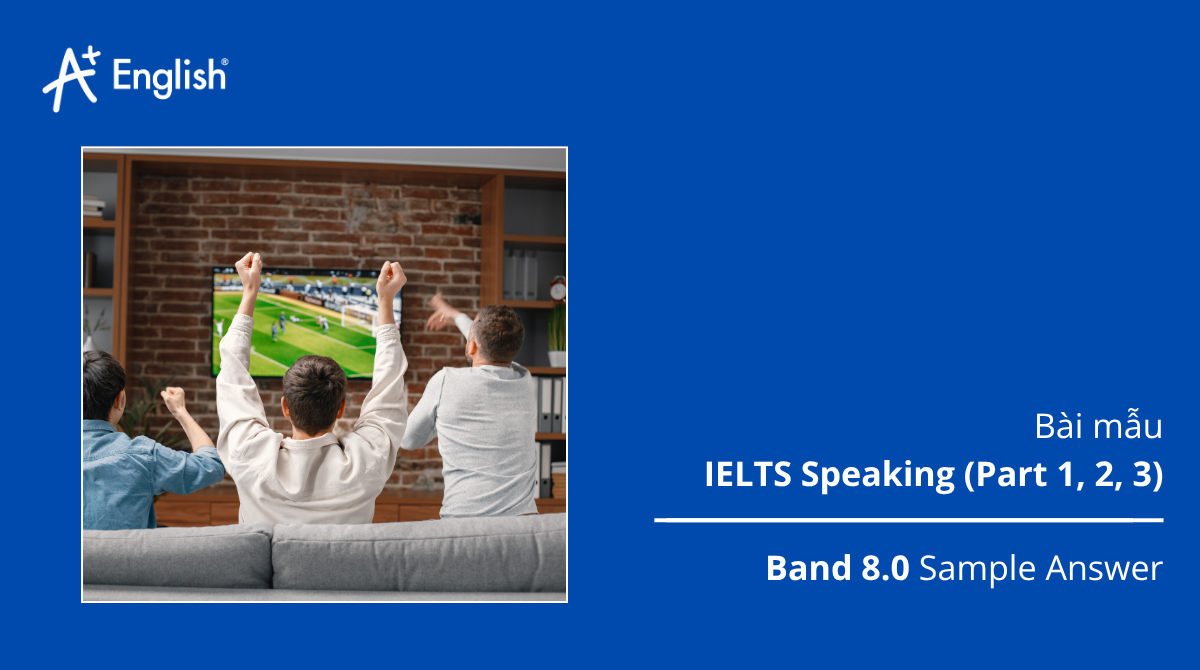
Task 2Oh wow, that’s such an interesting thing to talk about! Let me see… I don’t usually watch sports, but I remember one match that stood out. It was a football match between Vietnam and Thailand during the AFF Cup. I watched it at home with my dad and little sister. Even though I’m not really a sporty person, I was drawn into the excitement of the game. The players were giving their all, and the crowd noise—even through the TV—was electrifying. My dad was so into it, and for once, we were all sitting together, cheering. The match itself was pretty intense. Vietnam was playing with great spirit. The goals were spectacular, and each move felt like a roller coaster. As they say, “it kept me on the edge of my seat.” Even though I don’t usually talk much with my parents, this match made us all connect for a moment. What I enjoyed most was that feeling of unity. Everyone—online and offline—was talking about the game. It felt like the whole country was holding its breath at every pass. It reminded me that sports can be more than just a game. As the idiom goes, “sports bring people together.” So, while I don’t follow sports often, that football match was a special moment. It was one of those rare times where I didn’t feel like an outsider, and I could say I was part of something bigger than myself. |
Task 3What sports do most young people in your country enjoy doing?Hmm, let me think… In Vietnam, I’d say football is definitely the most popular sport among young people. You can see kids and teens playing almost everywhere—from schoolyards to local parks. It’s a low-cost sport that doesn’t need much equipment, so it’s super accessible. Plus, it’s a great way to connect with others. For many teens, it’s a fun way to stay active and make new friends. What are the main benefits for young people of continuing to play different sports?That’s an interesting question. Well, playing different sports helps young people build physical strength and better coordination. But not just that—it also teaches life skills like teamwork, discipline, and time management. On top of that, it’s a great way to deal with stress. You know, there’s a saying: “a healthy body leads to a healthy mind,” and that really applies, especially during the school years. Can you suggest some ways to encourage young people to play more sports?Let me see… I think schools could organize more friendly matches or sports festivals to make things more fun and less competitive. Also, communities could build more free playgrounds or offer low-cost classes. And of course, parents and teachers should lead by example—when kids see adults being active, they often follow. A little encouragement really goes a long way. Like they say, “you can lead a horse to water, but you can’t make it drink”—but showing the way still matters. What kinds of sports do people in your country most often watch on TV? Why?Well, if I had to choose one, I’d say football is number one for sure. Whenever our national team plays, it feels like the whole country stops to watch. People love the excitement and unpredictability of it. Big events like the World Cup even bring families together—it feels more like a celebration than just a match. Even people who don’t usually watch sports often join in. What do you think are the disadvantages of having a lot of coverage of sports on TV?Hmm, that’s a good point. I suppose one issue is that people might spend too much time watching sports instead of actually playing. It can also make some viewers feel discouraged if they think they can never play like the professionals. And for students, it could become a distraction from studying. So yeah, like the saying goes, “too much of a good thing can be bad.” How do you think the broadcasting of sports on TV will change in the next 20 years?That’s an interesting one… I think in the future, we’ll see more online streaming than traditional TV broadcasting. People might watch games using virtual reality and feel like they’re inside the stadium. Also, short highlights and interactive content will probably become more common on social media. Honestly, the way we watch sports is already changing, and I think it’ll keep getting more advanced and personalized. Why do you think international sports competitions (like the Football World Cup) are so popular?Let me think for a moment… I believe it’s because these events bring people from different countries together. Everyone cheers for their own team, and it creates a strong emotional connection. The matches are exciting, and the players are often the best in the world. Also, it’s more than just a game—it feels like a global celebration of both sports and culture. As people often say, “it’s not just a game—it’s a shared experience.” What are the advantages and disadvantages to a country when it hosts a major international sports competition?Well, that’s a tough one. On the one hand, hosting a big event can boost tourism, improve infrastructure, and give the country a lot of global attention. But on the other hand, the cost is massive, and sometimes the new stadiums don’t get used much afterward. There’s also pressure to do well and make everything perfect. So yeah, like the idiom goes, “every rose has its thorn.” What should governments invest more in: helping their top sportspeople to win international competitions, or in promoting sport for everyone? Why?Hmm, that’s a tough call, but if you ask me, I’d say promoting sport for everyone is more important. It helps improve public health, builds healthy habits in kids, and creates a more active society overall. Sure, winning medals is great, but if only a few benefit, it doesn’t really help the whole population. A healthy nation is a stronger one. As they say, “don’t put all your eggs in one basket.” |
Dịch
| Task 1
Bạn có sống gần đây không? Bạn sống trong nhà hay căn hộ? Bạn đã sống ở đó bao lâu rồi? Bạn có thích nơi mình đang sống không? Tại sao/có hay không? Bạn thường được nghỉ lễ bao lâu trong năm? Bạn thường ở nhà trong kỳ nghỉ hay đi đâu đó? Tại sao? Bạn đã làm gì vào kỳ nghỉ gần nhất? Bạn có ước gì có thêm kỳ nghỉ không? Tại sao? |
| Task 2
Ôi, đây là một chủ đề khá thú vị! Để mình nghĩ chút nhé… Mình không thường xuyên xem thể thao, nhưng có một trận đấu mình nhớ mãi. Đó là một trận bóng đá giữa Việt Nam và Thái Lan trong khuôn khổ AFF Cup. Mình xem ở nhà cùng ba và em gái. Mặc dù mình không phải người mê thể thao, nhưng trận đấu này thật sự rất hấp dẫn. Các cầu thủ chơi hết mình, và tiếng cổ vũ từ khán giả – dù chỉ nghe qua TV – vẫn cực kỳ sôi động. Ba mình thì vô cùng hào hứng, và lần hiếm hoi cả nhà ngồi xem cùng nhau, cổ vũ cùng nhau. Trận đấu cực kỳ căng thẳng và kịch tính. Đội Việt Nam chơi đầy nhiệt huyết. Những bàn thắng thật tuyệt vời, và từng pha bóng như đưa mình lên xuống cảm xúc. Như người ta nói, “nó khiến mình không rời mắt khỏi màn hình.” Dù bình thường mình ít trò chuyện với ba mẹ, trận này khiến cả nhà có một khoảnh khắc gắn kết. Điều mình thích nhất là cảm giác đoàn kết. Cả trên mạng và ngoài đời, ai cũng nói về trận đấu. Giống như cả đất nước đang hồi hộp theo từng cú sút. Trận đấu làm mình nhận ra thể thao không chỉ là trò chơi, mà còn là nơi kết nối con người. Vậy nên, dù mình không phải người theo dõi thể thao thường xuyên, nhưng trận đấu bóng đá đó là một kỷ niệm đáng nhớ. Nó là một trong những khoảnh khắc hiếm hoi khiến mình cảm thấy không lạc lõng, mà thật sự là một phần của điều gì đó lớn lao hơn. |
| Task 3
Thanh thiếu niên ở nước bạn thường thích chơi môn thể thao nào? Lợi ích chính khi thanh niên tiếp tục chơi nhiều môn thể thao là gì? Bạn có thể gợi ý cách nào để khuyến khích thanh niên chơi thể thao nhiều hơn không? Người dân nước bạn thường xem môn thể thao nào nhất trên TV? Tại sao? Theo bạn, nhược điểm của việc có quá nhiều chương trình thể thao trên TV là gì? Bạn nghĩ phát sóng thể thao trên TV sẽ thay đổi thế nào trong 20 năm tới? Theo bạn, tại sao các giải thể thao quốc tế như World Cup lại được yêu thích đến vậy? Lợi ích và bất lợi khi một quốc gia đăng cai tổ chức giải thể thao lớn là gì? Chính phủ nên đầu tư nhiều hơn vào việc giúp vận động viên hàng đầu giành giải quốc tế, hay khuyến khích thể thao đại chúng? Tại sao? |
4. Từ vựng (Vocabulary)
- Accessible /əkˈses.ə.bəl/ –(B2,n): Dễ tiếp cận
Collocations:accessible to everyone (dễ tiếp cận với mọi người), make something accessible (làm cái gì đó dễ tiếp cận)
Example Sentence: It’s a low-cost sport that needs little equipment, so it’s very accessible.
Translation: Đó là một môn thể thao chi phí thấp, cần ít thiết bị, vì vậy rất dễ tiếp cận. - Coordination /kəʊˌɔː.dɪˈneɪ.ʃən/ – (B2,n): Sự phối hợp
Collocations: improve coordination (cải thiện sự phối hợp), hand-eye coordination (phối hợp tay và mắt)
Example Sentence: Playing various sports can help young people develop better physical strength and coordination.
Translation: Chơi nhiều môn thể thao giúp người trẻ phát triển thể chất và khả năng phối hợp tốt hơn. - Infrastructure /ˈɪn.frəˌstrʌk.tʃər/ –(B2,n): sở hạ tầng
Collocations: improve infrastructure (cải thiện cơ sở hạ tầng), public infrastructure (cơ sở hạ tầng công cộng)
Example Sentence: Hosting boosts tourism, improves infrastructure, and gives the country a lot of global attention.
Translation: Việc đăng cai thúc đẩy du lịch, cải thiện hạ tầng và tăng sự chú ý quốc tế cho đất nước. - Discipline /ˈdɪs.ə.plɪn/ – (B2,n): Kỷ luật
Collocations: self-discipline (tự kỷ luật), enforce discipline (thực thi kỷ luật)
Example Sentence: It also teaches important life skills like teamwork, discipline, and time management.
Translation: Nó còn dạy những kỹ năng sống quan trọng như làm việc nhóm, kỷ luật và quản lý thời gian. - Electrifying /ɪˈlek.trɪ.faɪ.ɪŋ/ –(B2,adj): Đầy phấn khích, gây hứng khởi
Collocations:electrifying atmosphere (bầu không khí náo nhiệt), electrifying moment (khoảnh khắc gây hứng khởi)
Example Sentence: The crowd noise—even through the TV—was electrifying.
Translation: Tiếng cổ vũ của đám đông—ngay cả qua TV—cũng thật sôi động. - Intense /ɪnˈtens/ – (B2,adj): Mạnh mẽ, căng thẳng
Collocations:intense competition (sự cạnh tranh khốc liệt), intense pressure (áp lực lớn)
Example Sentence: The match itself was pretty intense.
Translation: Trận đấu đó khá căng thẳng. - Spectacular /spekˈtæk.jə.lər/ – (B2,adj): Ngoạn mục
Collocations: spectacular view (cảnh đẹp ngoạn mục), spectacular goal (bàn thắng ngoạn mục)
Example Sentence: The goals were spectacular.
Translation: Những bàn thắng thật ngoạn mục. - Unity /ˈjuː.nə.ti/ – (B2,n): Sự đoàn kết
Collocations: national unity (sự đoàn kết dân tộc), promote unity (thúc đẩy sự đoàn kết)
Example Sentence: What I enjoyed most was that feeling of unity.
Translation: Điều tôi thích nhất là cảm giác về sự đoàn kết đó. - Celebration /ˌsel.əˈbreɪ.ʃən/ – (B2,n): Sự kỷ niệm, lễ hội
Collocations: national celebration (lễ hội quốc gia), hold a celebration (tổ chức lễ kỷ niệm)
Example Sentence: It feels like a national celebration.
Translation: Nó giống như một lễ hội quốc gia. - Encouragement /ɪnˈkʌr.ɪdʒ.mənt/ –(B2,n):: Sự khích lệ
Collocations: offer encouragement (đưa ra sự khuyến khích), words of encouragement (lời động viên)
Example Sentence: A bit of encouragement can go a long way.
Translation: Một chút khích lệ cũng có thể mang lại hiệu quả lớn.
5. Thành ngữ (Idioms)
- Every rose has its thorn : Điều tốt đẹp nào cũng có mặt trái của nó
Example Sentence: Hosting a big sports event brings many benefits, but every rose has its thorn.
Translation: Việc tổ chức một sự kiện thể thao lớn mang lại nhiều lợi ích, nhưng điều gì cũng có mặt trái của nó - Bring people together : Kết nối mọi người, gắn kết cộng đồng
Example Sentence: As the idiom goes, “sports bring people together.”
Translation: Như thành ngữ nói, “thể thao kết nối mọi người lại với nhau.” - A healthy body leads to a healthy mind : Thân thể khỏe mạnh thì tinh thần cũng minh mẫn
Example Sentence: As the saying goes, “a healthy body leads to a healthy mind.”
Translation: Như câu nói, “thân thể khỏe mạnh thì tinh thần cũng khỏe mạnh.” - Too much of a good thing can be bad : Cái gì nhiều quá cũng không tốt
Example Sentence: As people say, “too much of a good thing can be bad,” and that’s true here.
Translation: Như người ta nói, “cái gì nhiều quá cũng không tốt,” và điều đó đúng trong trường hợp này. - Don’t put all your eggs in one basket: Đừng đặt hết niềm tin hoặc đầu tư vào một thứ duy nhất
Example Sentence: As they say, “don’t put all your eggs in one basket.”
Translation: Như người ta nói, “đừng đặt tất cả trứng vào một giỏ.”
6. Ngữ pháp
1. Present Perfect Continuous
- Công thức chung: have/has + been + V-ing
- Nghĩa tiếng Việt: Đã và đang làm gì (kéo dài đến hiện tại)
- Bối cảnh sử dụng: Diễn tả việc sống ở nơi nào trong thời gian dài
- Câu ví dụ: I’ve been living there for about ten years now.
- Dịch câu: Tôi đã sống ở đó khoảng mười năm rồi.
2. So + adjective + that
- Công thức chung: so + tính từ + that + mệnh đề
- Nghĩa tiếng Việt: Quá… đến nỗi mà…
- Bối cảnh sử dụng: Diễn tả cảm xúc trong một trận đấu
- Câu ví dụ: The match was so intense that I couldn’t look away.
- Dịch câu: Trận đấu quá căng thẳng đến mức tôi không thể rời mắt.
3. Enough + noun + to V
- Công thức chung: enough + danh từ + to V
- Nghĩa tiếng Việt: Đủ… để làm gì
- Bối cảnh sử dụng: Nói về kỳ nghỉ
- Câu ví dụ: They’re not too frequent, but enough time to take a breather.
- Dịch câu: Không quá thường xuyên, nhưng đủ để nghỉ ngơi một chút.
4. It was one of those times when…
- Công thức chung: It was one of those times when + mệnh đề
- Nghĩa tiếng Việt: Đó là một trong những lúc mà…
- Bối cảnh sử dụng: Hồi tưởng lại khoảnh khắc đáng nhớ
- Câu ví dụ: It was one of those times where I didn’t feel like an outsider.
- Dịch câu: Đó là một trong những lần tôi không cảm thấy mình là người ngoài cuộc.
5. Like + noun / clause (như là…)
- Công thức chung: Like + danh từ/mệnh đề
- Nghĩa tiếng Việt: Giống như / Ví dụ như
- Bối cảnh sử dụng: So sánh tình huống
- Câu ví dụ: Like the idiom says, every rose has its thorn.
- Dịch câu: Như câu thành ngữ nói, hoa hồng nào cũng có gai.
7. Các hình thái thể hiện sự lưu loát
Use of Cohesive Devices (Logical Connectors, Pronouns, Conjunctions):
- Logical connectors: as the saying goes, like I said, what I liked most was…
- Pronouns: this, that, they, it, those
- Conjunctions: so, even though, while,
Spoken Language Style:
- Câu ngắn gọn: “Sure!”, “Well…”, “I guess…”
- Dừng ngắt tạm thời: “Let me see…”, “You know…”
- Sử dụng thành ngữ và ngôn ngữ gần gũi: “It felt like a national celebration.”
- Mở rộng tự nhiên: “…and for once, we were all sitting together, cheering.” → văn nói có yếu tố cảm xúc, đa tầng.
8. Phát âm
1. Meaningful Utterances (Chunks)
- Chia câu thành các cụm từ ngắn có nghĩa để giúp việc nói trôi chảy và tự nhiên hơn.
- Example:
- “step out of my comfort zone”
- “bring people together”
- “a healthy body leads to a healthy mind”
- “pretty intense”
- “I’ve been living there”
Rhythm:
- Nhấn mạnh các từ quan trọng như danh từ, động từ, tính từ.
- Giảm âm các từ chức năng như giới từ, mạo từ để nói tự nhiên hơn.
- Example:
- Discounts make online shopping more attractive.
- Nhấn mạnh: make, more attractive
- Giảm âm: discounts, online shopping
Elision/Linking
- Dropping unnecessary sounds in casual speech to produce smoother and faster speech.
- Example:
- “next day” → /nekst deɪ/
- “used to” → /ˈjuːstə/
- “go out” → /gəʊ‿aʊt/
- “watch it” → /wɒʧ‿ɪt/
Stress and Intonation
- Nhấn mạnh từ quan trọng để thể hiện sự quan tâm hoặc cảm xúc.
- Example:
- I REALLY prefer online shopping. (Nhấn mạnh “REALLY” để thể hiện mức độ yêu thích mạnh mẽ.)
- I NEVER buy things I don’t need. (Nhấn mạnh “NEVER” để nhấn mạnh rằng điều đó không bao giờ xảy ra.)
Contrastive Stress
- Nhấn mạnh hai từ để làm nổi bật sự khác biệt hoặc tương phản.
- Example:
- Shopping online is more convenient than shopping in-store.
- (Nhấn mạnh “online” và “in-store” để thể hiện sự đối lập.)
- I prefer staying at home, but my friends like going out.
- (Nhấn mạnh “home” và “out” để so sánh hai lựa chọn trái ngược.)
9. Bài luyện tập (Practice Exercise)
Bài tập dịch từ tiếng Việt qua tiếng Anh:
Bài tập viết lại câu:
|
| KEY
Bài tập dịch từ tiếng Việt qua tiếng Anh:
Bài tập viết lại câu:
|
Sau khi tham khảo bài mẫu IELTS Speaking – Band 6.0, A+ English hy vọng các bạn sẽ hiểu rõ cách triển khai câu trả lời, phát triển ý tưởng mạch lạc. Đồng thời, các bạn cũng sẽ thu thập thêm nhiều từ vựng, cấu trúc hay và cách diễn đạt tự nhiên để áp dụng trong kỳ thi.
Nếu bạn đang tìm một khóa học IELTS chất lượng cao, phù hợp với trình độ của mình, hãy liên hệ ngay Tại đây để được tư vấn lộ trình học cá nhân hóa và nhận những tài liệu độc quyền mới nhất!
A+ English chúc các bạn học tập hiệu quả!