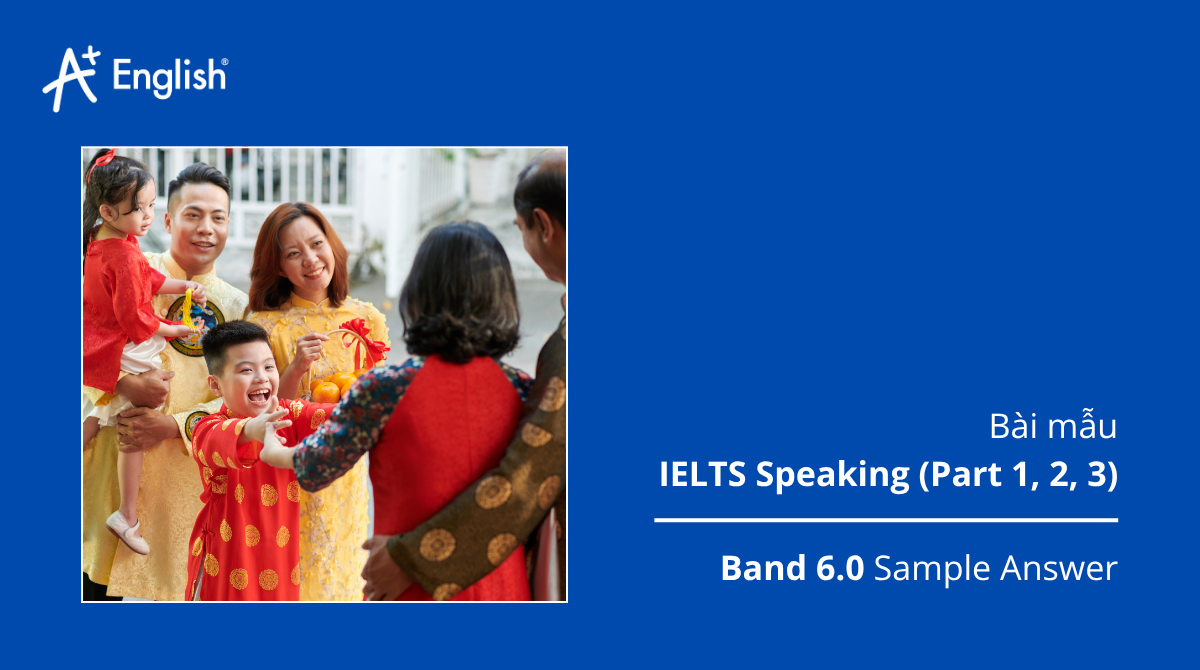
A+ English xin giới thiệu đến các bạn bài mẫu IELTS Speaking band 6.0 với những câu trả lời ấn tượng và tự nhiên, giúp thí sinh ghi điểm cao trong kỳ thi.
Bài mẫu không chỉ gợi ý cách triển khai ý tưởng mạch lạc mà còn cung cấp từ vựng phong phú, cấu trúc câu đa dạng và cách diễn đạt tự nhiên, giúp bạn tự tin giao tiếp và thuyết phục giám khảo.
Hãy cùng khám phá ngay để nâng tầm kỹ năng Speaking của bạn nhé!
1. Đề bài IELTS Speaking (Assignment)
| Task 1:
Why did you choose your subject(s)? When do you prefer to study on your own? [Why?] Tell me something about the other students on your course. What don’t you like about your studies? What sports are popular in your country? Did you learn any sports at school? [Why? / Why not?] How often do you watch sport? [Why not?] Do you participate in any sports at the moment? [Which ones?] |
| Task 2:
Describe a special event (e.g. a festival, carnival or other celebration) that takes place in your country.You should say:
and explain why the event is special. |
| Task 3:
What sort of occasions do families and friends like to celebrate? How important are celebrations in people’s lives? [Why? / Why not?] Should people have time off work for important celebrations? [Why? / Why not?] Why do many people enjoy participating in national celebrations? Have national celebrations become more or less important over time? [Why?] What sort of things do you think countries will celebrate in the future? |
Source: The Official cambridge guide to IELTS TEST 3
2. Phân tích câu hỏi – Lập dàn ý (Analyze the topic – Outline)
Task 1
Why did you choose your subject(s)?
Vì thích, phù hợp khả năng, cơ hội việc làm tốt.
When do you prefer to study on your own? [Why?]
Thích học buổi tối, vì yên tĩnh, tập trung hơn.
Tell me something about the other students on your course.
Thân thiện, năng động, hỗ trợ nhau trong học tập.
What don’t you like about your studies?
Áp lực thi cử, khối lượng bài tập lớn.
What sports are popular in your country?
Bóng đá, cầu lông, bóng chuyền.
Did you learn any sports at school? [Why? / Why not?]
Có, vì nằm trong chương trình bắt buộc, tốt cho sức khỏe.
How often do you watch sport? [Why not?]
Thỉnh thoảng, bận học và làm việc, không nhiều thời gian.
Do you participate in any sports at the moment? [Which ones?]
Có, chơi cầu lông cuối tuần cùng bạn bè.
Task 2
Why it takes place → Tết Nguyên Đán, để chào đón năm mới.
What people do → Sum họp gia đình, lì xì, thăm viếng họ hàng.
When the event takes place → Âm lịch, thường vào cuối tháng 1 hoặc đầu tháng 2.
Explain why the event is special → Dịp đoàn tụ, giữ gìn truyền thống, văn hóa dân tộc.
Task 3
What sort of occasions do families and friends like to celebrate?
Sinh nhật, cưới hỏi, lễ hội, ngày lễ truyền thống, tốt nghiệp.
How important are celebrations in people’s lives? [Why? / Why not?]
Rất quan trọng, tạo sự gắn kết, lưu giữ kỷ niệm, giảm căng thẳng.
Should people have time off work for important celebrations? [Why? / Why not?]
Nên, giúp cân bằng cuộc sống, duy trì truyền thống văn hóa.
Why do many people enjoy participating in national celebrations?
Thể hiện tinh thần dân tộc, gắn bó cộng đồng.
Have national celebrations become more or less important over time? [Why?]
Có xu hướng ít quan trọng hơn trước do lối sống hiện đại, bận rộn.
What sort of things do you think countries will celebrate in the future?
Thành tựu công nghệ, bảo vệ môi trường, đa dạng văn hóa, hòa bình thế giới.
3. Bài Mẫu (Sample Essay) Band 6.0+
Task 1Why did you choose your subject(s)?I chose my subjects because they seemed interesting and matched my strengths. Also, they offer useful knowledge and skills for my future career. When do you prefer to study on your own? [Why?]I prefer studying alone at night since it’s quieter, which helps me concentrate better. The peaceful environment also makes me feel more focused and productive. Tell me something about the other students on your course.My classmates are friendly and supportive. We often help each other with difficult assignments, and sometimes we play football during recess to relax. What don’t you like about your studies?I don’t enjoy the heavy workload of homework and exams. It feels overwhelming sometimes, especially when multiple deadlines fall around the same time. What sports are popular in your country?Football is definitely the most popular sport in my country. Many people enjoy watching matches on TV or playing with friends in local parks. Did you learn any sports at school? [Why? / Why not?]Yes, we learned football at school as part of our physical education classes. It was a great way to stay active and build teamwork skills. How often do you watch sport? [Why not?]I don’t watch sports very often because I prefer spending my free time playing computer games or hanging out with my friends instead. Do you participate in any sports at the moment? [Which ones?]Yes, I occasionally play football with my friends during school breaks. It’s a fun way to exercise, socialize, and relieve stress after studying. |
Task 2Lunar New Year, or Tet Festival, is the most important traditional festival in Vietnam, celebrated to welcome the new year according to the lunar calendar. It usually falls between late January and early February and holds great significance for Vietnamese families.During Tet, families reunite no matter how far they are from home. Preparation includes cleaning houses, decorating with peach blossoms and apricot flowers, which symbolize luck and prosperity. Traditional dishes like square sticky rice cake (banh chung) and cylindrical sticky rice cake (banh tet) are carefully made and enjoyed by everyone. Another important custom is giving and receiving red envelopes, known as lucky money, which is meant to bring good fortune and blessings, especially for children.What makes Tet special is not only the festive atmosphere but also its deeper meaning. It’s a time to show respect to ancestors, strengthen family bonds, and cherish cultural values. As the saying goes, “Blood is thicker than water.” Despite busy lives, people always try to come home for Tet. Moreover, it’s a chance to “turn over a new leaf”, leaving behind worries and embracing new hopes for the coming year.For me, Tet feels refreshing and joyful. The bustling streets, cheerful conversations, and delicious food all create a warm, welcoming feeling. It’s a simple yet meaningful occasion that truly highlights the importance of family and cultural traditions. |
Task 3What sort of occasions do families and friends like to celebrate?Hmm, let me think… Families and friends typically celebrate birthdays, weddings, national holidays, and graduation ceremonies because you know, these events bring people together and create lasting memories. How important are celebrations in people’s lives? [Why? / Why not?]Well, that’s a good question. Celebrations are crucial in people’s lives because they help build strong relationships and provide much-needed breaks from daily routines. In a way, they act as a breath of fresh air, making life more enjoyable and meaningful. Should people have time off work for important celebrations? [Why? / Why not?]To be honest, definitely. Taking time off allows people to participate fully in significant events, rejuvenate mentally, and maintain cultural traditions and family bonds. At the end of the day, it’s all about work-life balance Why do many people enjoy participating in national celebrations?Let me think for a moment… People relish national celebrations because these events cultivate community spirit, pride, and unity. I mean, it feels great to be part of something bigger and connect with others who share similar feelings and values.. Have national celebrations become more or less important over time? [Why?]Well, if I’m being honest, I think national celebrations have become slightly less important due to busy modern lifestyles. These days, people often prioritize work and personal activities, so they end up spending less time participating actively in traditional events. What sort of things do you think countries will celebrate in the future?That’s an interesting one… In the future, I reckon countries might celebrate technological achievements, environmental sustainability milestones, and advancements promoting peace and cultural diversity. As I see it, as the world evolves, so do the reasons we celebrate—shifting to topics of global significance. |
Dịch
| Task 1
Tại sao bạn chọn môn học đó? Bạn thích tự học vào lúc nào? [Tại sao?] Hãy kể cho tôi nghe về các bạn cùng lớp của bạn. Bạn không thích điều gì trong việc học của mình? Môn thể thao nào phổ biến ở nước bạn? Bạn có học môn thể thao nào ở trường không? [Tại sao có/không?] Bạn có thường xuyên xem thể thao không? [Tại sao/không?] Hiện tại bạn có tham gia môn thể thao nào không? [Môn nào?] |
| Task 2
Tết Nguyên Đán là lễ hội truyền thống quan trọng nhất ở Việt Nam, được tổ chức để chào đón năm mới theo lịch âm. Tết thường rơi vào cuối tháng Một hoặc đầu tháng Hai và có ý nghĩa to lớn đối với các gia đình Việt.Trong dịp Tết, các gia đình dù ở xa cũng cố gắng sum họp. Công việc chuẩn bị bao gồm dọn dẹp nhà cửa, trang trí bằng hoa đào và hoa mai – biểu tượng cho sự may mắn và thịnh vượng. Các món ăn truyền thống như bánh chưng và bánh tét được chuẩn bị kỹ lưỡng và mọi người cùng thưởng thức. Một phong tục quan trọng khác là lì xì – tức là mừng tuổi bằng bao đỏ, với ý nghĩa mang lại may mắn và lời chúc tốt đẹp, đặc biệt là cho trẻ em.Điều làm Tết trở nên đặc biệt không chỉ là không khí lễ hội mà còn là ý nghĩa sâu xa của nó. Đây là dịp để thể hiện lòng thành kính với tổ tiên, gắn kết tình thân và trân trọng các giá trị văn hóa. Như người ta vẫn nói: “Một giọt máu đào hơn ao nước lã.” Dù cuộc sống bận rộn đến đâu, mọi người vẫn cố gắng về nhà ăn Tết. Hơn thế nữa, đây còn là cơ hội để “làm lại từ đầu,” bỏ lại những lo lắng và đón nhận những hy vọng mới cho năm sắp tới.Với tôi, Tết mang lại cảm giác tươi mới và hạnh phúc. Những con phố nhộn nhịp, những câu chuyện rôm rả và các món ăn ngon tạo nên một không khí ấm cúng và chào đón. Đây là một dịp đơn giản nhưng đầy ý nghĩa, thể hiện rõ vai trò quan trọng của gia đình và truyền thống văn hóa. |
| Task 3
Những dịp nào mà gia đình và bạn bè thường tổ chức ăn mừng? Những dịp lễ có quan trọng trong cuộc sống của con người không? [Tại sao/có hay không?] Mọi người có nên được nghỉ làm trong những dịp lễ quan trọng không? [Tại sao/có hay không?] Tại sao nhiều người thích tham gia các lễ kỷ niệm mang tính quốc gia? Các lễ kỷ niệm quốc gia có trở nên quan trọng hơn hay kém quan trọng hơn theo thời gian? [Tại sao?] Theo bạn, các quốc gia sẽ ăn mừng những điều gì trong tương lai? |
4. Từ vựng (Vocabulary)
- Overwhelming /ˌəʊ.vəˈwel.mɪŋ/ – (B2,adj): Quá tải, áp đảo
Collocations: overwhelming support (sự ủng hộ áp đảo), overwhelming majority (đa số áp đảo)
Example Sentence: The homework this week was overwhelming for many students.
Translation: Bài tập tuần này thật quá tải đối với nhiều học sinh. - Prosperity /prɒsˈper.ɪ.ti/ – (B2,n): Sự thịnh vượng
Collocations: economic prosperity (sự thịnh vượng kinh tế), bring prosperity (mang lại sự thịnh vượng)
Example Sentence: Peach blossoms symbolize luck and prosperity during Tet.
Translation: Hoa đào tượng trưng cho sự may mắn và thịnh vượng trong dịp Tết. - Rejuvenate /rɪˈdʒuː.vən.eɪt/ – (B2,v): Làm mới, làm trẻ hóa
Collocations: rejuvenate the mind (làm mới tâm trí), rejuvenate the spirit (làm hồi sinh tinh thần)
Example Sentence: Important celebrations help rejuvenate people mentally.
Translation: Những dịp lễ quan trọng giúp làm mới tinh thần con người. - Milestone /ˈmaɪl.stəʊn/ – (B2,n): Cột mốc quan trọng
Collocations: reach a milestone (đạt được cột mốc), career milestone (cột mốc trong sự nghiệp)
Example Sentence: Graduation is a major milestone for every student.
Translation: Tốt nghiệp là một cột mốc lớn đối với mỗi sinh viên. - Cherish /ˈtʃer.ɪʃ/ – (B2,v): Trân trọng, yêu quý
Collocations: cherish memories (trân trọng ký ức), cherish cultural values (trân trọng giá trị văn hóa)
Example Sentence: Tet is a chance to cherish family bonds and traditions.
Translation: Tết là cơ hội để trân trọng các mối quan hệ gia đình và truyền thống. - Significance /sɪɡˈnɪf.ɪ.kəns/ – (B2,n): Tầm quan trọng
Collocations: great significance (tầm quan trọng lớn), cultural significance (ý nghĩa văn hóa)
Example Sentence: Tet holds great significance for Vietnamese families.
Translation: Tết mang ý nghĩa lớn đối với các gia đình Việt Nam. - Relieve /rɪˈliːv/ – (B2,v):Giảm bớt, làm dịu
Collocations: relieve stress (giảm căng thẳng), relieve pain (giảm đau)
Example Sentence: Playing football helps me relieve stress after studying.
Translation: Chơi bóng đá giúp tôi giảm căng thẳng sau giờ học. - Cultivate /ˈkʌl.tɪ.veɪt/ – (B2,v): Nuôi dưỡng, trau dồi
Collocations: cultivate relationships (nuôi dưỡng mối quan hệ), cultivate a habit (hình thành thói quen)
Example Sentence: National celebrations help cultivate a sense of unity.
Translation: Các ngày lễ quốc gia giúp nuôi dưỡng tinh thần đoàn kết. - Unity /ˈjuː.nɪ.ti/ – (B2,n): Sự đoàn kết
Collocations: national unity (sự đoàn kết quốc gia),promote unity (thúc đẩy đoàn kết)
Example Sentence: People enjoy national celebrations because they promote unity.
Translation: Mọi người yêu thích các ngày lễ quốc gia vì chúng thúc đẩy sự đoàn kết. - Embrace /ɪmˈbreɪs/ – (B2,v): Đón nhận, chấp nhận
Collocations: embrace change (đón nhận sự thay đổi), embrace tradition (trân trọng truyền thống)
Example Sentence: Tet is a time to embrace new hopes for the coming year.
Translation: Tết là thời điểm để đón nhận những hy vọng mới cho năm tới.
5. Thành ngữ (Idioms)
- Turn over a new leaf : Bắt đầu lại, thay đổi theo hướng tích cực
Example Sentence: Tet is a chance to turn over a new leaf.
Translation: Tết là cơ hội để làm lại cuộc đời theo hướng tốt đẹp hơn. - Blood is thicker than water : Một giọt máu đào hơn ao nước lã (Tình thân quan trọng hơn các mối quan hệ khác)
Example Sentence: As the saying goes, “Blood is thicker than water.”
Translation: Như câu nói: “Một giọt máu đào hơn ao nước lã.” - A breath of fresh air : Điều gì đó mới mẻ, tích cực, dễ chịu hơn
Example Sentence: Celebrations act as a breath of fresh air in our routine.
Translation: Những lễ hội như làn gió mới trong cuộc sống thường nhật. - Part of something bigger : Là một phần của điều gì đó lớn lao, có ý nghĩa
Example Sentence: People enjoy national celebrations because they feel like part of something bigger.
Translation: Mọi người thích các ngày lễ quốc gia vì họ cảm thấy mình là một phần của điều gì đó lớn lao hơn. - Hang out : Đi chơi, tụ tập (thân mật, không trang trọng)
Example Sentence: I prefer hanging out with friends to watching sports.
Translation: Tôi thích đi chơi với bạn bè hơn là xem
6. Ngữ pháp
1. Used to + V-inf
- Công thức chung: used to + động từ nguyên thể
- Nghĩa: Đã từng làm gì trong quá khứ (nhưng giờ không còn làm nữa)
- Bối cảnh sử dụng: Mô tả thói quen trong quá khứ (VD: học thể thao ở trường)
- Câu ví dụ: We learned football at school as part of our physical education classes.
- Dịch: Chúng tôi đã từng học bóng đá ở trường trong các tiết thể dục.
2. It’s a chance to + V-inf
- Công thức chung: It’s a chance/opportunity/time + to V-inf
- Nghĩa: Đó là cơ hội để làm gì
- Bối cảnh sử dụng: Nêu tác dụng tích cực của sự kiện
- Câu ví dụ: It’s a chance to “turn over a new leaf”, leaving behind worries.
- Dịch: Đó là cơ hội để “bắt đầu lại”, bỏ lại lo lắng phía sau.
3. Relative Clause (Mệnh đề quan hệ)
- Công thức chung: Noun + who/which/that + Verb…
- Nghĩa: Dùng để bổ nghĩa cho danh từ trước
- Bối cảnh sử dụng: Giải thích thêm về chủ thể như “dishes which are made”, “classmates who help”
- Câu ví dụ: We enjoy traditional dishes which are carefully made.
- Dịch: Chúng tôi thích các món ăn truyền thống được chuẩn bị rất công phu.
4. Complex Sentences with “although”, “especially when…”
- Công thức chung: Although + Clause, Clause | …, especially when + clause
- Nghĩa: Mặc dù…, đặc biệt là khi…
- Bối cảnh sử dụng: Thể hiện sự tương phản hoặc nhấn mạnh lý do
- Câu ví dụ: It feels overwhelming sometimes, especially when multiple deadlines fall around the same time.
- Dịch: Đôi khi cảm thấy quá tải, đặc biệt là khi nhiều hạn nộp bài trùng nhau.
5. Indirect questions using “What/How do you think…”
- Công thức chung: What/How do you think + S + V…?
- Nghĩa: Câu hỏi gián tiếp
- Bối cảnh sử dụng: Trong câu hỏi về suy nghĩ, nhận định
- Câu ví dụ: What sort of things do you think countries will celebrate in the future?
- Dịch: Bạn nghĩ trong tương lai các quốc gia sẽ kỷ niệm những điều gì?
7. Các hình thái thể hiện sự lưu loát
Use of Cohesive Devices (Logical Connectors, Pronouns, Conjunctions):
- Logical connectors: Also, moreover, especially, because, so, although, even though, despite…
- Pronouns: he, it, they, this, that
- Conjunctions: and, but, or, which, that, who
Spoken Language Style:
- Dùng cấu trúc rút gọn hoặc ngắn gọn để tạo sự tự nhiên.
- “Yes, we learned football at school.” (Không cần dài dòng như “Yes, we had football lessons at school.”)
- Ngắt nhịp bằng dấu phẩy hoặc dấu chấm để tạo điểm nhấn khi nói:
- “I don’t enjoy the heavy workload of homework and exams. It feels overwhelming sometimes…”
8. Phát âm
1. Meaningful Utterances (Chunks)
- Chia câu thành các cụm từ ngắn có nghĩa để giúp việc nói trôi chảy và tự nhiên hơn.
- Example:
- play football with my friends
- especially when multiple deadlines
- turn over a new leaf
- cherish cultural values
Rhythm:
- Nhấn mạnh các từ quan trọng như danh từ, động từ, tính từ.
- Giảm âm các từ chức năng như giới từ, mạo từ để nói tự nhiên hơn.
- Example:
- “Football is definitely the most popular sport…” → nhấn mạnh vào football và popular để tạo điểm nhấn ý nghĩa.
Elision/ Linking:
- Dropping unnecessary sounds in casual speech to produce smoother and faster speech.
- Example:
- “watch_sport” → /wɒtʃ spɔːt/
- “kind_of celebration” → /kaɪnd əv/
- “friends during school” thường sẽ rút gọn thành /frendz ˈdjʊə.rɪŋ skuːl/
3. Stress and Intonation
- Ngữ điệu lên giọng để mở rộng ý:
- Ngữ điệu xuống để kết thúc ý:
- Example:
- “…play football, hang out with friends, or just relax.”
- “…makes me feel more focused and productive.”
Contrastive Stress
- Nhấn mạnh hai từ để làm nổi bật sự khác biệt hoặc tương phản.
- Example:
- “I prefer studying alone at night, not in a group.”
9. Bài luyện tập (Practice Exercise)
Bài tập dịch từ tiếng Việt qua tiếng Anh:
Bài tập viết lại câu:
|
| KEY
Bài tập dịch từ tiếng Việt qua tiếng Anh:
Bài tập viết lại câu:
|
Sau khi tham khảo bài mẫu IELTS Speaking – Band 6.0, A+ English hy vọng các bạn sẽ hiểu rõ cách triển khai câu trả lời, phát triển ý tưởng mạch lạc. Đồng thời, các bạn cũng sẽ thu thập thêm nhiều từ vựng, cấu trúc hay và cách diễn đạt tự nhiên để áp dụng trong kỳ thi.
Nếu bạn đang tìm một khóa học IELTS chất lượng cao, phù hợp với trình độ của mình, hãy liên hệ ngay Tại đây để được tư vấn lộ trình học cá nhân hóa và nhận những tài liệu độc quyền mới nhất!
A+ English chúc các bạn học tập hiệu quả!